Top desert trekking routes in Oman
What's the story
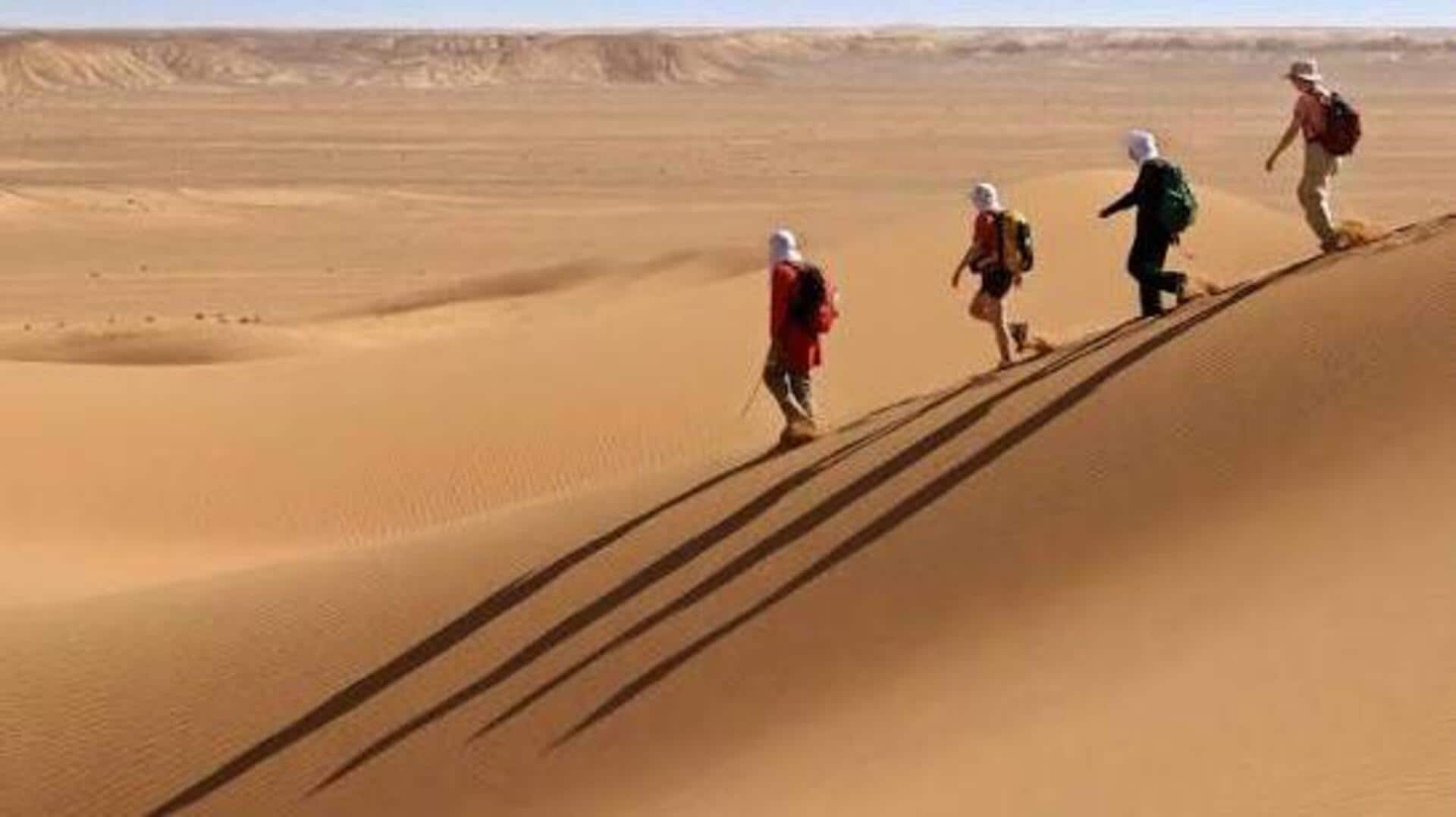
Oman, a Middle Eastern country, is home to some of the most beautiful desert landscapes. The vast expanses of sand and unique geological formations make it a perfect place for desert trekking. The country's diverse terrain and rich cultural heritage make it an ideal destination for adventure lovers. Here are some of the best desert trekking routes in Oman, along with tips to explore them.
#1
Discovering Wahiba Sands
Wahiba Sands is one of Oman's most famous deserts, known for its rolling dunes and diverse wildlife.
The desert spans over 10,000 square kilometers and offers an array of trekking opportunities for adventurers.
One can explore the traditional Bedouin camps, where you can learn about the local culture.
The shifting sands create a dynamic landscape, making each trek a unique experience.
#2
Exploring Sharqiya Sands
Sharqiya Sands, popularly known as Wahiba Sands, is famous for its towering dunes and stunning sunsets. The desert is ideal for those looking to try sandboarding or dune bashing.
The region also has several oases where trekkers can take a break from the heat and enjoy the lush greenery.
With its varied terrain, Sharqiya Sands offers both challenging trails and easy paths for all skill levels.
#3
Navigating Rub' al Khali
Rub' al Khali, or Empty Quarter, is one of the largest sand deserts in the world, spanning Oman, Saudi Arabia, UAE, and Yemen.
The vastness of this desert is awe-inspiring, with its endless sea of sand dunes. Trekkers can experience solitude like never before while navigating through this majestic landscape.
However, due to its size and harsh conditions, proper planning is essential for safety.
Tip 1
Tips for safe desert trekking
When planning a trek in Oman's deserts, it is important to keep safety in mind.
Always carry enough water to stay hydrated in the heat.
Wear light-colored, loose-fitting clothes to stay cool. A hat and sunglasses are essential to protect yourself from the sun's rays.
GPS devices or maps are essential for navigation, as cell networks may not be available in remote areas.