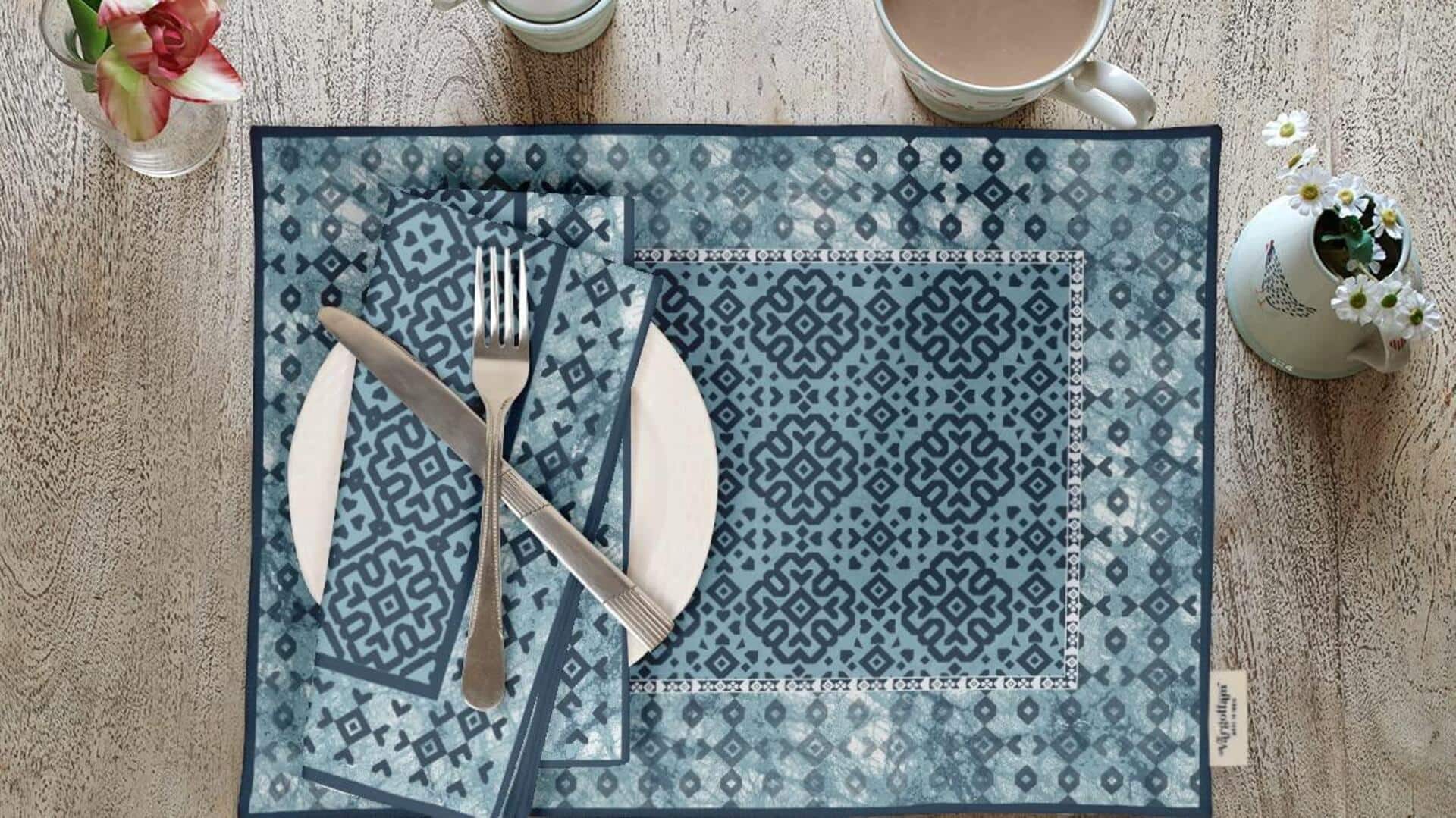
DIY: How to make batik-style placemats
What's the story
African batik-style placemats are a beautiful way to add some culture and color to your dining table. The traditional art of batik involves applying wax on fabric and dyeing it to create intricate patterns. These placemats are not just functional, but also a piece of art that can spark conversations. By making your own, you can customize colors and designs to fit your style, while also enjoying a creative process.
Materials
Gather your materials
To make African batik-style placemats, you will need some basic materials: plain cotton fabric, wax resist (paraffin or beeswax), fabric dyes or paints, brushes, and a flat surface for working.
Make sure the fabric is pre-washed to remove any sizing agents.
Having all materials ready before starting will make the process smoother and more enjoyable.
Design
Create your design
Decide on the patterns you want to create on your placemats. Traditional African designs often include geometric shapes or nature-inspired motifs like leaves or animals.
Sketch your design on paper first, then transfer it onto the fabric with a pencil or chalk.
This step is crucial, as it guides the application of wax and dye later on.
Wax application
Apply wax resist technique
The wax resist technique is key to achieving those intricate patterns.
Heat the wax until it is liquid, and use a brush or tool to apply it over your design on the fabric.
The wax will create barriers that prevent dye from penetrating those areas when you dye the fabric later on.
Let the wax cool completely before proceeding.
Dyeing process
Dye your fabric
Once the wax has cooled, immerse your fabric in dye baths of your choice.
You can use multiple colors for different sections of your design by dipping parts of the fabric into different dye baths.
Make sure each section dries before moving on to another color application, if needed.
Finishing touches
Final touches and care instructions
After dyeing, carefully remove the dried wax using an iron between layers of paper towels, followed by washing instructions specific to the type of dyes used, if applicable.
This ensures longevity while maintaining vibrant colors over time, even after repeated use and washing cycles, as necessary.