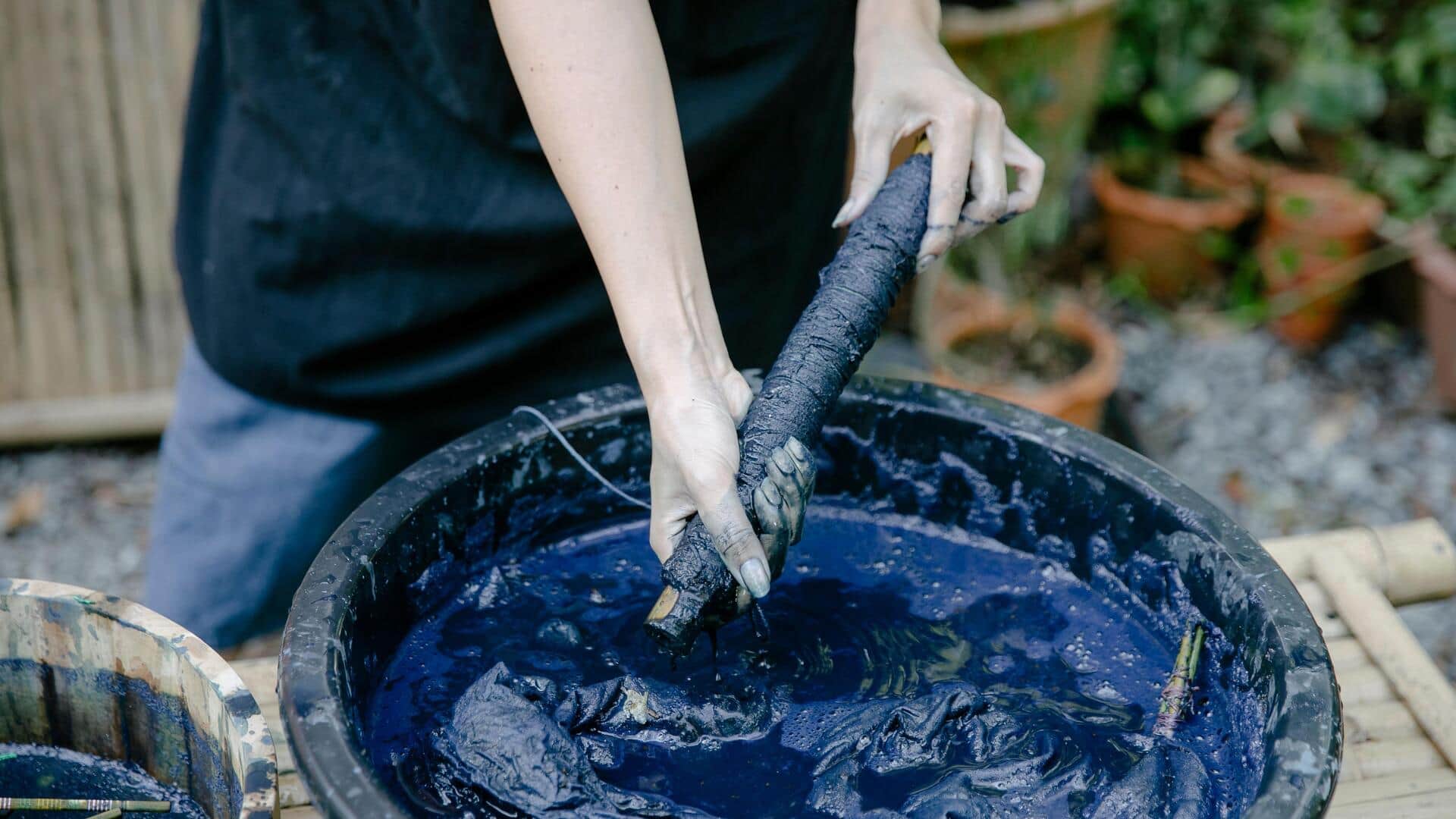
Make your own plant-based dyes at home
What's the story
Creating natural dyes from plants is an age-old art that provides a sustainable alternative to synthetic dyes. Not only does this process promote eco-friendliness, but it also allows you to explore a range of colors from your own backyard. By using common plants, you can create vibrant dyes for fabrics and other materials. Here are five tips to get you started on your natural dyeing journey.
Tip 1
Choose the right plant materials
Selecting appropriate plant materials is key to successful dyeing. Commonly used plants include turmeric for yellow, beetroot for red, and spinach for green. Each plant gives a different hue and intensity. Researching the color yield of various plants can help you plan your dyeing project better.
Tip 2
Prepare your fabric properly
Before dyeing, make sure your fabric is clean and free of any residues. Pre-soaking the fabric in a mordant solution can help improve color absorption. Common mordants include alum or vinegar, which help fix the dye onto the fabric. Proper preparation ensures vibrant and long-lasting colors.
Tip 3
Experiment with dye extraction techniques
There are different methods to extract dyes from plant materials, like boiling or cold soaking. Boiling extracts colors more quickly but may alter some delicate plant compounds. Cold soaking is gentler but takes longer to achieve desired results. Experimenting with different techniques can help you find what works best for each type of plant material.
Tip 4
Test colors before full application
Before applying dye on the entire piece of fabric, test small swatches first. This gives an idea of how the final color would look once applied on the fabric. It also allows adjustments in concentration or soaking time before committing to full-scale dyeing.
Tip 5
Document your process for future reference
Keeping records of your dyeing process is useful for future projects. Note down details like plant type used, extraction method, mordant application, and resulting colors achieved on different fabrics. This documentation helps replicate successful outcomes later on and contributes to developing your own natural dyeing techniques over time.