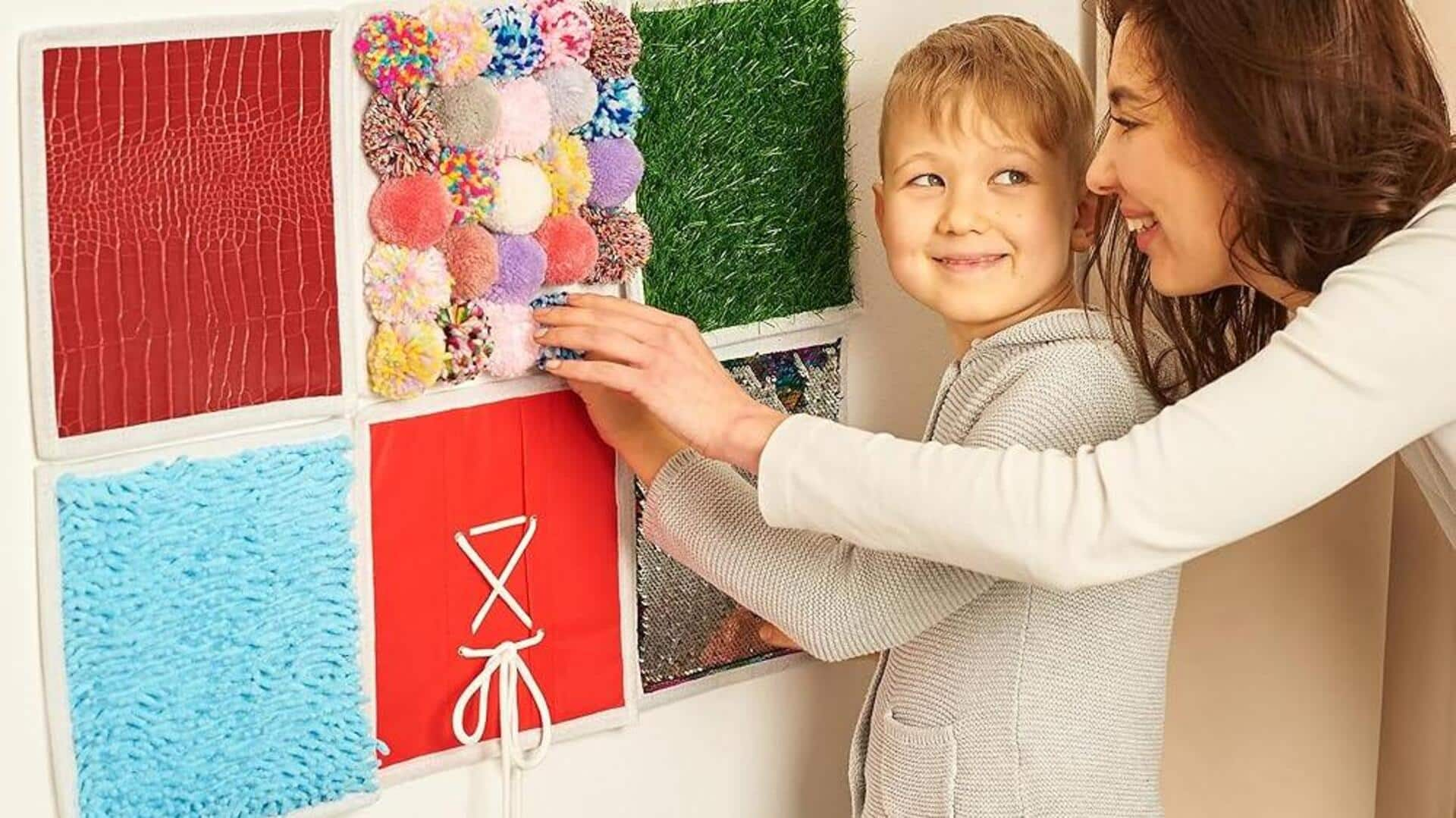
Sensory wall: What it is exactly
What's the story
Creating a sensory wall at home can be an innovative way to enhance self-care. This tactile experience stimulates the senses, providing a calming and engaging environment. By incorporating various textures and materials, you can design a space that promotes relaxation and mindfulness. Here are five unique ways to create a sensory wall, each offering distinct benefits for mental well-being.
Tip 1
Use natural materials for texture
Incorporating natural materials like wood, leaves, or stones can add an earthy feel to your sensory wall. These elements provide different textures that can be soothing to touch. For instance, rough bark or smooth pebbles can create a contrast that invites exploration and interaction. Using natural materials also connects you with nature indoors, which is known to reduce stress levels.
Tip 2
Incorporate soft fabrics
Adding soft fabrics like felt or velvet can make your sensory wall more inviting. These materials provide a gentle touch that is comforting and relaxing. You could use different colors and patterns to make the wall visually appealing while also offering a tactile experience. The softness of these fabrics can help calm anxiety by providing sensory feedback.
Tip 3
Integrate interactive elements
Interactive elements such as buttons, zippers, or Velcro strips can make your sensory wall more engaging. These features invite active participation, keeping the mind focused and occupied. Playing with these elements can be a mindful activity that helps divert attention from stressors. It also encourages fine motor skills development, adding another layer of benefit to the experience.
Tip 4
Add aromatic features
Incorporating aromatic features like scented oils or herbs into your sensory wall can engage the sense of smell, which is closely linked to emotions and memory. Using essential oils like lavender or eucalyptus in small diffusers attached to the wall can create a calming atmosphere. Aromatherapy has been shown to reduce anxiety and improve mood, making it a great addition to any self-care space.
Tip 5
Utilize visual stimuli
Visual stimuli such as mirrors, colorful artwork, or LED lights can enhance the sensory experience by appealing to sight. Mirrors can create an illusion of depth in smaller spaces while colorful artwork adds vibrancy and energy when needed most during low moods. LED lights offer adjustable brightness levels, allowing users control over their environment's ambiance at any given moment, thereby promoting relaxation through visual means alone without overwhelming other senses present within this setup too!