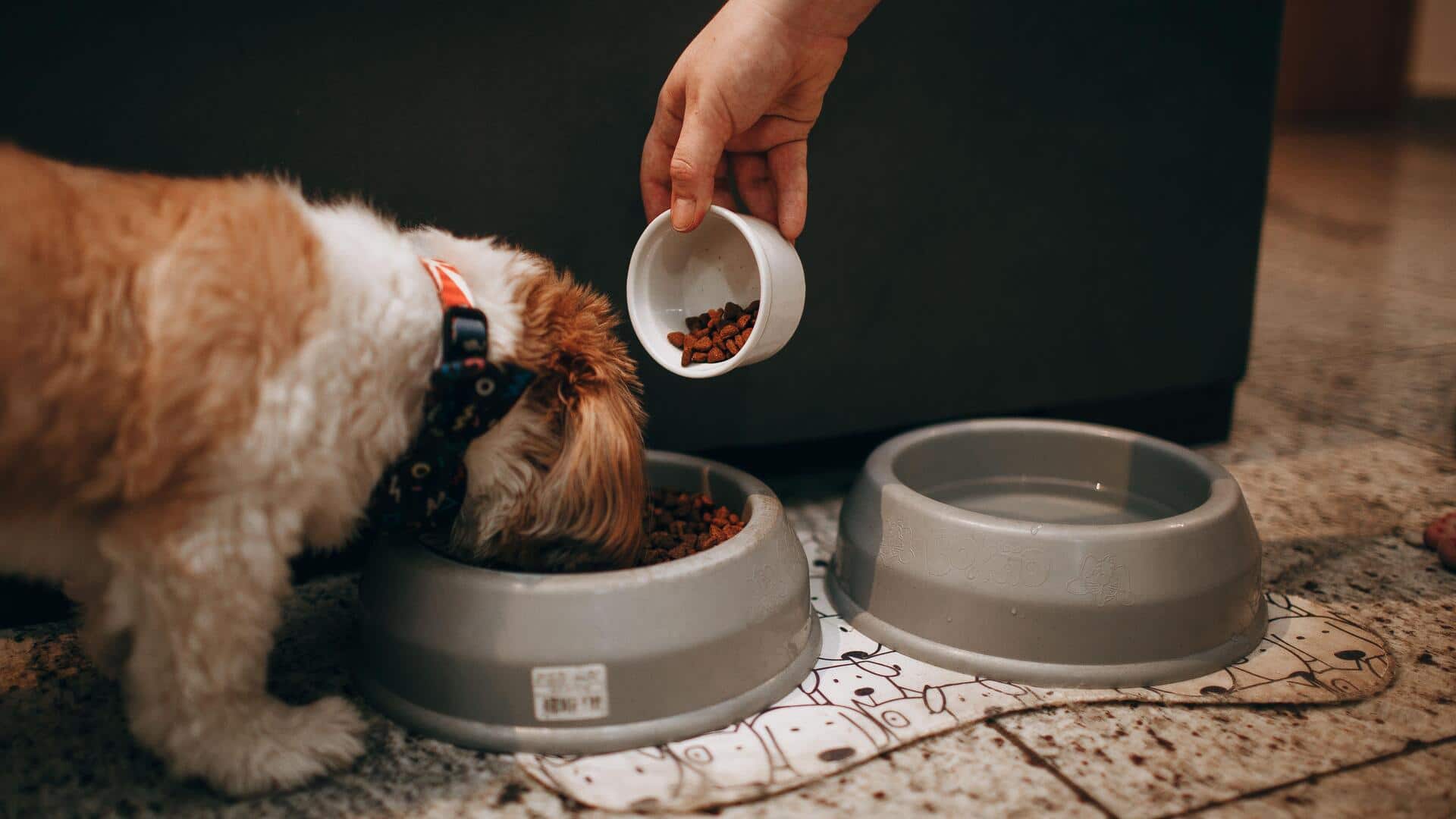
How to create a mess-free feeding spot for your dog
What's the story
Creating a dog feeding station can help keep your home tidy while ensuring your pet's meals are served efficiently. By designing a dedicated space for feeding, you can minimize spills and messes, making cleanup easier. Here are five practical ideas to set up an effective dog feeding station that suits your lifestyle and meets your dog's needs.
Tip 1
Elevated feeding stations
Elevated feeding stations can be a game changer for both you and your dog.
They keep the bowls at a comfortable height, which can be especially helpful for larger breeds.
This way, you minimize the strain on your dog's neck and joints, while also keeping the floor clean by preventing spills from reaching the ground.
You can buy or make an elevated station to fit your dog's size.
Tip 2
Non-slip mats
Non-slip mats are an inexpensive yet effective way to keep food and water bowls in place.
These mats are designed to grip the floor, preventing bowls from sliding around during mealtime.
They also catch any stray kibble or water that spills out of the bowl, making cleanup a breeze.
Available in various sizes and designs, non-slip mats can easily fit into any home decor.
Tip 3
Wall-mounted bowl holders
Wall-mounted bowl holders are an innovative solution for minimizing messes.
These holders securely attach bowls to the wall at a height that suits your pet's needs.
By keeping bowls in place, they prevent tipping and spilling of food and water.
This setup is especially useful in smaller spaces where floor space is limited.
Tip 4
Automatic feeders
Automatic feeders provide a convenient way to manage portion control and reduce messes from overzealous eaters.
These devices dispense a pre-measured amount of food at scheduled times, ensuring your dog gets the right amount without making a mess.
Some models even come with built-in mats or trays to catch any stray pieces of food.
Tip 5
Customizable storage solutions
Customizable storage solutions let you organize dog supplies efficiently while keeping them accessible during feeding times.
You can use cabinets or shelves with labeled containers for dry food, treats, and other essentials near the feeding station.
This way, everything is organized and easy to reach when it's time for meals or snacks.