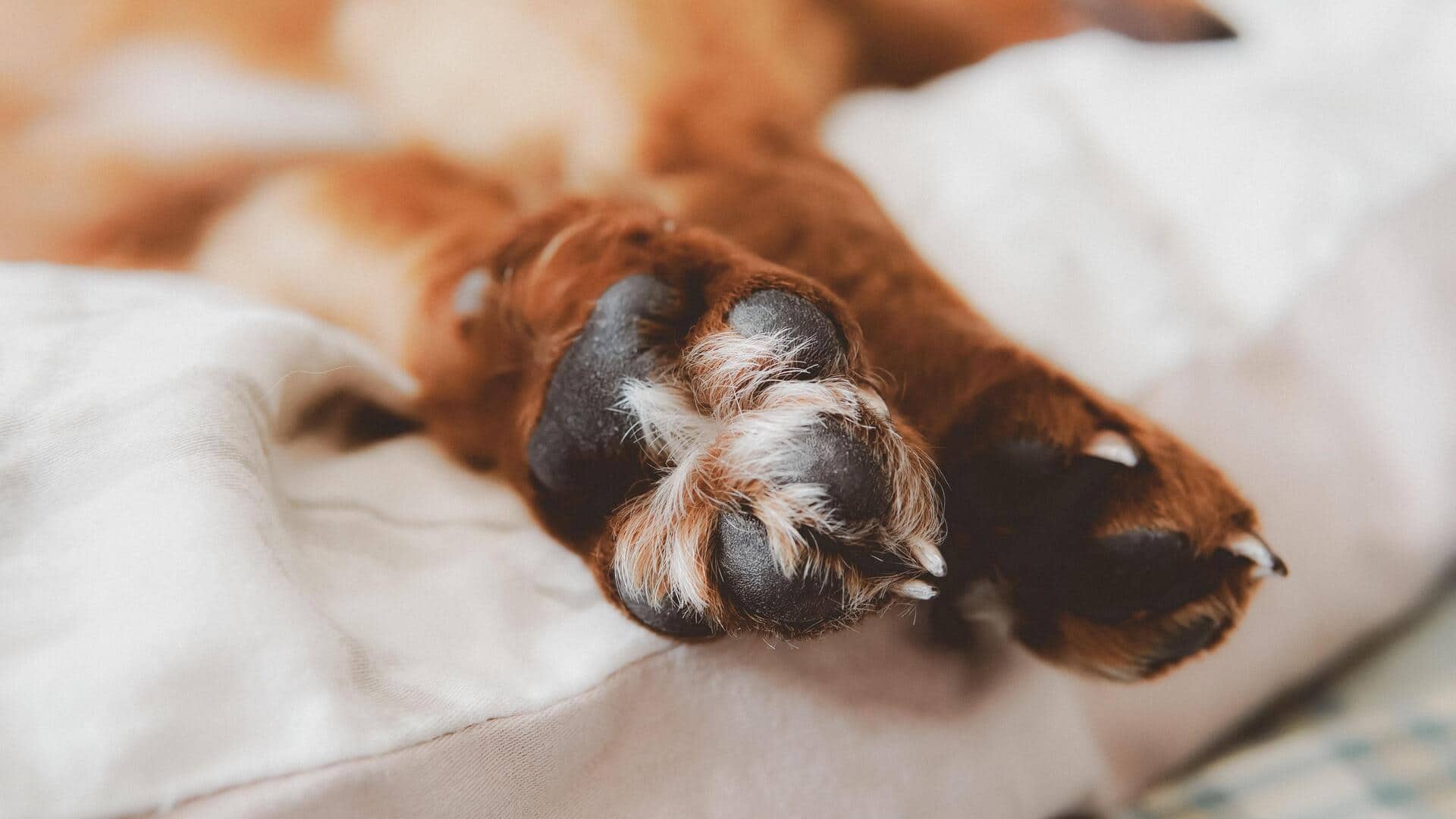
How to keep your dog's paws clean at home
What's the story
Keeping your dog's paws clean is essential for their health and hygiene. Dirty paws can lead to infections and discomfort, making it important to have a routine in place. Here are five practical home maintenance hacks that can help you keep your dog's paws clean without much hassle. These tips are easy to follow and can be incorporated into your daily routine, ensuring your furry friend's paws stay healthy.
Tip 1
Regular paw washing routine
Establishing a regular paw washing routine is key to keeping dirt and grime at bay.
After walks or playtime outside, gently rinse your dog's paws with lukewarm water.
Use a mild pet-safe soap if necessary, but avoid over-washing as it can dry out their skin.
This simple step prevents buildup of dirt and keeps their paws clean.
Tip 2
Use of paw wipes
Paw wipes are a convenient alternative to washing your dog's paws every time they come inside.
These pre-moistened wipes are specially designed for pets and can easily remove dirt, mud, or allergens from your dog's paws.
Keep a pack near the door for easy access after outdoor activities, making it easier to maintain cleanliness without much effort.
Tip 3
Trim fur between toes
Long fur between your dog's toes can trap dirt and moisture, leading to infections or discomfort.
Regularly trimming this fur helps keep their paws cleaner by preventing debris from getting stuck.
Use pet-safe scissors or clippers to carefully trim the fur without hurting your dog, making it a part of your grooming routine.
Tip 4
Apply paw balm regularly
Applying paw balm regularly helps keep your dog's paw pads moisturized and protected from harsh weather conditions like extreme heat or cold.
Choose a natural, non-toxic balm specifically formulated for pets, and apply it sparingly on each paw pad as needed.
This keeps their paws healthy and prevents cracking or dryness.
Tip 5
Monitor outdoor surfaces
Be mindful of the surfaces your dog walks on outdoors, as some can be harsh on their paws.
Hot pavement in summer can burn their pads, while icy sidewalks in winter can cause frostbite.
Try to walk them on grass or shaded areas when possible during hot months, and use dog booties if necessary during cold months to protect their feet.