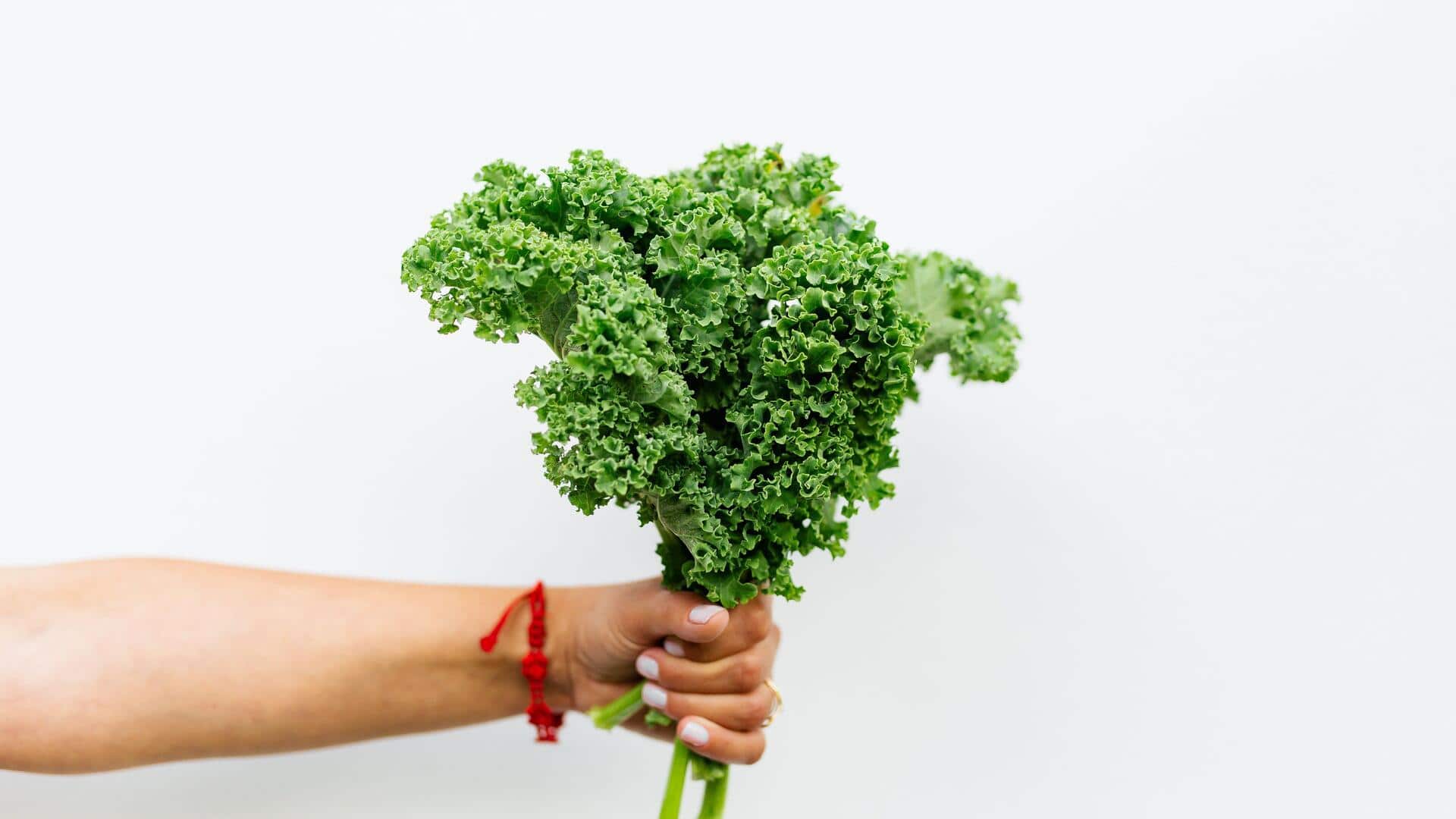
Leafy stems you need in your vegetarian diet
What's the story
Vegetarian diets are all about health, and what can be better than leafy stems to amp up your meals? These nutrient-rich parts of plants are loaded with vitamins and minerals, making them a perfect addition to any vegetarian meal. From boosting your health to making your meals more delicious, leafy stems are the best! Let's explore some amazing leafy stems that can amp up your vegetarian meals.
#1
Kale stems: A nutrient powerhouse
Kale stems are often ignored, but they are loaded with nutrients.
They are rich in fiber, vitamin C, and calcium, making them an amazing addition to a vegetarian diet.
You can chop them finely and add them to salads or stir-fries for an extra crunch.
The fiber content helps in digestion while vitamin C boosts the immune system.
#2
Swiss chard stems: Colorful and nutritious
Swiss chard stems are colorful and packed with nutrients like magnesium, potassium, and vitamin K.
These stems can be sauteed with garlic or added to soups for an extra flavor and nutrition.
Magnesium is important for muscle function, while potassium helps in maintaining blood pressure levels.
#3
Beet greens: Versatile additions
Beet greens are the leafy tops of beets and are loaded with vitamins A and K, along with iron.
They can be used in salads or cooked like spinach for a nutritious side dish.
Iron is important for transporting oxygen in the body, making beet greens a great choice for vegetarians who want to boost their iron intake.
#4
Broccoli stalks: Waste not, want not
Often thrown away, broccoli stalks are just as nutritious as florets, if not more.
They are high in fiber and vitamin C, which makes them great for boosting immunity and digestion.
Grated broccoli stalks can be added to coleslaw or used as a base for vegetable fritters, minimizing waste from your kitchen.
#5
Collard green stems: Fiber-rich options
Collard green stems are loaded with fiber, which makes them great for digestive health.
They are best used when cooked, as it softens their texture, making them easier to chew.
This makes them a great addition to soups or stews, where they can be simmered to perfection.
Their mild flavor blends well with other ingredients, enhancing the dish without overpowering it.