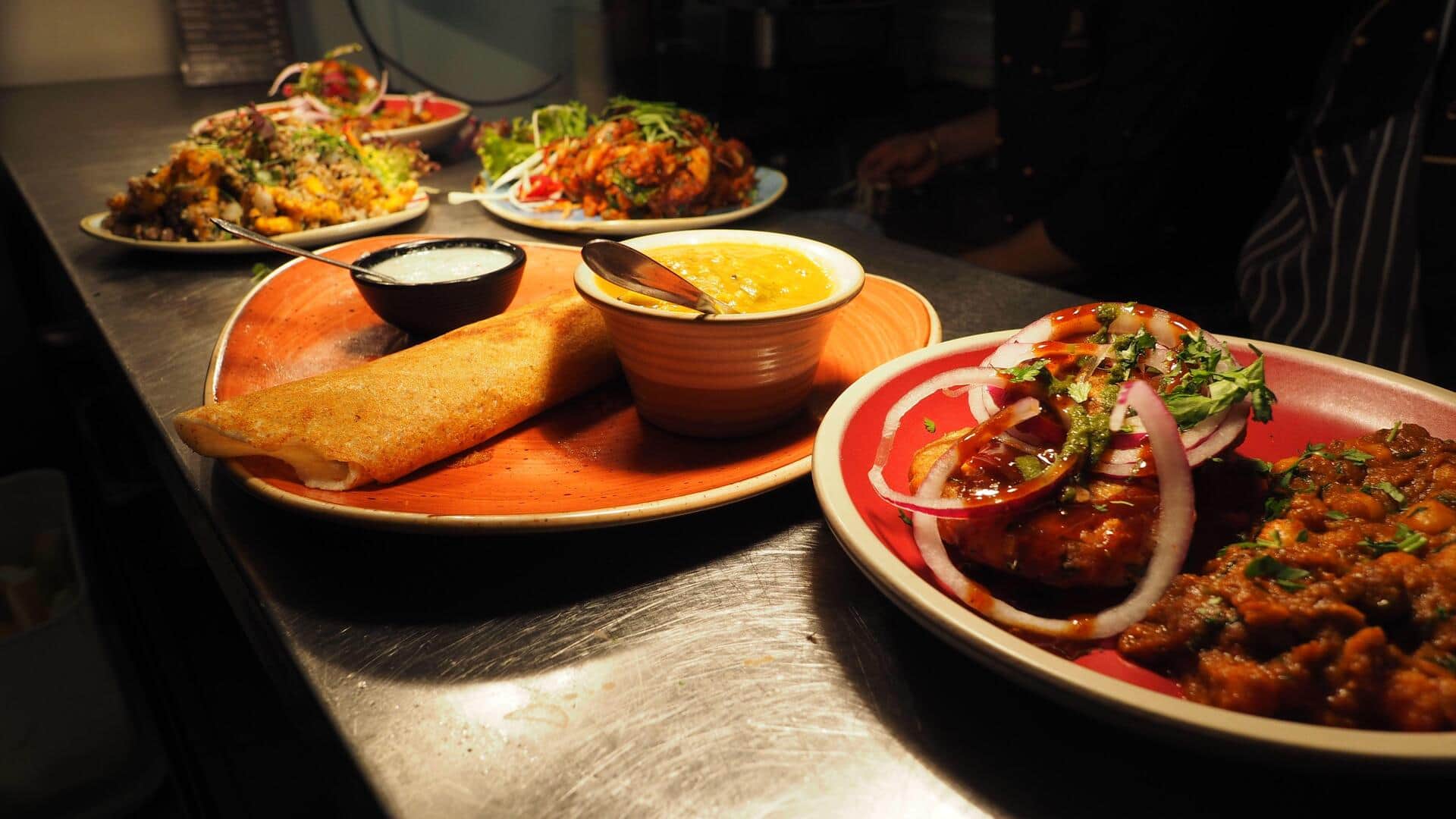
The story behind dosa's global popularity
What's the story
A staple of South Indian cuisine, dosa has traveled from traditional kitchens to global menus. This thin, crispy crepe made from fermented rice and lentils is now a favorite of food lovers across the world. Its versatility and nutritional value have contributed to its rise in popularity beyond India. Here's how dosa went from being a regional dish to an international sensation.
#1
The origins of dosa
Dosa's history dates back over 1,000 years in South India, where it was first prepared as a breakfast item.
Traditionally, it was made with locally sourced ingredients such as rice and urad dal. The fermentation process not only enhanced the flavor but also improved its digestibility and nutritional value.
Over the years, different regions in India developed their own versions of dosa, each with unique ingredients and cooking techniques.
#2
Nutritional benefits driving popularity
The health benefits of dosa have played a major role in its global appeal.
Being made from fermented batter, dosa is rich in probiotics, which promote gut health.
It is also low in calories but high in carbohydrates, making it an ideal option for those looking for a healthy meal.
The addition of various fillings like vegetables or paneer further boosts its nutritional profile without compromising on taste.
#3
Adaptations for global palates
To cater to international tastes, chefs have adapted dosa by adding local flavors and fillings.
In Western countries, for instance, dosas are often stuffed with cheese or vegetables like spinach and mushrooms.
These adaptations make the dish more appealing to non-Indian consumers while preserving its core identity as a versatile crepe.
#4
Dosa's presence on global menus
Today, dosa is featured on menus across the globe, from high-end restaurants to casual cafes. It is a testament to its widespread appeal.
Many chefs experiment with fusion recipes that combine traditional Indian spices with Western ingredients such as avocado or pesto sauce.
This experimentation has helped introduce dosa to new audiences who may not be familiar with traditional Indian cuisine.
Tip 1
Tips for enjoying dosas at home
Making dosas at home gives you the freedom to play with flavors while keeping it authentic.
Start with a well-fermented batter for the best texture and taste.
Use a non-stick pan or griddle for easy flipping without sticking.
Experiment with different fillings like potato masala or mixed vegetables for variety.
Serve hot with chutneys or sambar for an authentic experience.