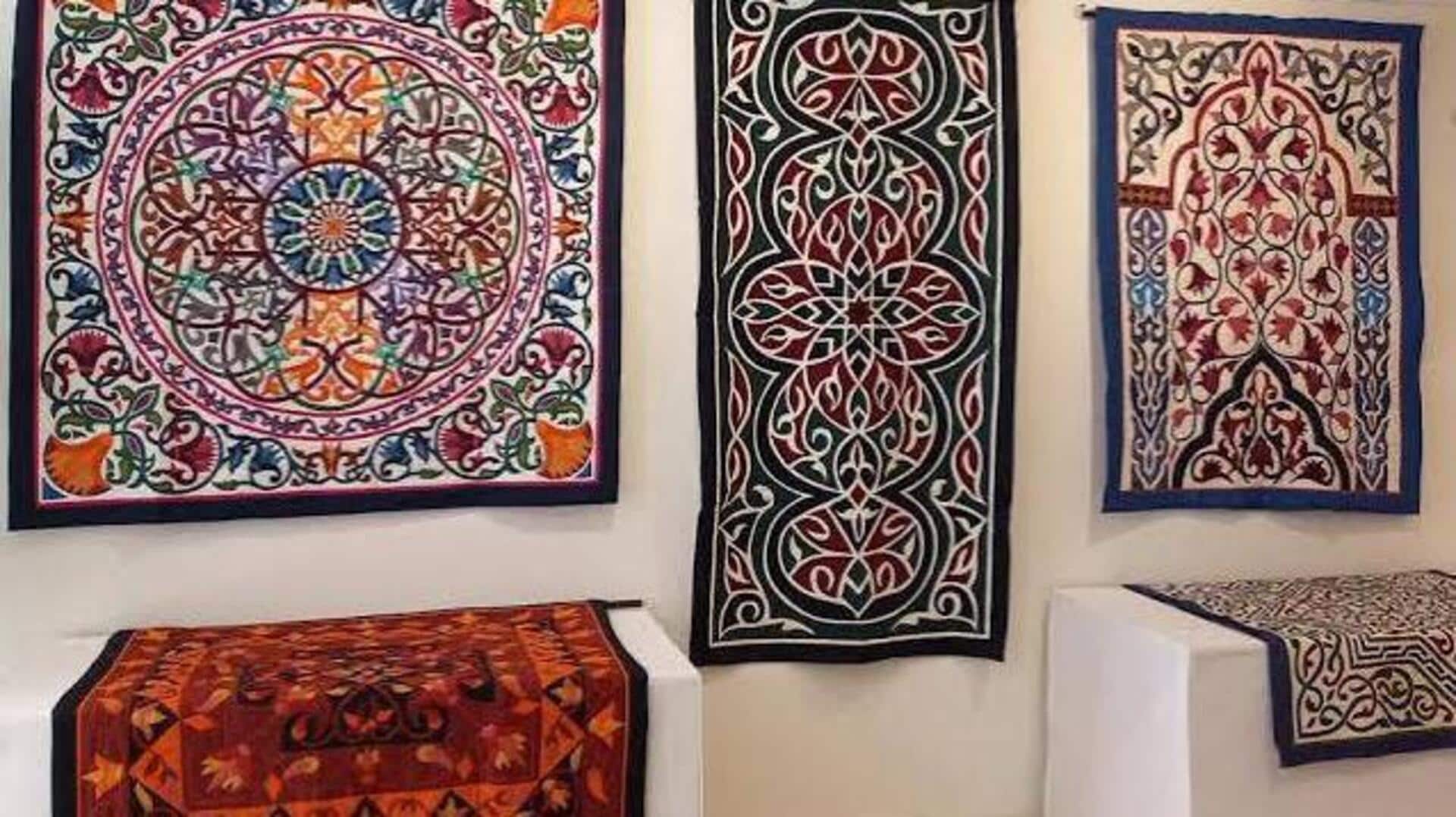
All about Egyptian textile art
What's the story
Egyptian textile art has been a significant part of the country's cultural heritage for centuries. Famous for its intricate designs and vibrant colors, these textiles provide a glimpse into ancient Egyptian life and beliefs. The art of textile making was not just a craft, but an important aspect of daily life and rituals. From clothing to decorative pieces, Egyptian textiles were integral to the ancient civilization.
#1
The significance of linen in ancient Egypt
Linen was the most popular fabric in ancient Egypt, thanks to its breathability and comfort in hot weather.
It was made from flax plants, which were grown on the banks of the Nile.
Linen was used for everything from clothing to burial shrouds, signifying purity and light.
The production of linen was labor-intensive, but highly valued, making it a prized commodity in ancient Egyptian society.
#2
Symbolism in textile patterns
Patterns used in Egyptian textiles also had symbolic meanings.
Common motifs included lotus flowers, which symbolized rebirth, and papyrus plants, which represented lower Egypt.
These designs were not just decorative but also conveyed messages about protection, fertility, and divinity.
The use of symbols allowed artisans to embed cultural values into everyday items.
#3
Techniques used by ancient artisans
Ancient Egyptian artisans employed various techniques to create their textiles.
Weaving was the most common method, using simple looms to produce complex patterns with different colored threads.
Dyeing techniques also played an important role in achieving vibrant colors from natural sources like indigo or saffron.
These methods required great skill and knowledge passed down through generations.
#4
Preservation efforts for Egyptian textiles today
Efforts are being made to preserve these historical pieces as part of Egypt's cultural heritage.
Museums display ancient textiles, carefully restored by experts who understand their historical significance.
Preservation ensures that future generations can appreciate this unique aspect of Egyptian history while learning about its impact on modern textile design worldwide.