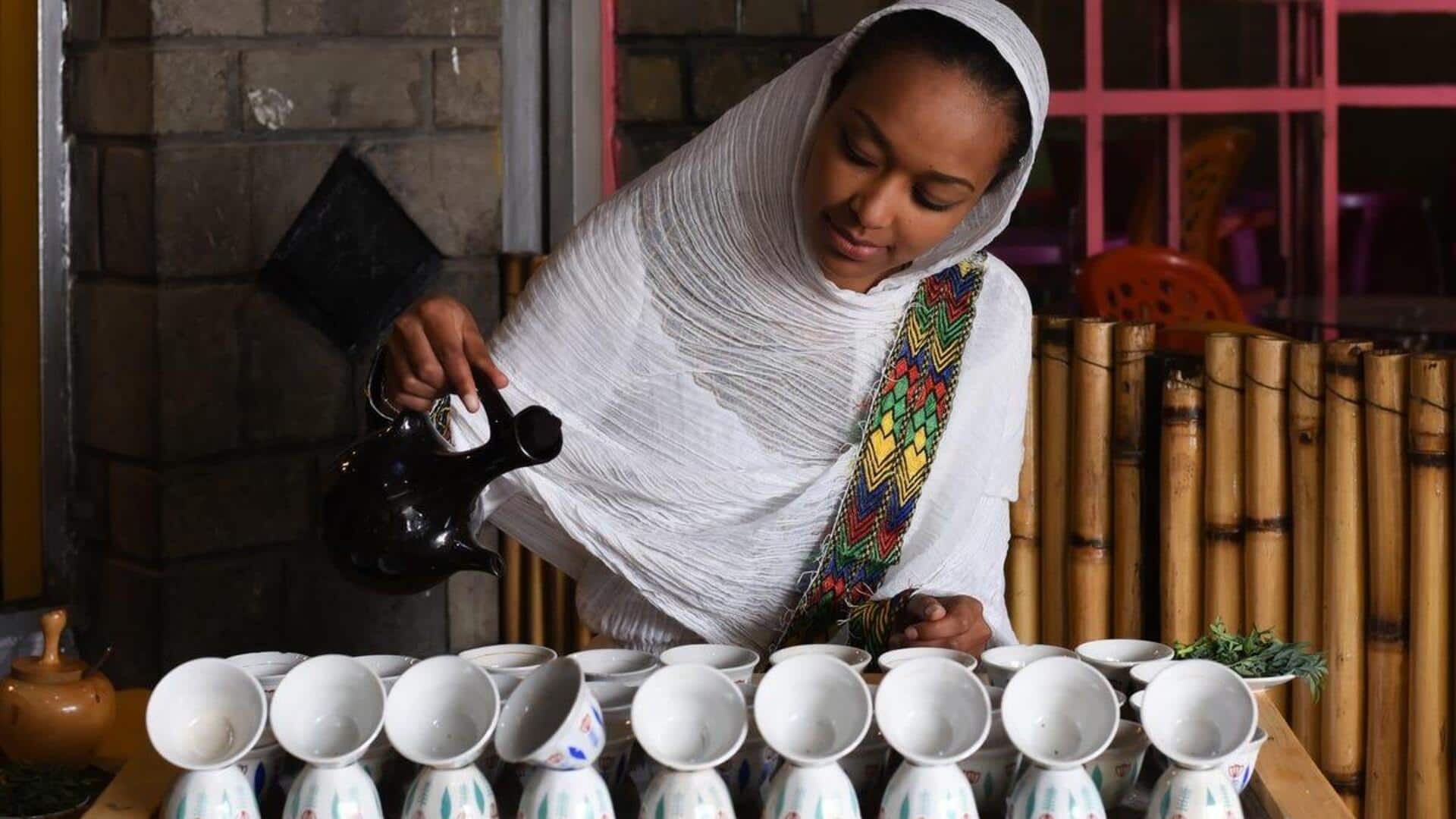
Did you know Ethiopian weddings have a coffee ritual?
What's the story
Ethiopian weddings are steeped in rich traditions, and one of the most cherished is the coffee ceremony. This ritual is not just about serving coffee; it's a symbol of hospitality and community. The ceremony involves several steps, each holding cultural significance. Understanding these rituals can give you a deeper insight into Ethiopian culture and its values of respect, unity, and celebration.
#1
The preparation of coffee beans
The preparation of coffee beans is the first step in the Ethiopian wedding coffee ceremony.
Traditionally, green coffee beans are roasted over an open flame until they turn dark brown. The aroma that fills the air during this process is considered inviting and signifies welcome to guests.
Once roasted, the beans are ground into a fine powder using a mortar and pestle.
#2
Brewing in a jebena
After grinding, the coffee is brewed in a traditional pot called a jebena.
The jebena is made from clay or ceramic and has a long neck with a spout for pouring.
Water is added to the ground coffee in the jebena and boiled over low heat until it brews strong.
This method ensures that flavors are fully extracted from the grounds.
#3
Serving with respect
Serving coffee during an Ethiopian wedding ceremony is done with utmost respect.
It is customary for the host to serve guests in rounds, starting with the eldest or most honored guest first.
Each round signifies goodwill and appreciation towards those present at the gathering.
The host pours small amounts into cups or bowls while offering words of gratitude.
#4
Adding spices for flavor
To enhance flavor during the wedding coffee ceremony, spices like cardamom or cinnamon may be added to brewed coffee before serving.
These spices not only add depth but also symbolize warmth and comfort among attendees.
Their inclusion reflects attention to detail within cultural practices surrounding weddings.
Tip 1
Enjoying together as community
The final aspect of an Ethiopian wedding coffee ritual is enjoying it together as a community activity that fosters connection among participants.
Sharing stories over cups filled with freshly brewed concoctions strengthens bonds between families involved in nuptial celebrations.
It reinforces communal ties vital within society today, just like centuries ago when these traditions first began taking shape across regions throughout Ethiopia's diverse landscapes.