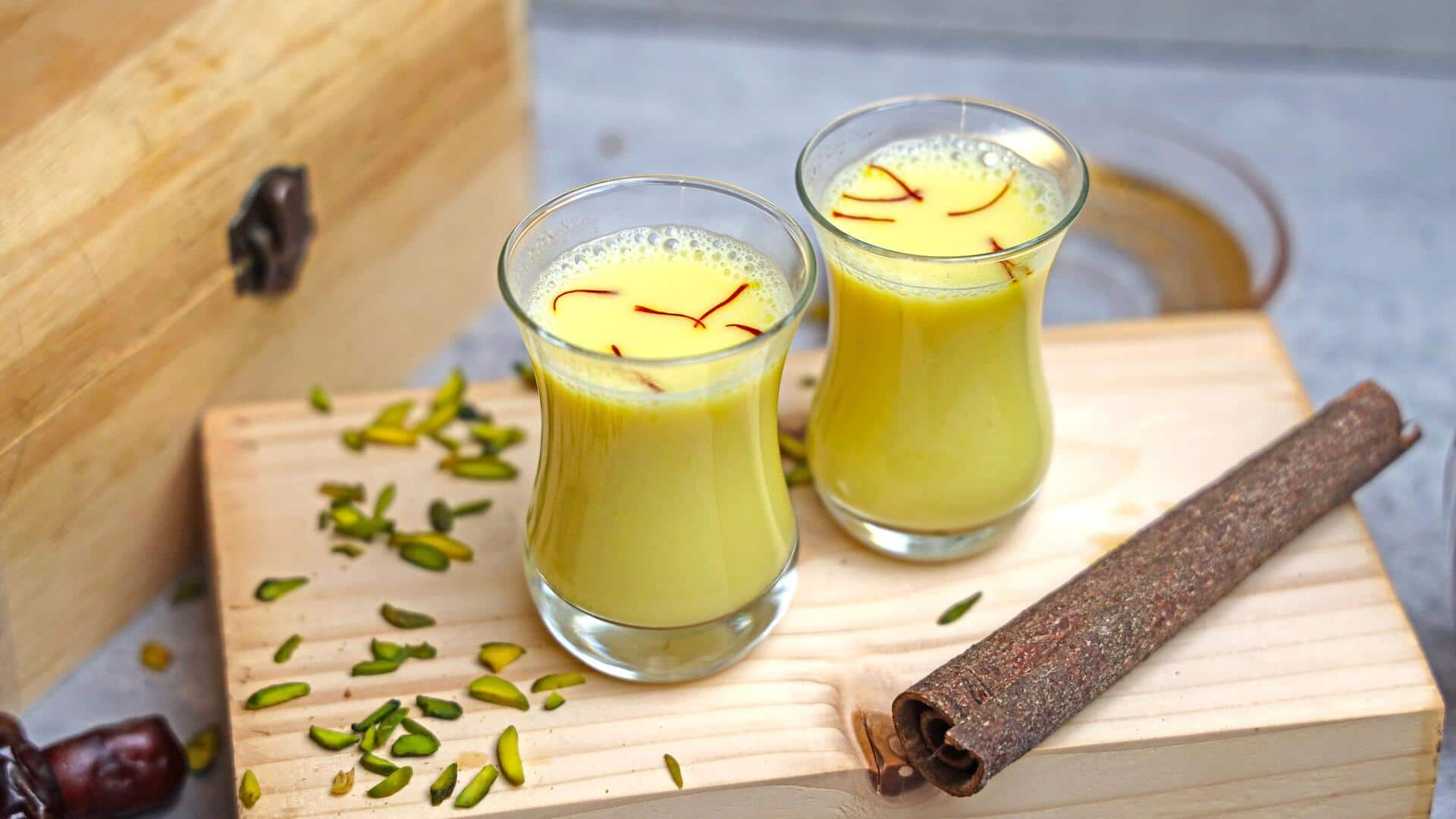
Thandai: How India's classic drink has evolved
What's the story
A traditional Indian drink, thandai, is a refreshing mix of milk, nuts, spices, and sugar. It is especially popular during festivals such as Holi. The drink has a long history, dating back to ancient times when it was consumed for its cooling properties and health benefits. Over the years, thandai has evolved with regional variations and adaptations. But its essence as a festive delight remains unchanged.
#1
Ancient roots of thandai
Thandai's origins can be traced back to ancient India, where it was first consumed for its cooling effects in the hot weather.
Historical texts mention the use of ingredients such as almonds, saffron, and cardamom, which are still used in modern-day recipes.
The drink was also associated with health benefits and was often consumed by royalty.
#2
Regional variations across India
As thandai spread across India, different regions added their own twist to the drink.
In some areas, rose petals or kewra water are added for fragrance. Others may use different nuts or spices depending on local availability and preferences.
These variations reflect India's diverse culinary landscape while keeping the essence of thandai intact.
#3
Thandai in Indian festivals
Thandai is an integral part of many Indian festivals, particularly Holi. The drink's vibrant flavors and cooling properties make it perfect for celebrating the arrival of spring.
Other than Holi, thandai is also consumed during Shivratri and other occasions where fasting is observed, as it provides nourishment without breaking fasts.
#4
Modern adaptations and innovations
In recent years, thandai has undergone modern adaptations with innovative twists like chocolate or fruit-flavored versions.
These variations cater to changing tastes while introducing this traditional drink to younger generations who may prefer contemporary flavors over classic ones.
However, traditionalists still cherish the authentic taste that has been passed down through generations.