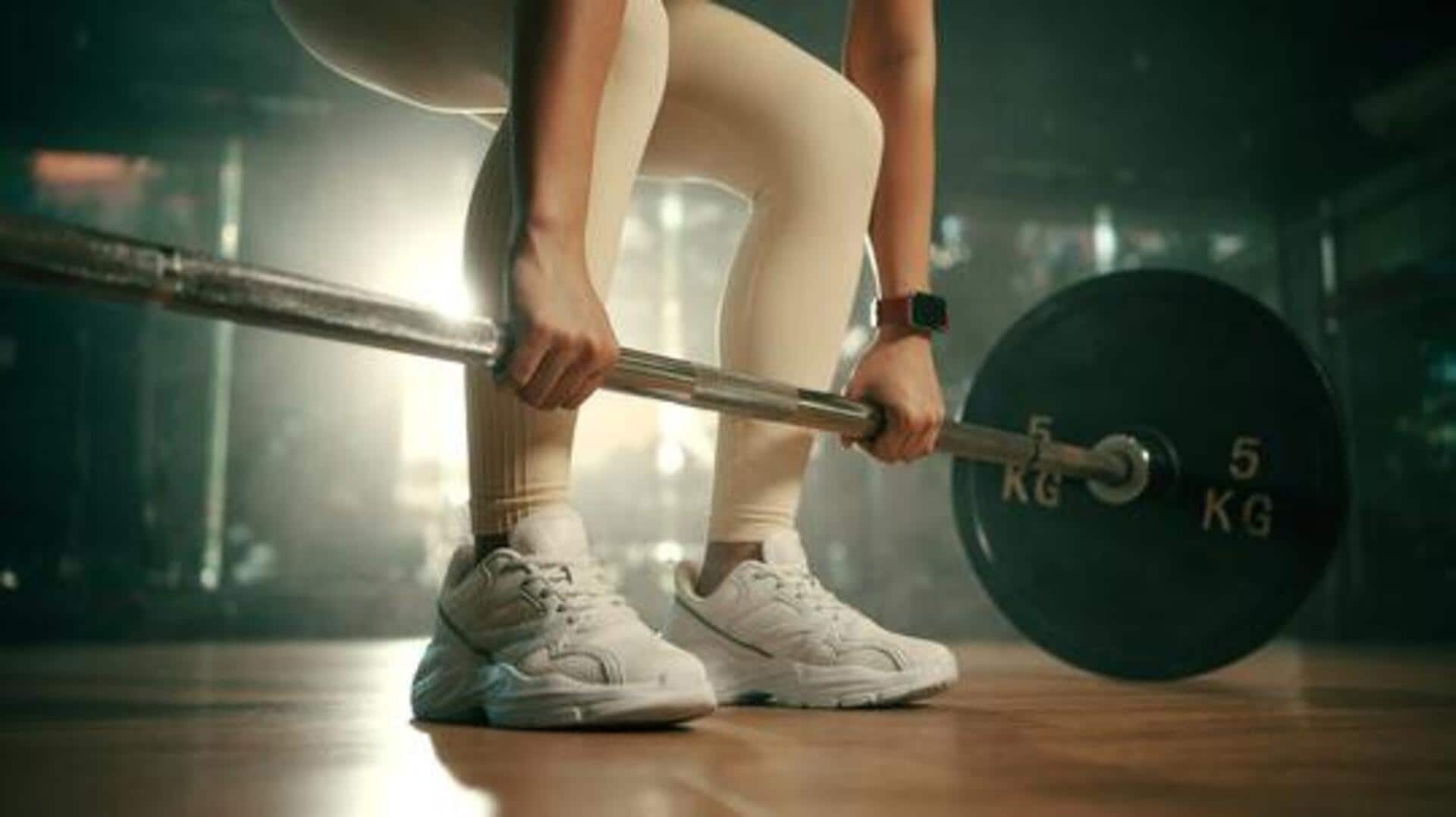
Debunking all myths about female weightlifting
What's the story
Despite the growing popularity of female weightlifting, many misconceptions continue to deter women from embracing this empowering activity. These myths often stem from outdated beliefs and a lack of understanding about the benefits of weightlifting. By debunking these misconceptions, we can encourage more women to engage in strength training and reap its numerous physical and mental benefits. Here are five common myths about female weightlifting.
Myth 1
Lifting weights makes women bulky
One of the most common misconceptions is that lifting weights will make women bulky.
However, the truth is that women have lower testosterone levels than men, making it difficult to gain muscle mass like men do.
Instead of bulking up, weightlifting helps women develop lean muscle tone and improve their overall body composition.
Myth 2
Weightlifting is only for athletes
Another myth is that weightlifting is only for athletes or those training for a competition.
In reality, anyone can benefit from strength training, irrespective of their fitness level or goals.
Weightlifting improves bone density, boosts metabolism, and increases strength, making it beneficial for all women looking to improve their health.
Myth 3
Cardio should be prioritized over weights
Many believe cardio exercises should be prioritized over weightlifting for weight loss or fitness goals.
However, incorporating resistance training into one's routine can be more effective in burning calories and building muscle mass than cardio alone.
A balanced routine of both cardio and strength training can yield better results.
Myth 4
Weightlifting increases risk of injury
Some think that lifting weights increases the risk of injury, when in fact, if done correctly, it reduces injury risk by strengthening muscles and joints.
Proper form, adequate warm-up, and using appropriate weights are key to safe weightlifting practices.
Myth 5
Women should avoid heavy weights
There's a misconception that women should stick to lighter weights to avoid injury or strain.
However, progressive overload — gradually increasing the weight lifted — is essential for muscle growth and strength development.
Women can lift heavy weights safely with proper guidance and technique, just like men do in their training regimens.