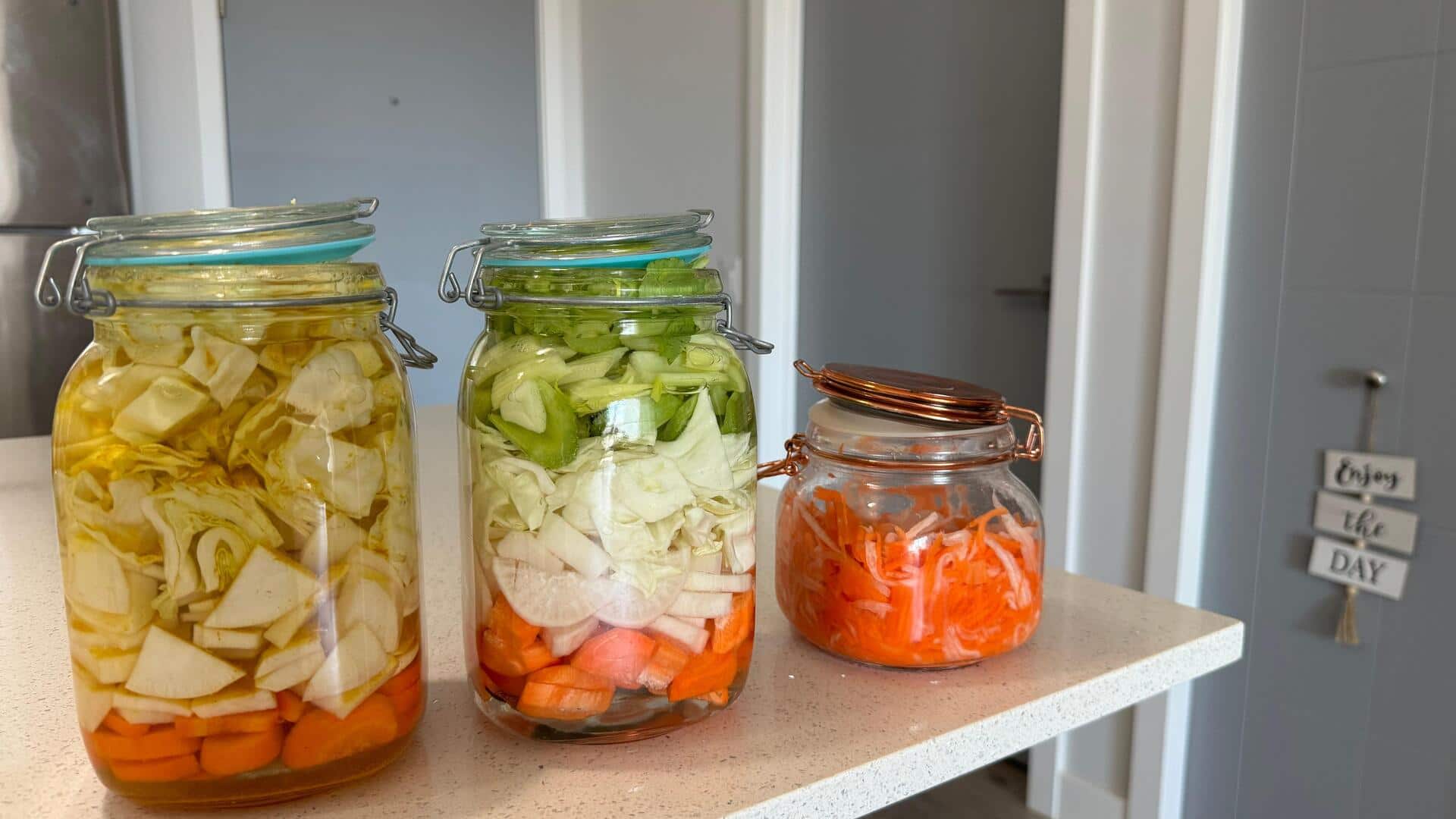
How to ferment vegetables at home without the fuss
What's the story
Fermenting vegetables is a great way to preserve them and add a unique flavor to your meals. For beginners, the process can seem daunting, but with a few simple tips, you can master the art of fermentation. Not only does fermentation extend the shelf life of vegetables, but it also boosts their nutritional value by increasing probiotics. Here are five practical tips to get you started on your fermentation journey.
Tip 1
Choose fresh vegetables
Selecting fresh vegetables is key to successful fermentation.
Choose organic produce whenever possible, as they are less likely to have pesticide residues that can interfere with the fermentation process.
Look for firm, unblemished vegetables free from signs of spoilage or decay.
Freshness ensures better flavor development and a higher likelihood of achieving the desired texture in your fermented products.
Tip 2
Use non-iodized salt
Salt is integral to fermentation, as it prevents bad bacteria from growing and helps good bacteria thrive.
Always use non-iodized salt, like sea salt or kosher salt, as iodine can inhibit fermentation.
The general rule is to use about 2% salt by weight of the vegetable you are fermenting. This ratio helps maintain the right environment for beneficial microbes.
Tip 3
Maintain proper temperature
Temperature plays a key role in how quickly your vegetables ferment.
Ideally, keep your fermentation jars at room temperature between 18 degrees Celsius and 24 degrees Celsius (64 degrees Fahrenheit and 75 degrees Fahrenheit).
Avoid direct sunlight or heat sources, as they can cause uneven fermentation and spoilage.
Tip 4
Use clean equipment
To avoid contamination during fermentation, make sure all your equipment is clean and sanitized.
Use glass jars or ceramic crocks, as they are non-reactive surfaces that do not affect the taste of your ferments.
Wash them thoroughly with hot soapy water, rinse well, and let them air dry before use.
Tip 5
Taste regularly
Regularly tasting your fermenting vegetables helps you know how the flavors are developing over time.
Start tasting after about three days, depending on the type of vegetable being fermented, until you reach the desired level of tanginess or sourness.
This way, you can adjust the fermentation time according to your personal preference without any guesswork involved.