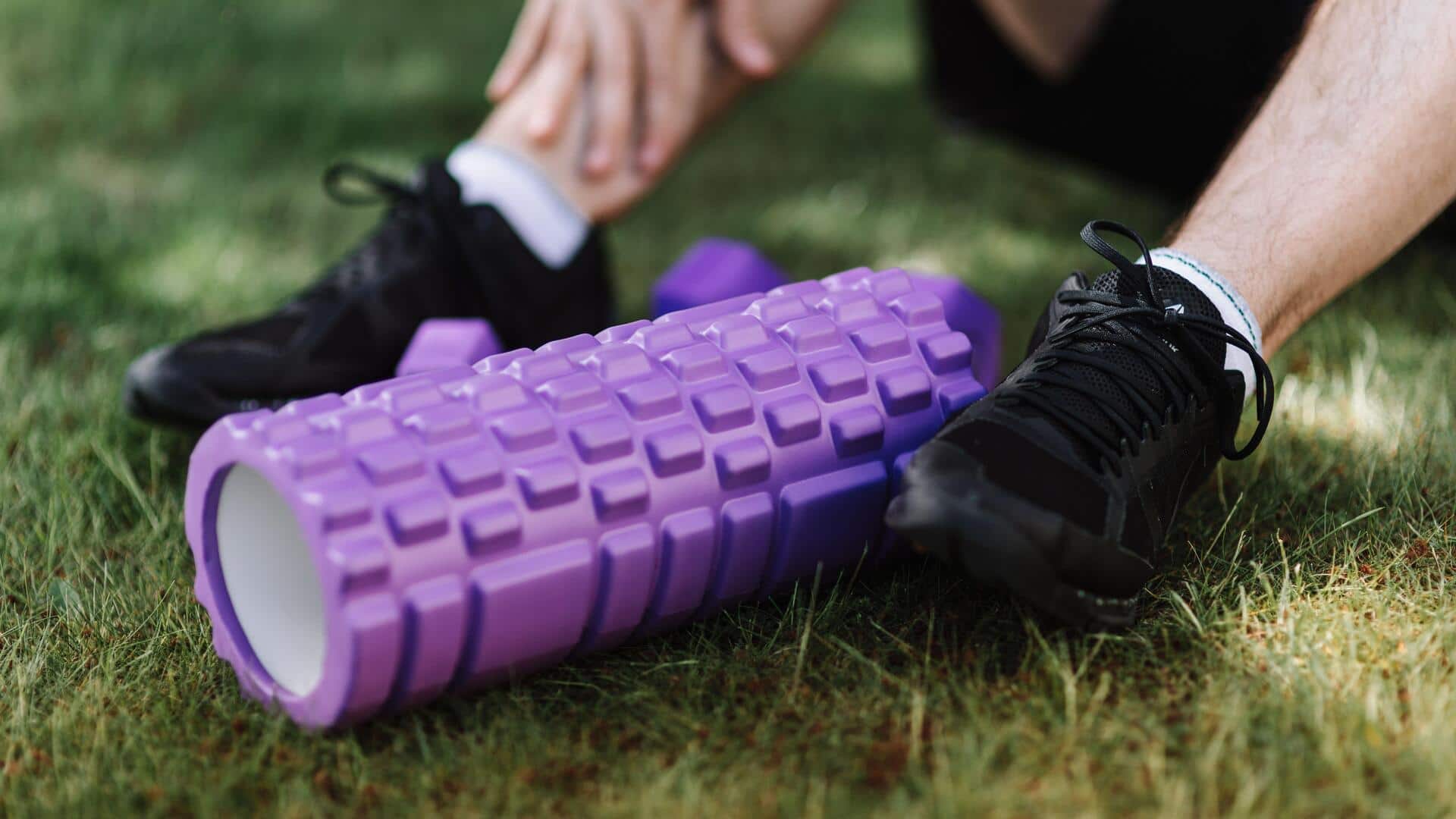
What are foam roller exercises?
What's the story
Foam rolling is a simple, yet effective, way to improve flexibility and speed up recovery. The technique, which involves using a foam roller to massage muscles, can be beneficial for anyone looking to improve their physical performance or recover from workouts. By releasing muscle tension and increasing blood flow, foam rolling can help you maintain flexibility and reduce soreness after exercise.
#1
Understanding foam rolling basics
Foam rolling is basically a self-myofascial release technique that helps relieve muscle tightness and improve elasticity.
By rolling over the foam roller, you apply pressure on specific points of your muscles, which helps break up knots and trigger points.
This process increases blood circulation to the area, promoting healing and reducing inflammation.
It's an easy-to-use tool that can be used at home or in the gym.
#2
Benefits of foam rolling for flexibility
Regular foam rolling sessions can improve your flexibility by loosening tight muscles and fascia.
When you roll out these areas, you allow for a greater range of motion in joints, which is crucial for performing daily activities and exercise routines efficiently.
Improved flexibility also reduces the risk of injury during physical activities by ensuring that muscles are not overly strained.
#3
Foam rolling techniques for recovery
To use foam rolling for recovery, focus on major muscle groups such as calves, thighs, back, and shoulders.
Spend about 30 seconds to 1 minute on each area, applying moderate pressure without causing pain.
Move slowly over the roller to allow your muscles to adapt to the pressure gradually.
This technique helps reduce post-workout soreness by flushing out toxins from muscles.
#4
Incorporating foam rolling into routine
To get the most out of foam rolling, add it to your warm-up or cool-down routine.
Before working out, use it as part of your dynamic stretching to get your muscles ready for action.
After exercising, use it as part of your static stretching to help your muscles relax and recover.
Consistency is key; aim for at least three times a week for the best results.