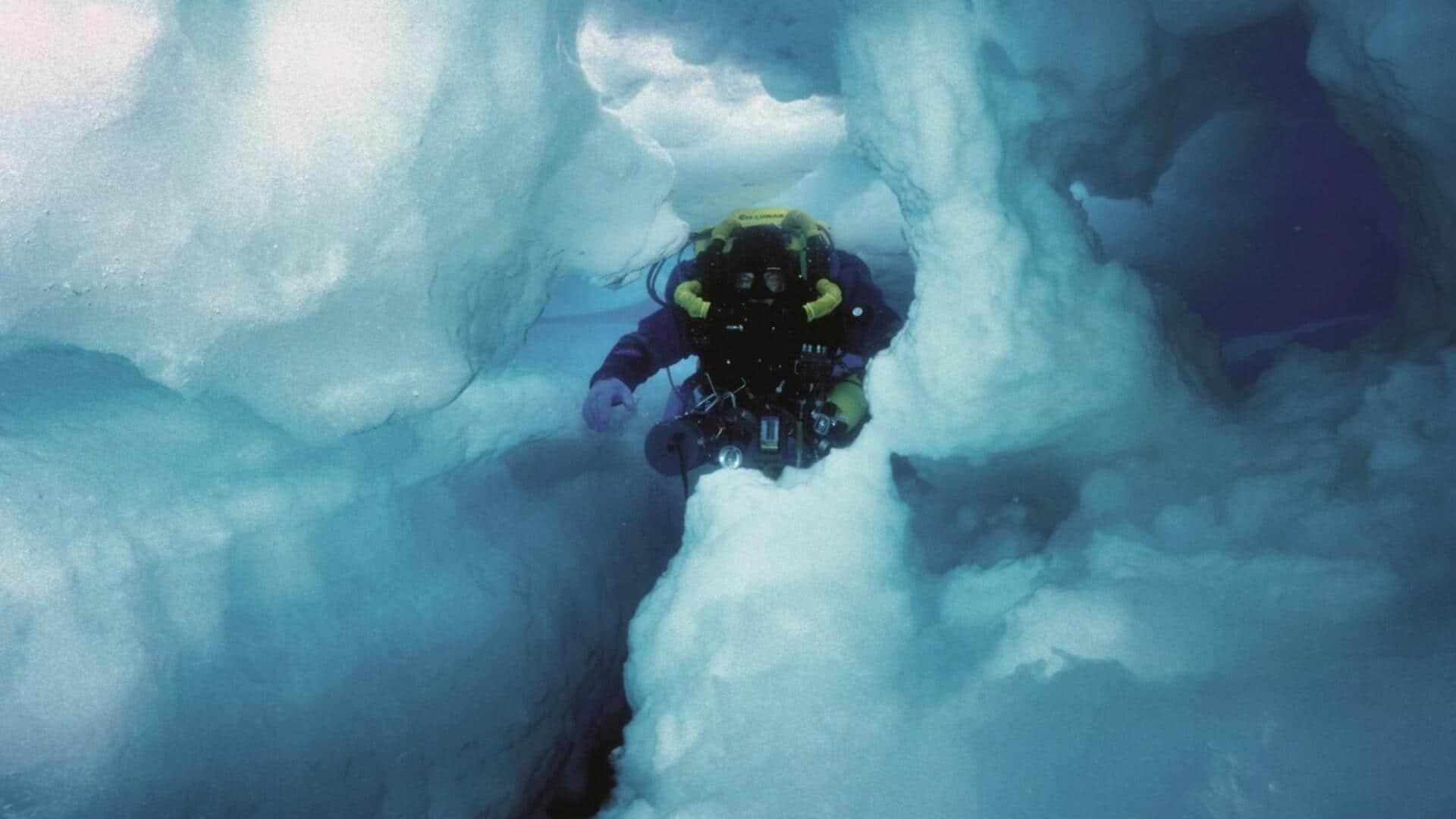
Hey divers, explored Antarctica's icebergs yet?
What's the story
Antarctica's remote icebergs provide a unique diving experience for those looking to explore the underwater wonders of this frozen continent. The icy waters are home to diverse marine life and stunning geological formations, making it an adventurous destination for experienced divers. However, the extreme conditions and isolation require careful planning and preparation. Here are some insights into diving Antarctica's icebergs, including what to expect and how to prepare for this extraordinary journey.
#1
Preparing for icy waters
Diving in Antarctica means facing frigid temperatures, which can be as low as -2 degrees Celsius.
To stay warm, divers should invest in high-quality dry suits with thermal undergarments. These suits keep water out and retain body heat, making it possible to dive for longer periods without risking hypothermia.
Also, divers should practice putting on their gear before the trip to ensure a proper fit and comfort.
#2
Understanding marine life
The waters around Antarctica's icebergs are teeming with life, from seals and penguins to various fish species.
Divers should familiarize themselves with these creatures to ensure safe interactions during their dives.
Knowing the behavior of local wildlife can help divers avoid disturbing natural habitats while maximizing opportunities for observation.
#3
Navigating iceberg formations
Icebergs present unique challenges and opportunities for divers.
Their formations can create stunning underwater vistas but also pose navigation hazards due to shifting ice and currents.
Divers should be trained in navigating these environments, using reliable maps or guides familiar with current conditions.
Understanding how icebergs move is crucial for safety.
#4
Safety measures in extreme conditions
Safety is paramount when diving in remote areas like Antarctica's icebergs.
Divers should always have a buddy system in place, ensuring that someone is monitoring them at all times underwater or on the surface.
Communication devices are essential, as they allow quick contact with support teams if needed.
Regular equipment checks before each dive help prevent malfunctions under extreme conditions.