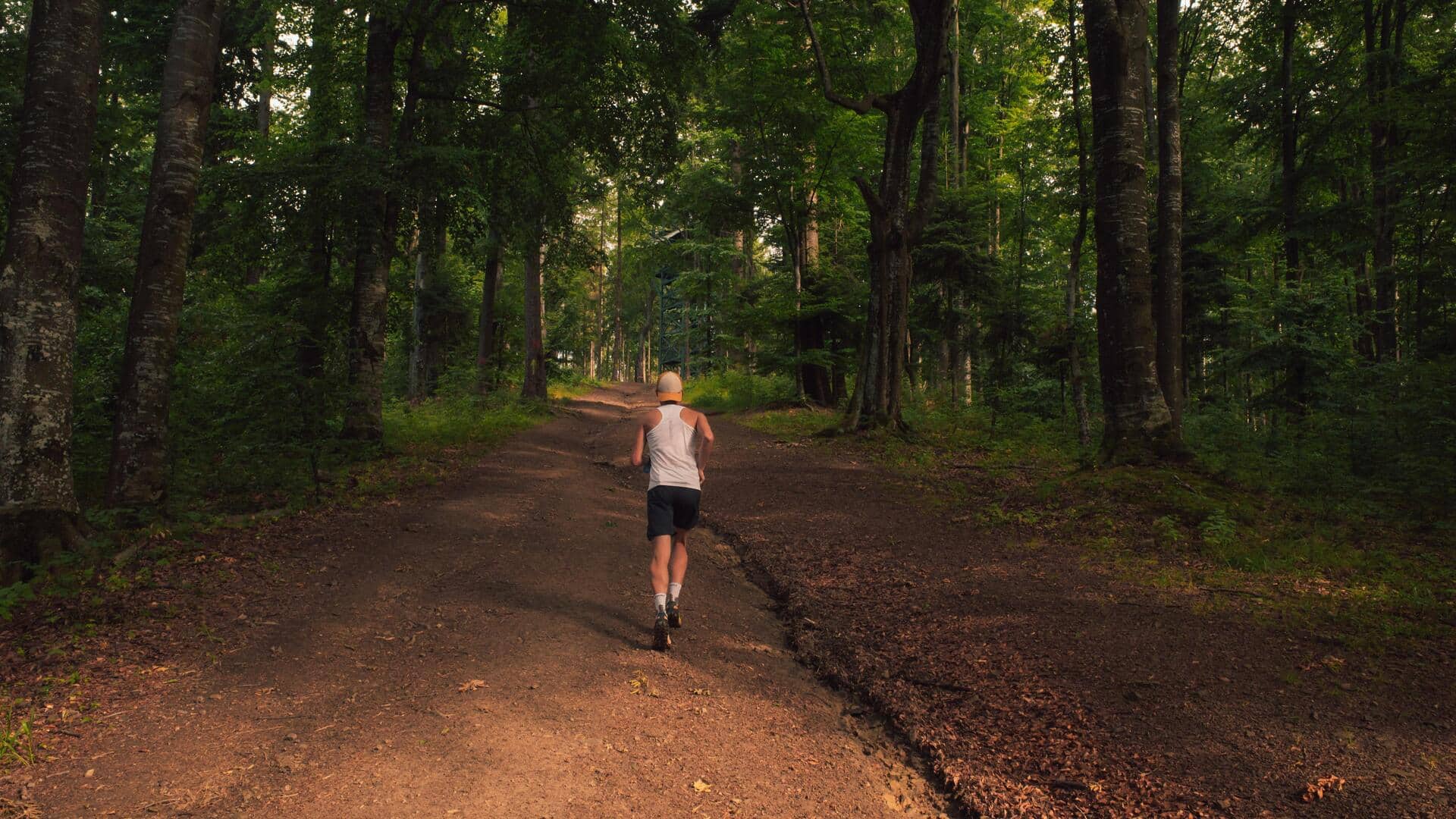
Looking for a better run? Head to the forest
What's the story
Forest trail running is more than just a workout; it's a way to connect with nature. Unlike urban runs, forest trails provide a unique experience that can benefit both the body and mind. The natural environment, varied terrain, and fresh air make it an ideal setting for runners looking to enhance their fitness and mental well-being. Here are five surprising benefits of forest trail running.
#1
Boosts cardiovascular health
Running on forest trails helps improve cardiovascular health by increasing heart rate variability and lowering blood pressure.
The varied terrain of forest trails also requires more effort than flat surfaces, which helps strengthen the heart muscle.
The fresh air in forests also aids in better oxygen intake, contributing to overall cardiovascular efficiency.
#2
Enhances mental well-being
Forest trail running can significantly enhance mental well-being.
The serene environment of lush greenery, and the absence of urban noise, can reduce stress levels by up to 30%.
This form of exercise also promotes the release of endorphins, which are natural mood lifters.
As a result, runners often experience a marked improvement in their mood and a reduction in symptoms related to anxiety and depression.
#3
Strengthens muscles and joints
The uneven surfaces of forest trails provide a natural way to strengthen muscles and joints.
Running on these surfaces engages different muscle groups compared to running on roads or treadmills.
This not only improves muscle tone but also enhances joint stability, reducing the risk of injuries over time.
#4
Increases calorie burn
Forest trail running generally results in a higher calorie burn than road running, thanks to its varied terrain.
The uphill climbs and descents require more energy, resulting in an increased metabolic rate during and after the run.
This makes it an effective way to manage weight or lose weight, if that is your goal.
#5
Improves balance and coordination
Navigating through forest trails requires constant adjustments in balance and coordination due to obstacles like roots or rocks.
These challenges improve proprioception—the body's ability to sense movement—and enhance coordination skills over time.
Runners often find themselves becoming more agile as they adapt to these natural hurdles.