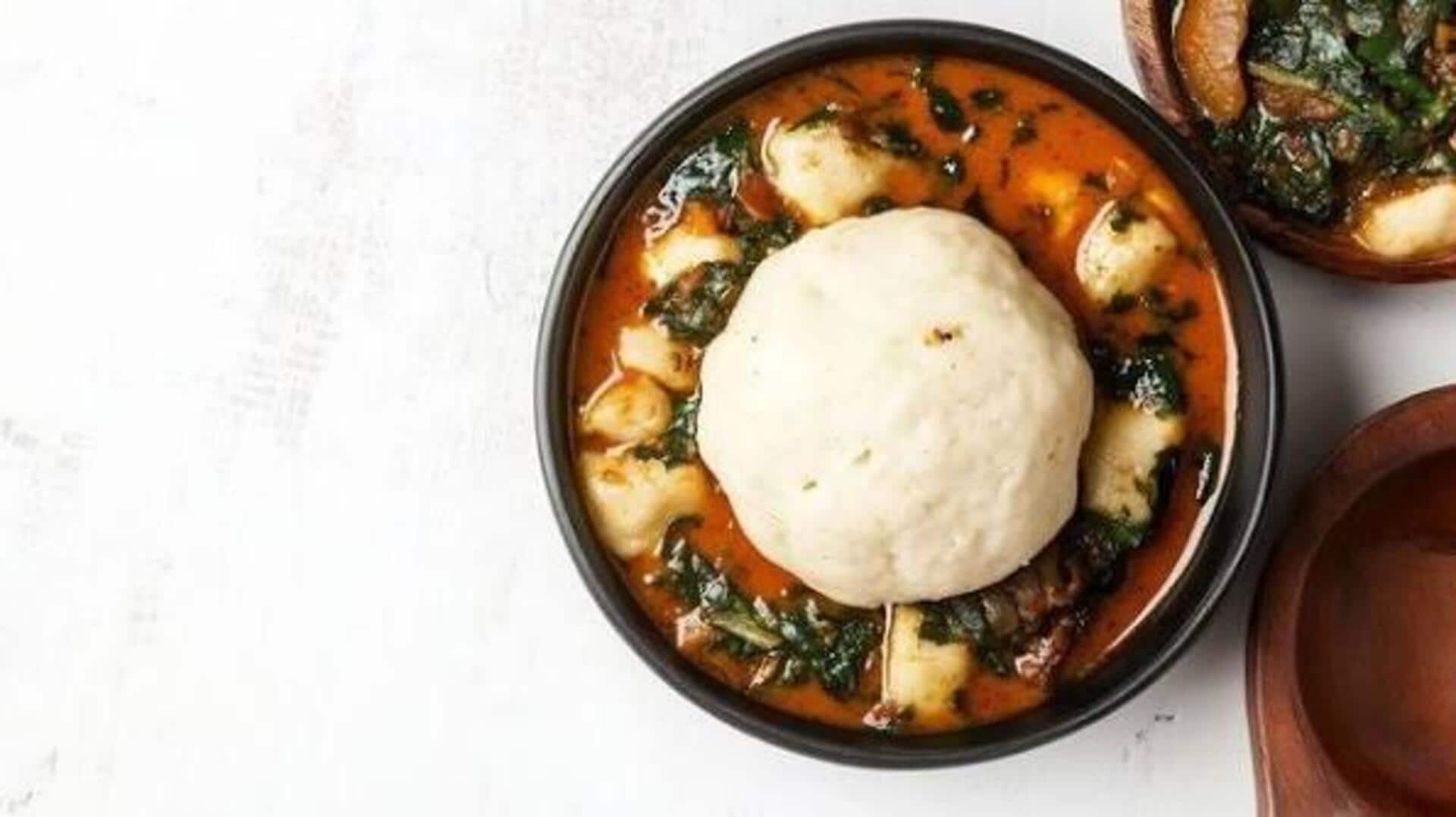
5 unique fufu recipes from Africa
What's the story
Fufu, a staple dish in many African countries, is prepared by pounding starchy foods into a smooth, dough-like consistency. While the dish is similar across cultures, each region has its own unique twist to it. From the type of starch used to the method of preparation, fufu variations reflect the diverse culinary traditions of Africa. Here are five unique fufu variations from different African cultures.
#1
Cassava fufu: A West African staple
Cassava fufu is a common dish in many West African countries, including Nigeria and Ghana.
It is prepared by fermenting cassava and then pounding it until smooth.
The fermentation gives the fufu a slightly sour taste, which goes well with spicy soups and stews.
This version of fufu is popular for its versatility and ability to soak up rich flavors.
#2
Plantain fufu: A sweet twist
Plantain fufu is another delicious variation that adds a hint of sweetness to the dish.
Commonly found in Central Africa, ripe plantains are boiled and then pounded into a smooth paste.
This version goes well with savory dishes, as the natural sweetness of the plantains balances out spicy or tangy flavors.
#3
Yam fufu: A hearty choice
Yam fufu is a favorite in many parts of West Africa, including Nigeria and Cameroon.
The yams are boiled until soft and then pounded into a thick paste.
This hearty version is known for its creamy texture and earthy flavor, making it an ideal accompaniment to robust soups and stews.
#4
Cocoyam fufu: A nutritious option
Cocoyam fufu provides a nutritious alternative to other starches used in preparing this dish.
Commonly eaten in parts of West Africa, cocoyams are boiled until tender and pounded into a smooth consistency.
Rich in vitamins and minerals, cocoyam adds nutritional value without compromising on taste.
#5
Sorghum fufu: A gluten-free choice
Sorghum fufu provides a gluten-free option for those with dietary restrictions or preferences.
Commonly eaten in Eastern Africa, sorghum flour is mixed with water and pounded into a dough-like consistency.
This version has a mild flavor that goes well with lighter broths or vegetable-based dishes, while still providing the traditional fufu experience.