
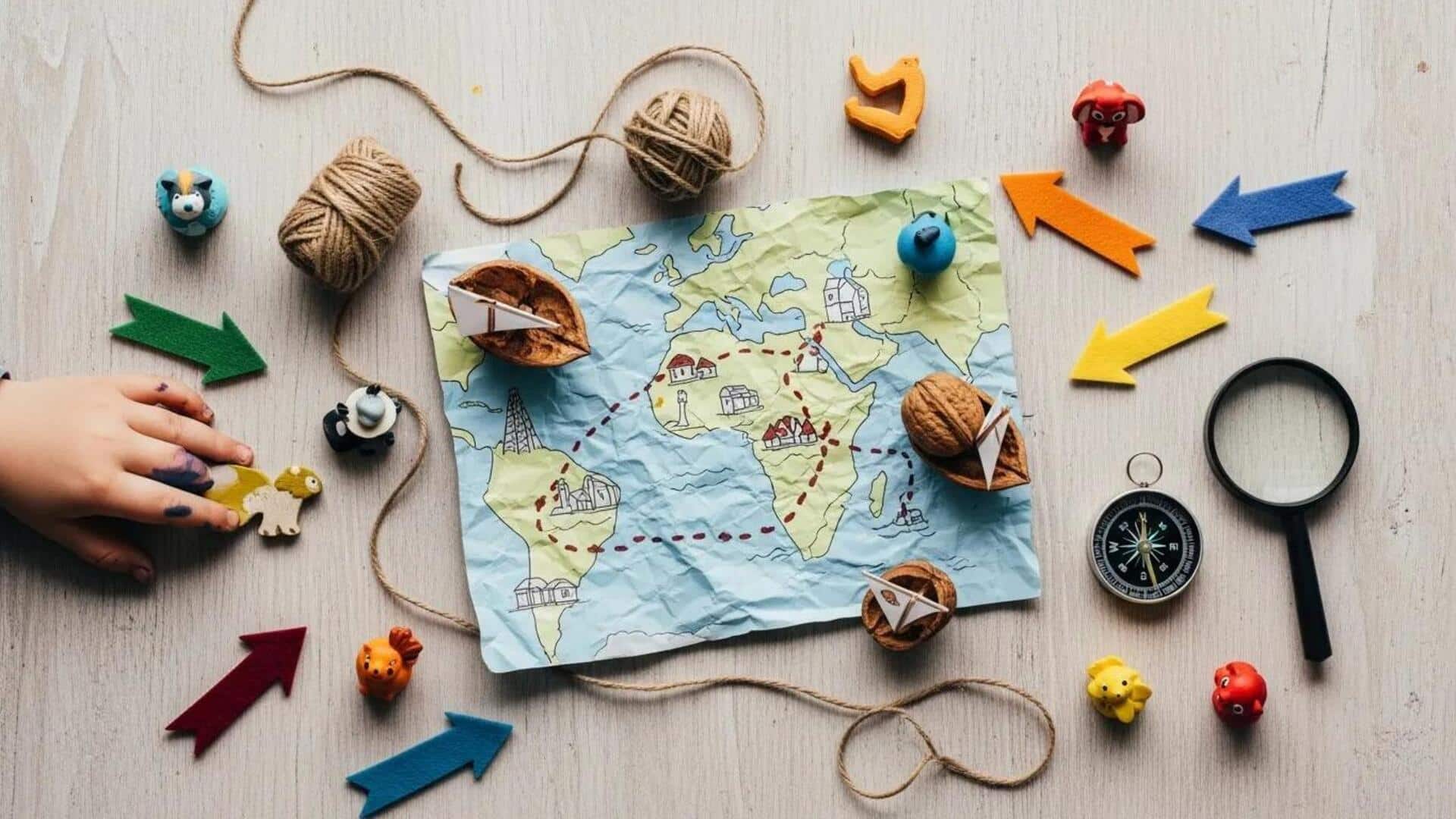
These map-making activities can improve your child's focus
What's the story
Engaging children in creative activities can significantly enhance their focus and concentration. Mapmaking activities, in particular, offer a unique way for kids to explore their surroundings, develop spatial awareness, and improve their cognitive skills. By participating in these activities, children can learn to pay attention to detail and think critically. Here are five creative mapmaking activities that can help improve your child's focus while making learning fun and interactive.
Activity 1
Create a treasure map adventure
Creating a treasure map is an exciting activity that requires kids to pay attention to detail. They can draw their own neighborhood or a fictional land, marking important landmarks like schools, parks, or secret hiding spots. This activity encourages them to visualize spaces and think critically about how different locations relate to each other. It also sparks imagination as they design routes leading to hidden treasures.
Activity 2
Design a personal journey map
Designing a personal journey map helps kids reflect on their daily routines or memorable trips. They can illustrate key places they visit regularly or significant destinations from past adventures. This activity promotes mindfulness as children consider the sequence of events in their day-to-day lives or travel experiences. It also enhances organizational skills by requiring them to arrange information logically on the map.
Activity 3
Illustrate an imaginary world map
Encouraging children to illustrate an imaginary world map lets them unleash their creativity without any boundaries. They can invent continents, oceans, and unique terrains while populating these with fantastical creatures and cities. This exercise not only hones artistic skills but also demands sustained concentration as children meticulously craft every detail of their imaginary universe.
Activity 4
Map out a family tree visually
Mapping out a family tree visually offers children an opportunity to learn about family history while practicing focus-oriented tasks such as drawing lines connecting relatives accurately over generations. This activity fosters patience since it requires careful planning before execution; kids must think about how best represent relationships visually on paper.
Activity 5
Plan an eco-friendly city layout
Planning an eco-friendly city layout challenges children to think about sustainability while designing urban spaces thoughtfully. They must consider factors like green spaces, public transport routes, and energy-efficient buildings. All of this requires heightened focus throughout the planning process. It culminates in a cohesive city model, one that balances environmental considerations with practical urban needs effectively.