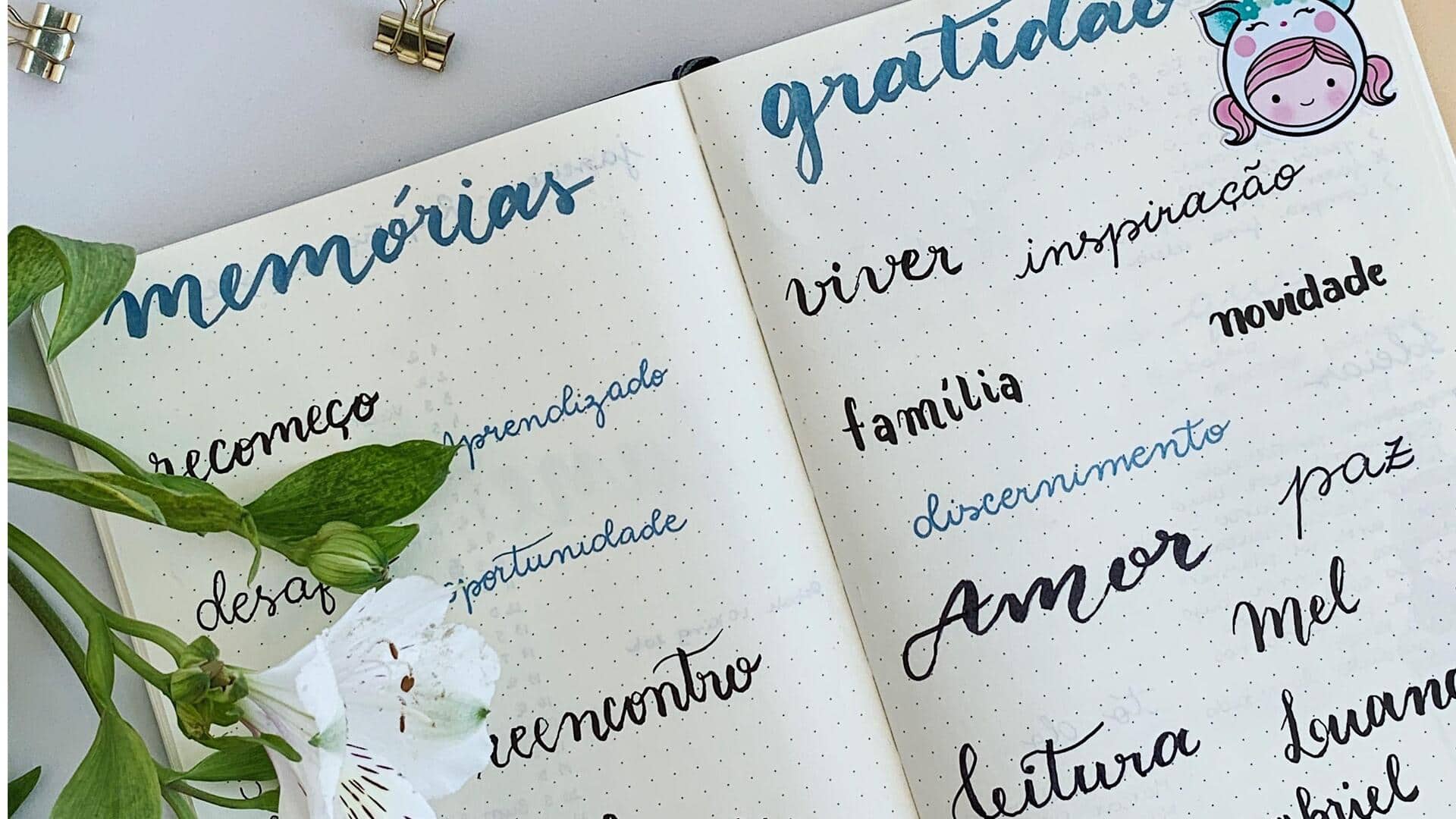
How gratitude journaling can change your mindset
What's the story
Gratitude journaling is a simple yet powerful practice that can transform your mindset. By regularly noting things you are grateful for, you can develop a more positive outlook on life. This habit encourages mindfulness and helps you focus on the present moment. It can improve mental health, boost your mood, and even enhance relationships. Here's how you can get started with gratitude journaling effectively.
Tip 1
Start with small steps
Begin your gratitude journaling journey by writing down three things each day that you are thankful for.
These can be as simple as a sunny day or a kind gesture from someone.
The key is consistency; try to make this a daily habit.
Over time, this practice will train your mind to focus on positive aspects of life, even during challenging times.
Tip 2
Use prompts for inspiration
Sometimes, finding the right words to express gratitude can be difficult.
Using prompts can help guide your thoughts and make journaling easier.
Prompts like "What made you smile today?" or "Who helped you recently?" can give you direction and keep your entries varied.
They also encourage deeper reflection and help you discover new things to be grateful for.
Tip 3
Reflect on personal growth
Take time to reflect on how far you've come in life by noting down moments of personal growth or achievements, no matter how small.
This could be overcoming a fear, learning a new skill, or simply getting through a tough day.
Recognizing these milestones helps reinforce self-worth and encourages continued progress.
Tip 4
Share your gratitude with others
Sharing your gratitude can deepen connections with others and spread positivity around you.
Consider sending a note or message expressing thanks to someone who has made a difference in your life.
Not only does this strengthen relationships, it also reinforces your own feelings of gratitude by acknowledging the contributions of others.
Tip 5
Create a positive environment
Enhance your gratitude journaling experience by creating an inviting environment.
Choose a comfortable spot where you can focus without distractions.
Surround yourself with items that uplift you, be it plants or artwork, to make the space more enjoyable.
This setting encourages regular practice and helps you maintain a positive mindset.