Greece's top UNESCO World Heritage sites: A list
What's the story
Greece is home to some of the most culturally rich and historically significant UNESCO World Heritage Sites. These sites give a glimpse into the ancient civilization and its contributions to the world. From architectural marvels to natural wonders, each site narrates a different story of Greece's glorious past. Here's a look at some of these iconic sites and what makes them special.
#1
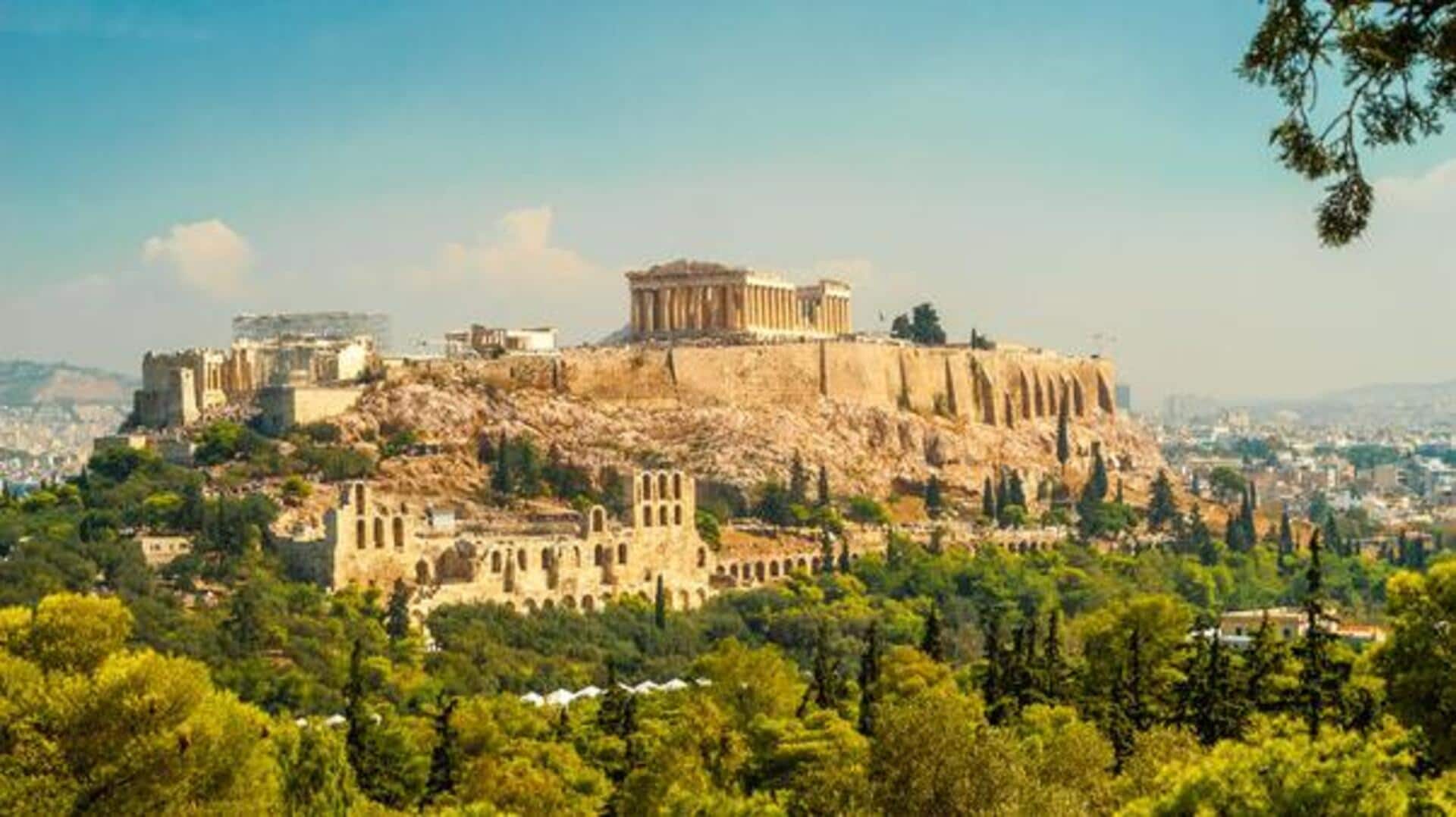
The Acropolis of Athens
The Acropolis of Athens is one of the most famous landmarks in Greece. It is a symbol of ancient Greek civilization and democracy.
The site features several important structures, including the Parthenon, which was dedicated to the goddess Athena.
The Acropolis offers stunning views of Athens and is an important archaeological site that attracts millions of visitors every year.
#2
Delphi: The ancient oracle
Delphi was once considered the center of the world by ancient Greeks.
Famous for its oracle, who was believed to deliver prophecies from Apollo himself, this site is surrounded by breathtaking mountains and ruins of temples and theaters.
Visitors can explore these ancient structures and learn about their significance in Greek mythology and history.
#3
Meteora: Monasteries on rock pillars
Meteora is famous for its monasteries perched on top of towering rock pillars. This UNESCO site is an example of human ingenuity blending with nature's beauty.
The six active monasteries provide stunning views and a peek into monastic life in medieval Greece.
Visitors can explore these spiritual retreats while enjoying scenic trails around the area.
#4
Sanctuary of Asklepios at Epidaurus
The Sanctuary of Asklepios at Epidaurus was an important healing center in antiquity, dedicated to Asklepios, the god of medicine.
The site features well-preserved ruins, including a theater famous for its acoustics, where performances are still held today during festivals dedicated to ancient drama.
#5
Archaeological site of Olympia
Olympia was home to one of the most important religious sanctuaries dedicated to Zeus and the birthplace of the Olympic Games in antiquity.
The archaeological site has temples, altars, and athletic facilities where athletes competed every four years in honor of Zeus.
Today, it remains a testament to Greece's athletic heritage, drawing visitors from around the world who come to explore its historical significance.