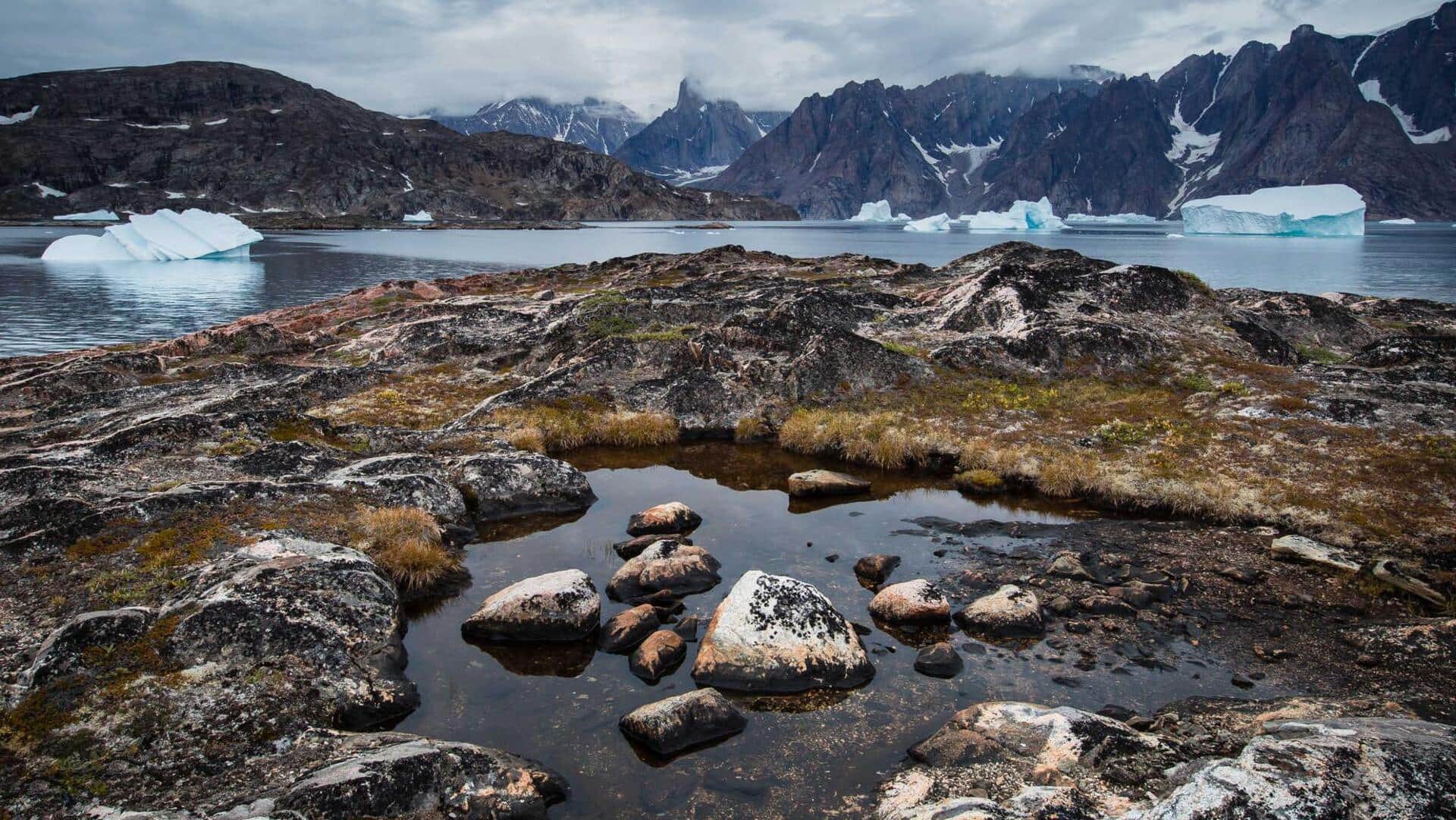
Greenland's east coast: A trekker's paradise
What's the story
Greenland's East Coast is a remote and rugged terrain, offering a unique trekking experience to adventurers. This part of the world is known for its stunning landscapes, including towering cliffs, vast ice fields, and pristine fjords. The trek here is not just about physical endurance, but also about immersing oneself in the natural beauty and solitude that this region offers. Here are some insights into exploring this untouched wilderness.
Trail navigation
Navigating remote trails
Navigating trails on Greenland's East Coast requires proper planning and preparation.
The trails are often unmarked and challenging, so it is important to have a reliable map and GPS device.
Trekkers should also be prepared for rapidly changing weather conditions, which can affect visibility and trail accessibility.
It is advisable to check weather forecasts regularly and adjust plans accordingly.
Wildlife encounters
Encountering unique wildlife
Greenland's East Coast is home to a variety of wildlife, including seals, whales, and various bird species.
While trekking, adventurers may have the opportunity to observe these animals in their natural habitat.
However, it is important to maintain a respectful distance from wildlife to avoid disturbing them.
Using binoculars or a camera with zoom capabilities can enhance the experience without intruding on their space.
Weather preparation
Preparing for extreme weather conditions
The weather on Greenland's East Coast can be extreme and unpredictable.
Temperatures can vary widely even within a single day, so layering clothing is essential for comfort.
Waterproof gear is also crucial, as rain or snow can occur at any time.
Trekkers should pack high-quality gear designed for cold climates to ensure safety during their journey.
Cultural insights
Understanding cultural significance
Exploring Greenland's East Coast also means understanding its cultural significance to the indigenous communities living there.
These communities have a rich history and connection to the land, which can be learned through local guides or literature before embarking on your trek.
Respecting cultural sites along your journey enhances both personal growth and appreciation of this unique region.