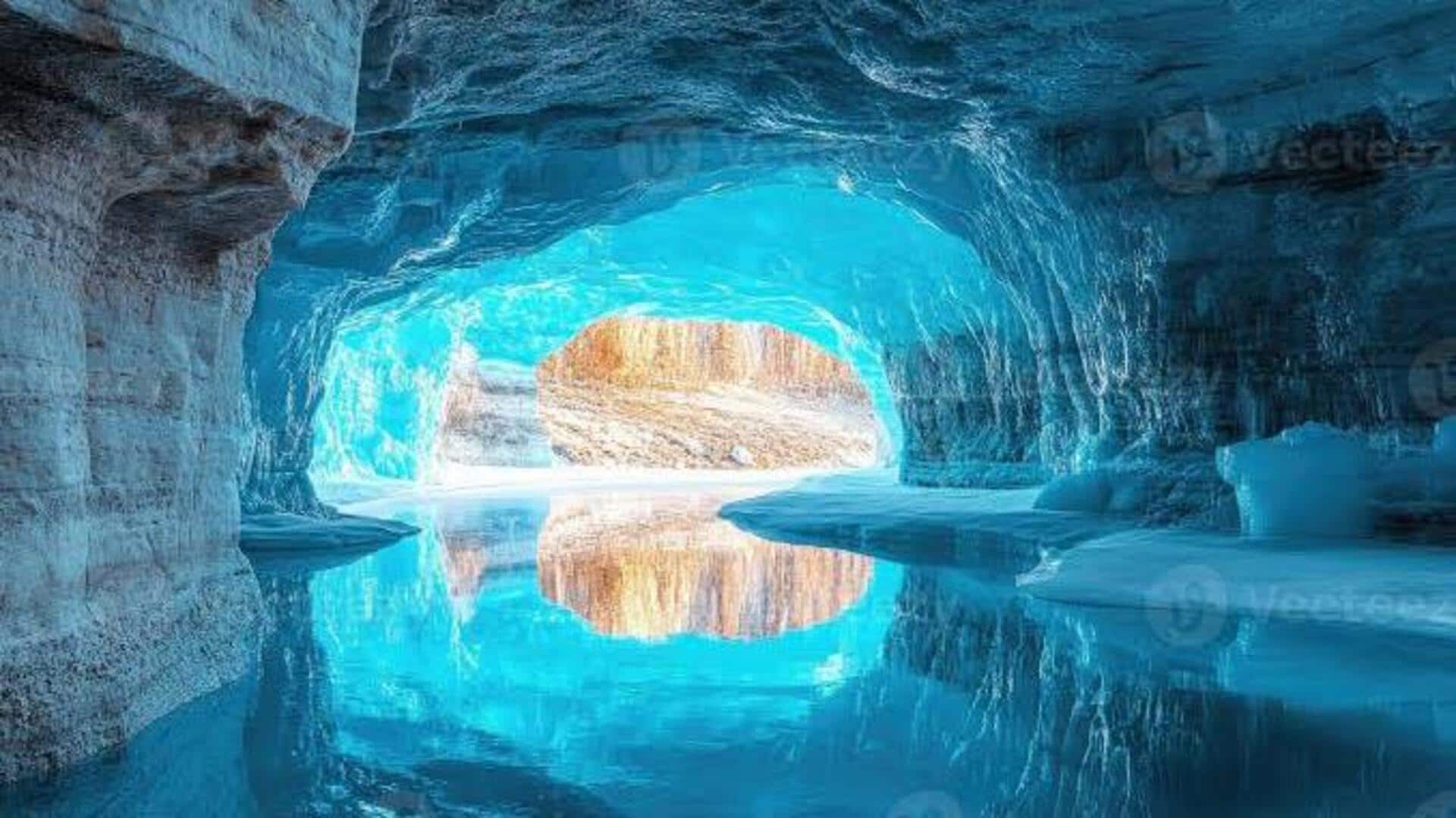
You must explore Greenland's ice caves at least once
What's the story
Greenland's ice caves are a one-of-a-kind adventure for those looking for something different. These natural wonders, hidden under glaciers, provide a glimpse into the Earth's frozen beauty. Exploring these caves is not only an adventure but also a chance to witness the effects of climate change on these majestic formations. With their stunning ice formations and serene atmosphere, Greenland's ice caves are a must-visit for adventurers.
#1
How to reach Greenland's ice caves
Reaching Greenland's ice caves involves some planning.
Most travelers fly into Nuuk, the capital, before heading to smaller towns like Ilulissat or Kangerlussuaq.
From there, guided tours are the best way to access the caves, as they provide necessary equipment and expertise.
The tours usually include snowmobiles or dog sleds during winter months, when roads are inaccessible.
#2
Best time to visit the caves
The best time to visit Greenland's ice caves is during summer, when temperatures are milder, and days are longer.
This period allows for easier access and better visibility inside the caves.
However, if you prefer fewer crowds and do not mind colder weather, visiting during late spring or early fall can also be rewarding experiences.
#3
Safety tips for exploring ice caves
Safety should be your top priority while exploring ice caves.
Always go with a guide who knows the terrain and potential hazards, like falling ice or unstable ground.
Wear appropriate clothing in layers to deal with changing temperatures, and sturdy footwear for slippery surfaces.
Carry necessary gear, like helmets with headlamps, for illumination in dim areas.
Tip 1
Photography tips inside ice caves
Capturing the beauty of Greenland's ice caves requires some photography tips, given the unique lighting conditions and reflective surfaces inside these natural wonders.
Use a tripod for stability in low-light situations, and adjust your camera settings accordingly to capture the intricate details of ice formations without overexposing them due to glare from reflective surfaces.