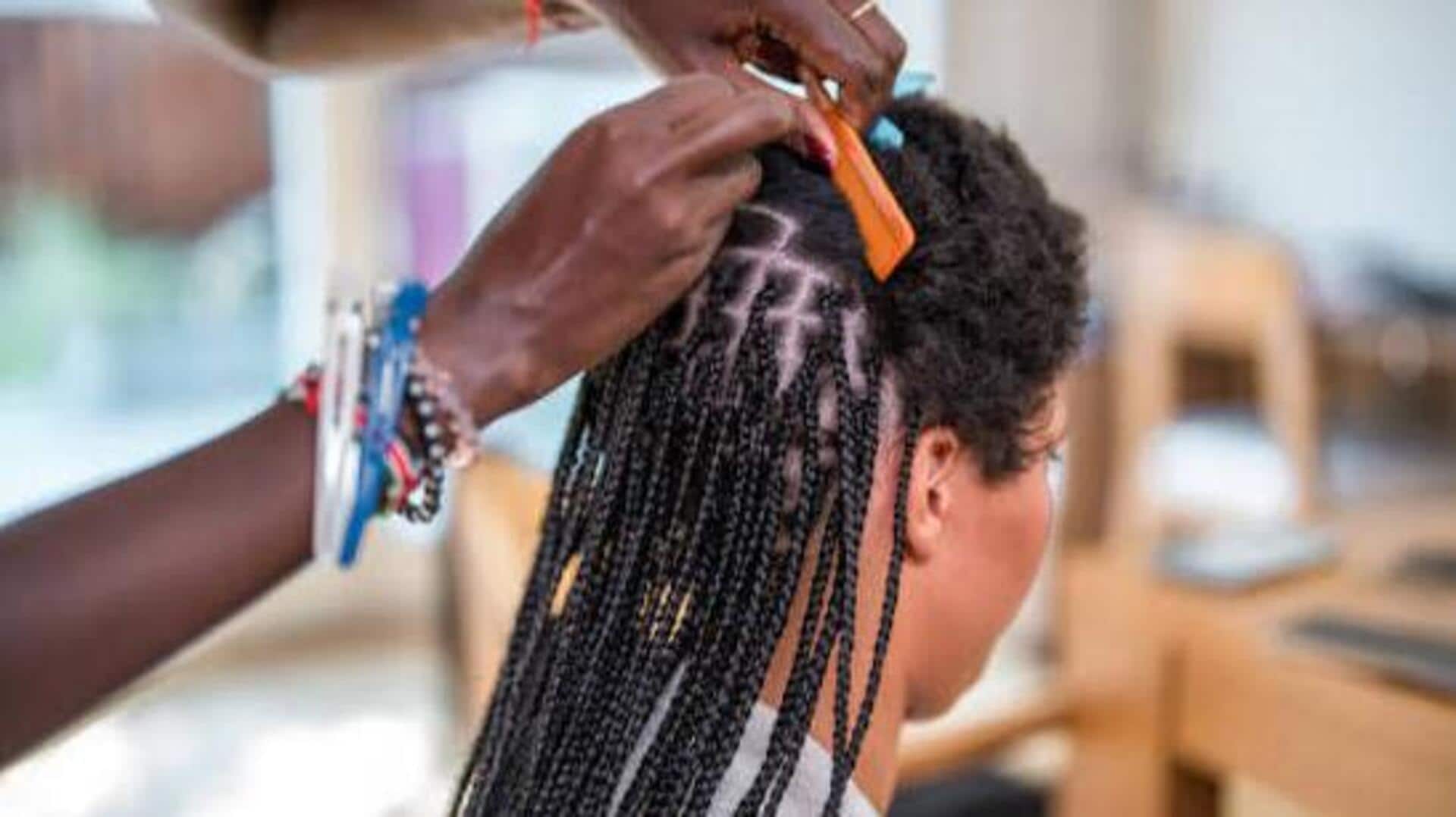
Hair threading: The age-old method of styling and protecting hair
What's the story
African Fulani hair threading is an age-old beauty practice, which has been passed down generations. It is a traditional method of styling hair, which is known to promote healthy growth and maintain the natural texture of hair. Using colorful threads, this technique not only adds to the aesthetic appeal but also protects the hair from damage. Here are the insights into this fascinating practice and its benefits.
Technique
The art of hair threading
Hair threading involves wrapping strands of hair with colorful threads in intricate patterns.
The process requires skill and patience, as each thread is carefully placed to create a desired design.
This technique helps in reducing breakage by minimizing friction on the hair shaft.
The threads also act as a protective barrier against environmental factors that can harm the hair.
Advantages
Benefits of Fulani hair threading
Fulani hair threading offers several benefits for those looking to maintain healthy locks.
It helps retain moisture by reducing exposure to air and humidity, which can dry out hair over time.
Additionally, this method encourages natural hair growth by preventing tangles and knots that often lead to breakage.
The vibrant colors used in threading also allow for personal expression without altering natural pigmentation.
Essentials
Tools needed for threading
To get started with Fulani hair threading, you will need some basic tools.
Colorful cotton or silk threads are the most important, as they are gentle on the scalp and do not cause irritation.
A wide-toothed comb is also essential to detangle hair before beginning the process.
Finally, small scissors are required to trim excess thread after completing each section.
Care tips
Tips for maintaining threaded hair
Once your Fulani-style threaded hair is done, you must take care of it to keep it looking good and healthy.
Keep your scalp moisturized with natural oils like coconut or olive oil, which nourish without weighing down your strands.
Avoid tight hairstyles that could cause tension on your scalp over time, and opt instead for loose buns or ponytails when necessary.