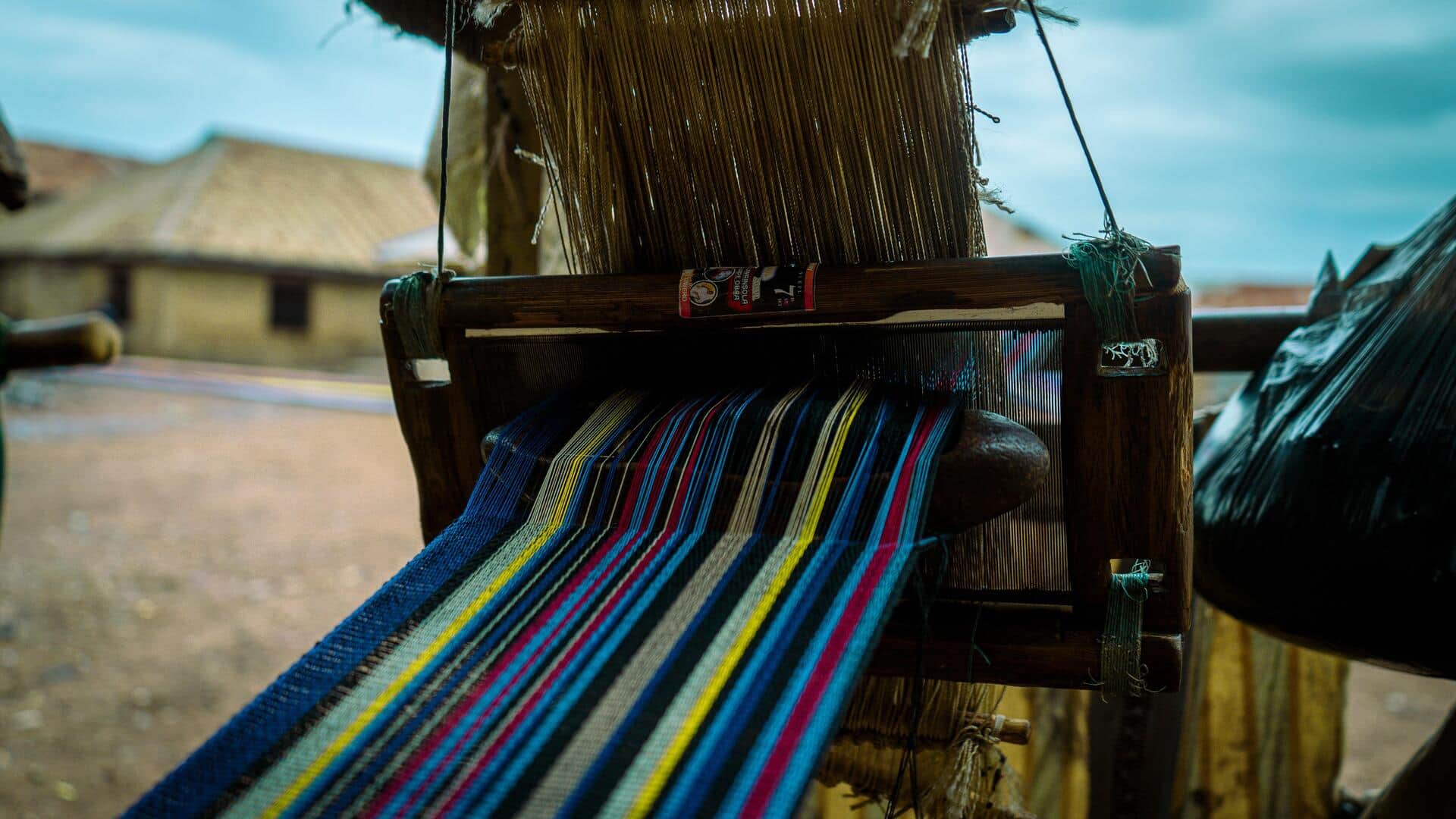
Handloom weaving: A traditional craft for a greener future
What's the story
Handloom weaving is an ancient craft that has been passed down through generations. It is a sustainable art form that promotes eco-friendly practices by using natural fibers and minimal machinery. By learning handloom weaving, you can contribute to environmental conservation while also preserving cultural heritage. This guide provides insights into the basics of handloom weaving, its environmental benefits, and how you can get started with this timeless craft.
#1
Understanding handloom weaving basics
Handloom weaving involves interlacing threads to create fabric without the use of power looms.
The process is simple yet intricate, requiring skill and patience.
The basic tools include a loom, shuttle, warp threads, and weft threads.
The loom serves as the framework where threads are held taut; shuttles carry weft threads across the warp threads to form patterns or designs.
#2
Environmental benefits of handloom weaving
Handloom weaving is also a sustainable practice as it uses natural fibers like cotton, silk, and wool.
These materials are biodegradable and have a lower carbon footprint than synthetic alternatives.
Plus, handloom production is often done on a small scale with less energy consumption than industrial textile manufacturing.
This helps reduce pollution and conserve resources.
#3
Getting started with handloom weaving
To start handloom weaving, you need a few basic tools. These include a small loom or frame, yarn in different colors or textures, shuttles, and scissors.
Shuttles help carry yarn across the warp threads. Use scissors to cut excess yarn as you complete each row or design.
#4
Preserving cultural heritage through weaving
Weaving has been an integral part of cultural traditions across the globe for centuries.
By learning this craft, you not only keep these traditions alive but also connect with communities that have been practicing it for generations.
You can also support local artisans by purchasing handmade textiles, which helps keep these traditions alive while promoting sustainable fashion choices among consumers today.