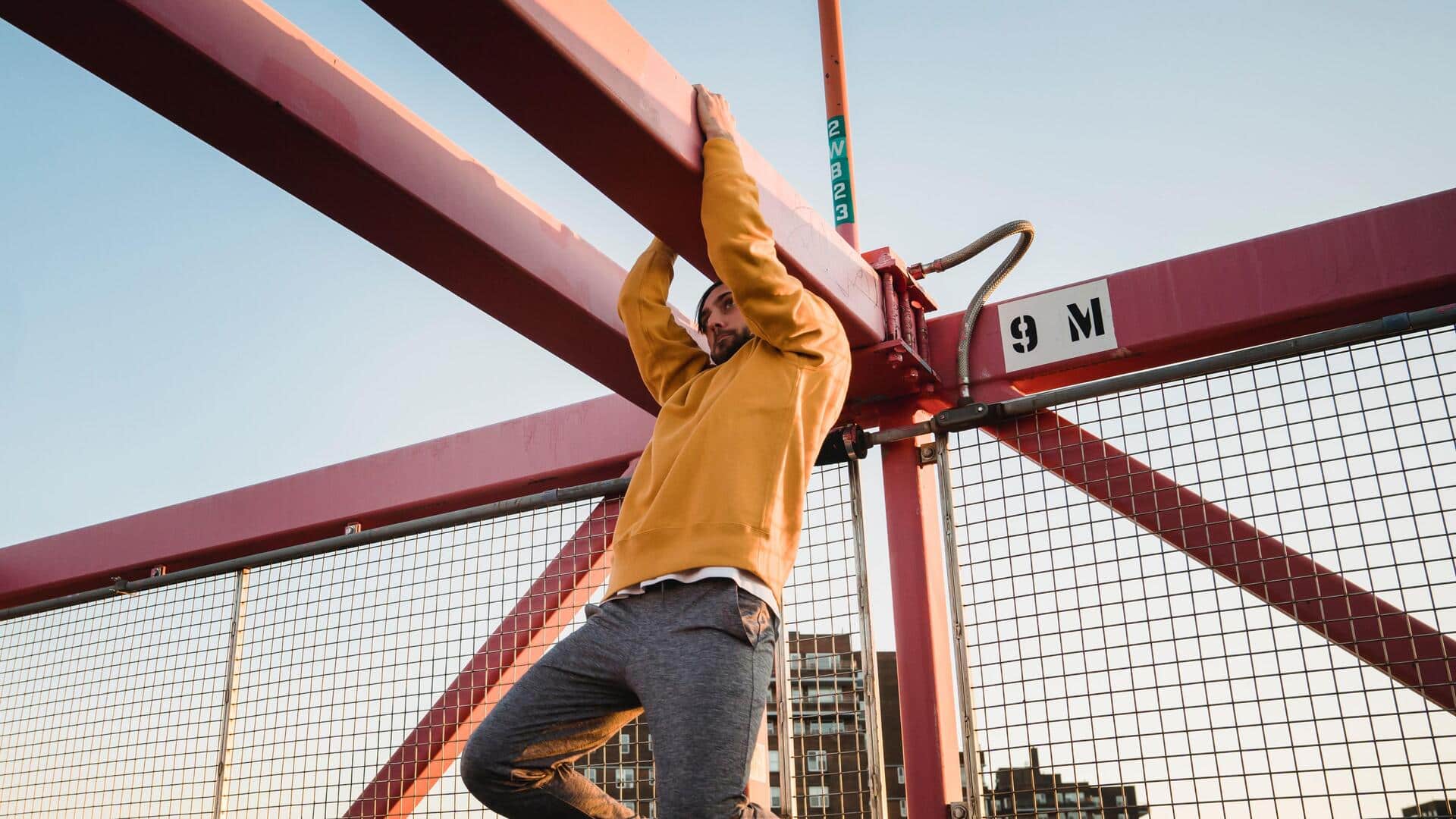
Hanging leg raises: A core strength game-changer
What's the story
Hanging leg raises are an effective exercise for building core strength. They target the abdominal muscles, hip flexors, and lower back. By hanging from a bar, you engage multiple muscle groups, making it a compound movement that promotes overall core stability. This exercise is beneficial for those looking to enhance their athletic performance or improve their posture. Here are some insights on incorporating hanging leg raises into your routine.
Tip 1
Proper form and technique
Maintaining proper form during hanging leg raises is crucial to avoid injury and maximize effectiveness.
Start by gripping the bar with an overhand grip, hands shoulder-width apart.
Let your body hang freely, with arms fully extended.
Engage your core by pulling your belly button toward your spine before raising your legs.
Keep your knees slightly bent, if needed, to maintain control throughout the movement.
Tip 2
Variations to increase difficulty
To further challenge yourself, try different variations of hanging leg raises.
One option is to perform them with bent knees, gradually progressing to straight legs as you gain strength.
Another variation involves adding twists at the top of each raise to engage oblique muscles more intensely.
These modifications can help prevent plateaus in strength development and keep workouts engaging.
Tip 3
Frequency and progression tips
Incorporate hanging leg raises into your routine two to three times a week for optimal results.
Start with sets of five to 10 repetitions, depending on your current fitness level, gradually increasing the number as you progress.
Consistency is key; aim for regular practice while ensuring adequate recovery time between sessions to allow muscles to repair and grow stronger.
Tip 4
Common mistakes to avoid
Avoid common mistakes like swinging or using momentum instead of controlled movements during hanging leg raises.
This can reduce effectiveness and increase the risk of injury. It may also strain your joints over time. Correct your form with guidance from an experienced trainer.