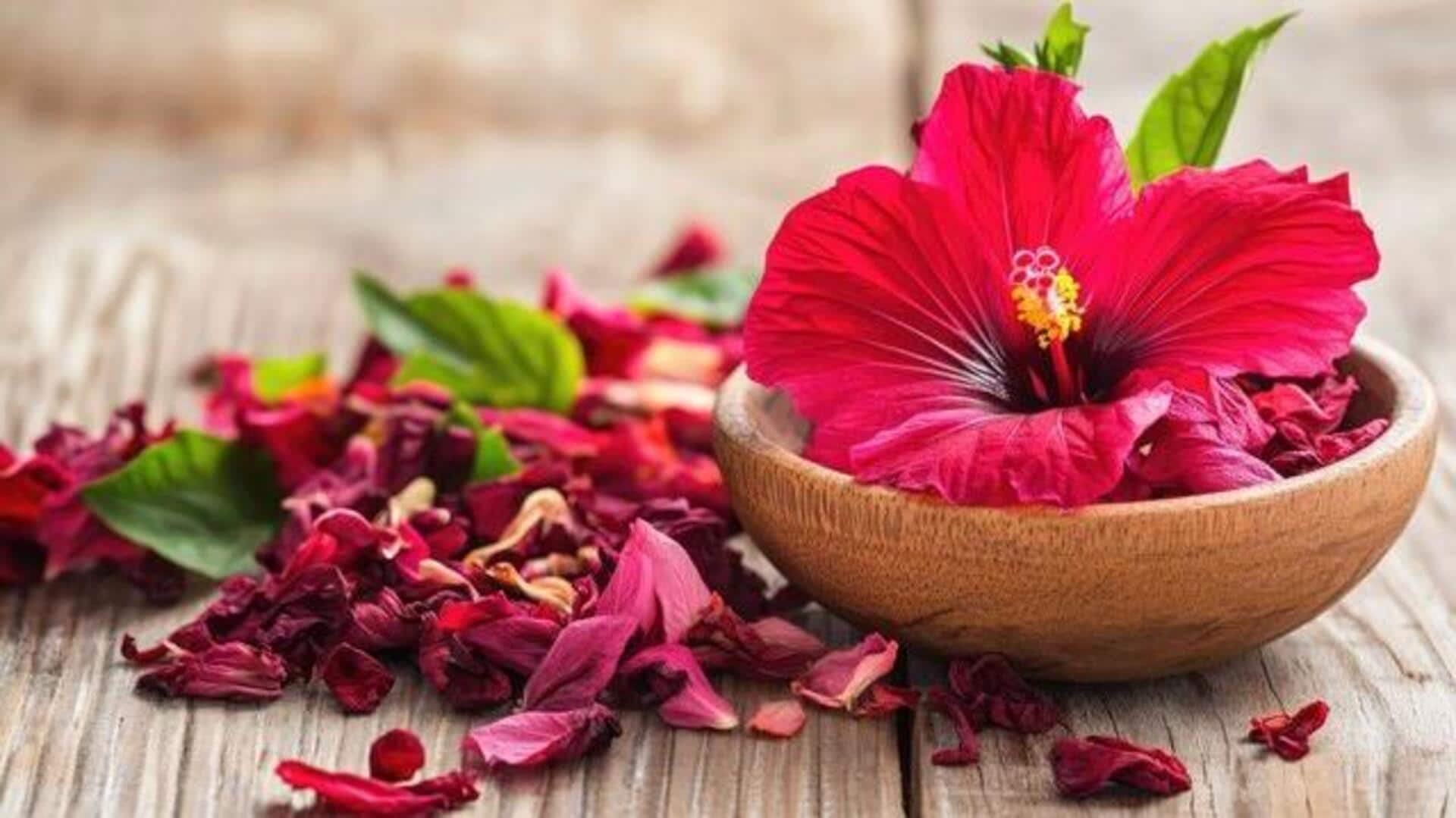
How to use hibiscus petals for glowing skin
What's the story
Hibiscus petals have been a part of African beauty rituals for centuries. The petals are packed with antioxidants and vitamins that promote healthy skin. From natural exfoliants to moisturizers, hibiscus petals can do it all. Here are some ways to incorporate hibiscus petals into your beauty routine, and get the most out of this natural ingredient.
Exfoliation
Natural exfoliant properties
Hibiscus petals can be used as a natural exfoliant, thanks to their alpha-hydroxy acids (AHAs). These acids help remove dead skin cells and promote cell renewal. By grinding dried hibiscus petals into a fine powder and mixing it with water or honey, you can create a gentle scrub that helps brighten the complexion and improve skin texture.
Antioxidants
Antioxidant benefits for skin health
Rich in antioxidants, hibiscus petals also protect the skin from free radicals and environmental damage. The antioxidants help reduce signs of aging, like fine lines and wrinkles. Applying a mask made from crushed hibiscus petals mixed with aloe vera gel or yogurt can give your skin an antioxidant boost.
Moisturizing
Moisturizing effects on dry skin
Hibiscus petals are known to be extremely hydrating, which is why they are perfect for dry skin. The mucilage content in the petals helps retain moisture, keeping the skin supple and soft. Mixing hibiscus petal extract with carrier oils, like coconut or olive oil, can give you an amazing moisturizer that deeply nourishes the skin without making it greasy.
Soothing
Soothing properties for sensitive skin
For those with sensitive or irritated skin, hibiscus petals can be a soothing solution. The anti-inflammatory properties of the petals calm redness and irritation, making them ideal for sensitive skin types. A calming face mask can be made by steeping fresh hibiscus petals in hot water, letting it cool, and applying it as a toner or compress on affected areas.