How to prepare for a Sahara hike
What's the story
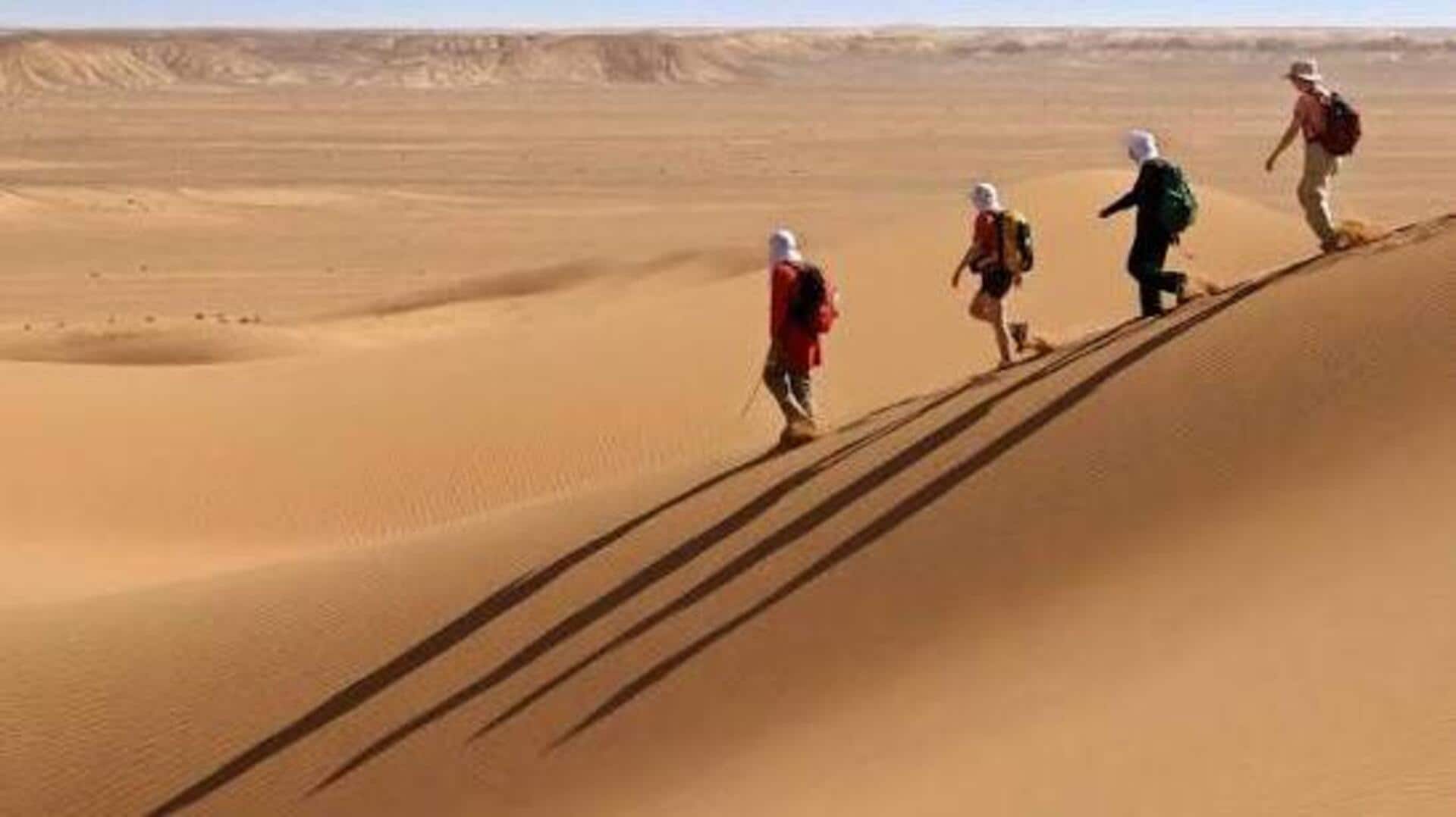
The Sahara Desert, the largest hot desert in the world, offers an exhilarating experience for those who love hiking. With its vast sand dunes and unique landscapes, the desert provides a challenging, yet rewarding, adventure. Hikers can explore the ever-changing terrain of the Sahara, witnessing stunning sunsets and sunrises over endless sands. This article delves into practical insights for those looking to embark on a hiking journey in this iconic desert.
Timing
Choosing the right time to visit
Selecting the right time to visit is crucial when planning a hike in the Sahara Desert.
The best months are from October to April, when temperatures are cooler and more manageable.
During these months, daytime temperatures are relatively mild, making it easier for hikers to explore without risking heat exhaustion.
Avoiding summer months is important, as temperatures can soar above 50 degrees Celsius.
Gear
Essential gear for desert hiking
Proper gear is essential for a successful hike in the Sahara.
Lightweight clothing that covers skin helps protect against sunburn while allowing sweat evaporation.
A wide-brimmed hat and sunglasses provide additional protection from sunlight.
Sturdy boots with good grip are necessary for walking on sandy terrain.
Carrying plenty of water and high-energy snacks ensures hydration and sustenance during long treks.
Culture
Understanding local culture and customs
Familiarizing yourself with local culture is important when hiking in the Sahara Desert region.
Many areas are inhabited by nomadic tribes who have lived there for centuries.
Respecting their customs and traditions enhances your experience while promoting cultural exchange.
Learning basic phrases in local languages can help facilitate communication with locals you may encounter during your journey.
Navigation
Navigating safely through sand dunes
Navigating through sand dunes requires careful planning and awareness of your surroundings.
Using maps or GPS devices helps ensure you stay on course amid shifting sands that can easily alter familiar landmarks.
It is advisable to travel during daylight hours only, as visibility decreases significantly after sunset, making navigation more challenging at night.