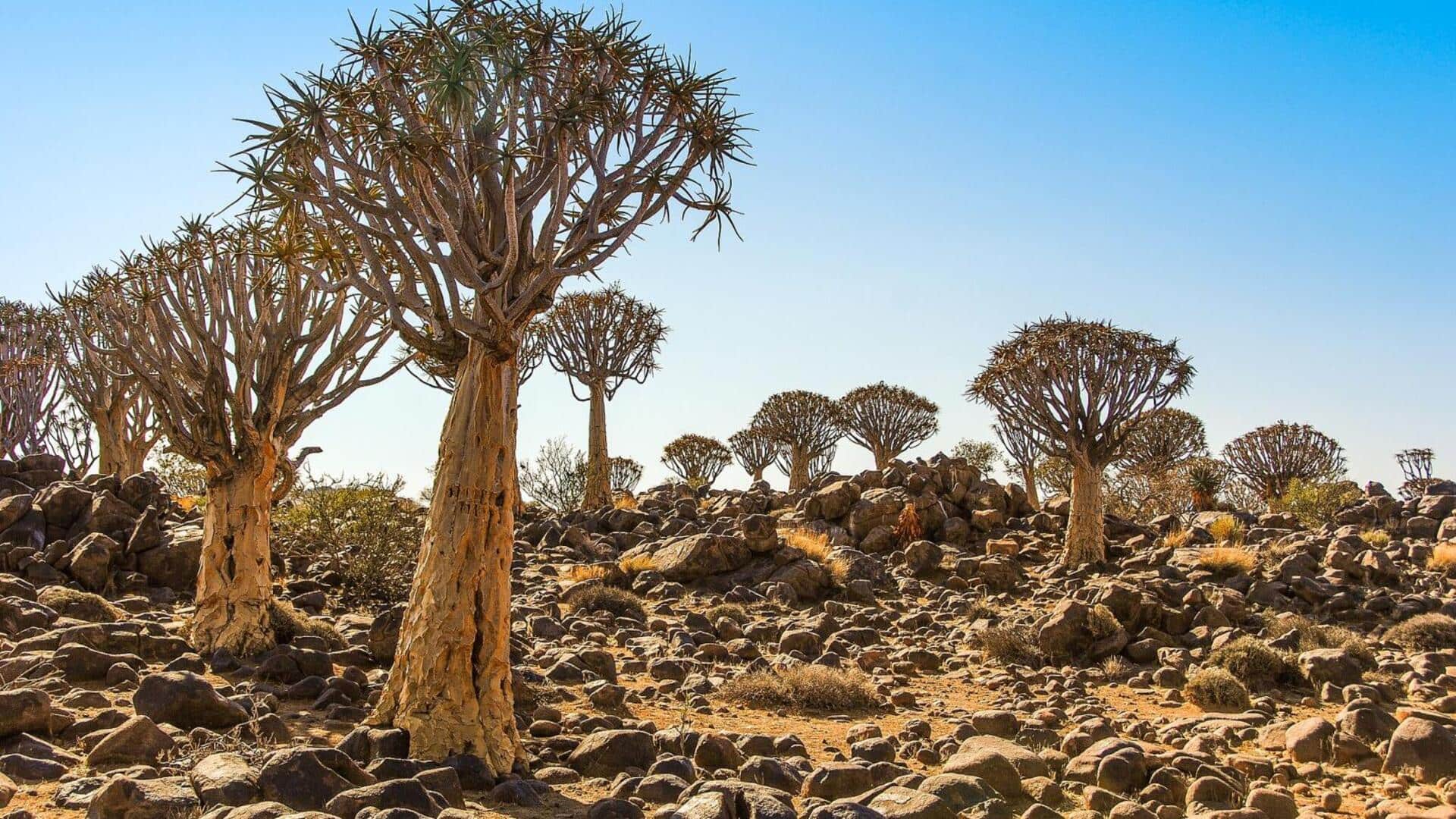
Namibia's Quiver Tree Forest: A hiker's paradise
What's the story
Namibia's Quiver Tree Forest is a unique hiking destination, famous for its otherworldly landscape. The forest, dotted with the peculiar quiver trees, offers a one-of-a-kind experience to nature lovers and adventure junkies. The trees, which can grow up to nine meters tall, create a surreal atmosphere ideal for exploration and photography. Here's everything you need to know about hiking through this amazing forest.
#1
Unique flora of the forest
The Quiver Tree Forest is home to the distinctive quiver tree, which is endemic to southern Africa. These trees have adapted to the harsh desert climate of Namibia, with their thick trunk and spiky leaves. The forest has hundreds of these trees, some of which are even centuries old. Their unusual shape and resilience make them an interesting subject for botanists and nature lovers alike.
#2
Best time to visit
The best time to visit the Quiver Tree Forest is during the cooler months from May to September, when temperatures are more pleasant for hiking. During these months, daytime temperatures hover around 20 degrees Celsius, making it easier to explore the trails without the heat. Also, visiting during this time gives you a chance to witness the stunning sunrise or sunset over the landscape.
#3
Hiking trails and routes
The Quiver Tree Forest has several hiking trails that vary in difficulty, from easy walks to more challenging routes for experienced hikers. The trails take you through different parts of the forest, giving you a chance to see various flora and fauna along the way. Guided tours are also available for those who want to learn more about the ecosystem and history of this unique place.
Tip 1
Photography tips for visitors
For photography enthusiasts, the Quiver Tree Forest makes for a stunning backdrop for capturing unique landscapes. Early morning or late afternoon light is ideal for shooting, as it casts long shadows and highlights the textures of the trees. A wide-angle lens can help capture the vastness of the scenery, while close-ups can emphasize the intricate details of each tree's bark and leaves.