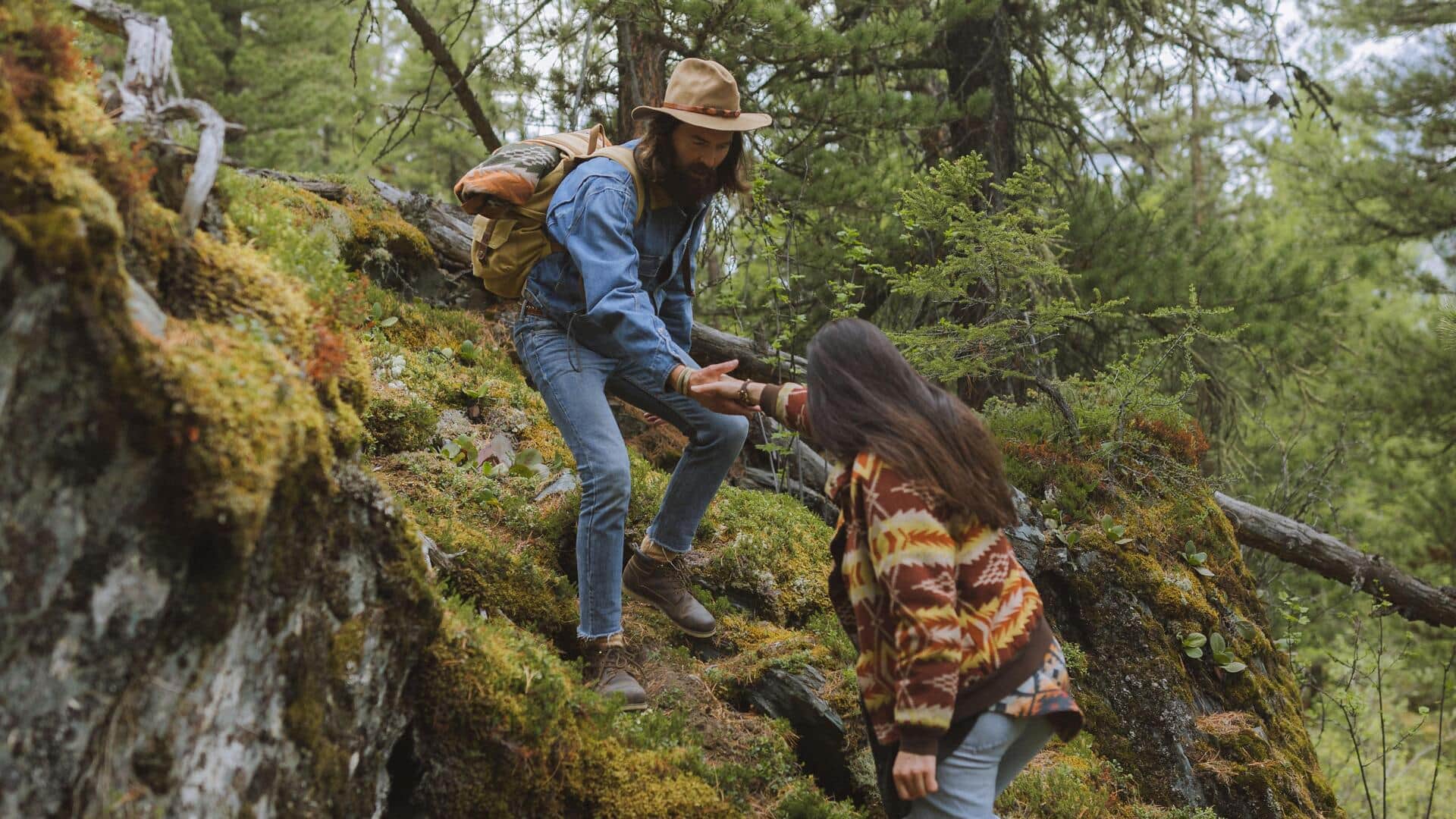
Looking for a mental reset? Try hiking or rock climbing
What's the story
Hiking and rock climbing are two popular outdoor activities that provide unique mental health benefits. While both activities allow you to connect with nature, they also challenge your mind and body in different ways. Hiking is often seen as a more accessible way to enjoy the outdoors, while rock climbing provides a more intense physical and mental challenge. Here's how both activities can help improve your mental well-being.
#1
Hiking's calming effect on the mind
Hiking through nature trails can be extremely calming. The rhythmic motion of walking, coupled with the fresh air, can reduce stress levels.
Studies have shown that spending time in nature can lower cortisol levels by up to 30%.
This makes hiking an ideal activity for those looking to unwind and clear their minds.
#2
Rock climbing's focus and problem-solving benefits
Rock climbing demands a lot of focus and problem-solving skills.
Climbers have to concentrate on their moves, plan their routes, and make quick decisions.
This intense focus can help improve cognitive function and boost self-confidence.
The sense of accomplishment after completing a climb also contributes positively to mental health.
#3
Social interaction opportunities in hiking groups
Hiking is usually a group activity, which gives you a chance to socialize and meet new people.
Being part of a hiking group can give you a sense of community and belonging, both of which are essential for your mental health.
Socializing with fellow hikers on the trails can also make you feel less lonely and more supported.
#4
Physical fitness benefits from rock climbing
Rock climbing is a full-body workout that improves strength, endurance, flexibility, and balance.
The physical exertion releases endorphins, the body's natural mood lifters. This leads to an improved mood and reduced anxiety levels.
The physical demands of rock climbing require you to be mentally prepared, which further improves your focus and problem-solving skills.