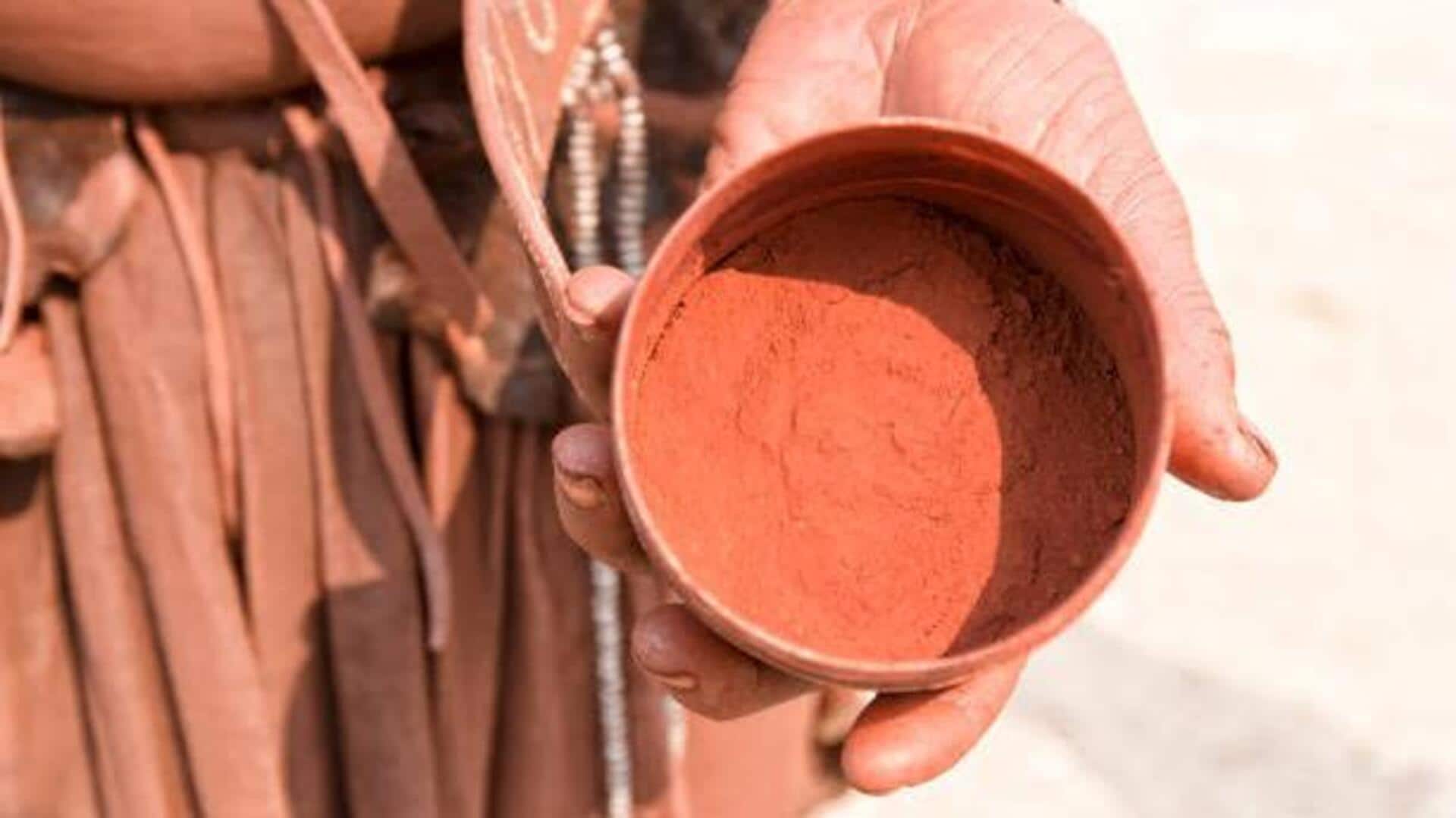
Red ochre paste: A fascinating beauty ritual worth knowing
What's the story
The Himba people of Namibia are famous for their unique beauty secret, a red ochre paste. The paste is not just a beauty product, but an important part of their culture and identity. The Himba use the paste to protect their skin from harsh weather, and as a form of social and spiritual expression. This traditional practice gives us a glimpse into the beauty standards and lifestyle of the Himba.
#1
The significance of red ochre
Red ochre is an iron-rich mineral that the Himba people use to color their skin and hair.
The paste is made by mixing ground ochre with butterfat from cows or goats.
This mixture protects against sunburn and dehydration in the harsh climate of Namibia.
It also symbolizes beauty, health, and status within Himba society. The vibrant color it imparts is considered attractive and desirable.
#2
Ingredients used in making the paste
To make the traditional Himba ochre paste, you need a few basic ingredients: red ochre powder, butterfat from cows or goats, and, sometimes, aromatic herbs for fragrance.
The process involves mixing these ingredients until you get a smooth consistency.
This mixture is applied all over the body and hair daily to keep skin moisturized and protected from environmental damage.
#3
Cultural importance of the paste
For the Himba, the use of red ochre paste is much more than a beauty routine.
It is a cultural practice that is passed down generations. It is an integral part of their identity and social interactions.
The application of this paste is often a communal activity where women help each other apply it as a sign of bonding and community spirit.
Tip 1
Modern interest in traditional practices
In recent years, there has been a growing interest in traditional African beauty practices like that of the Himba people.
This has led to increased awareness about natural skincare solutions derived from indigenous knowledge systems.
These are still relevant today, despite modern advancements in dermatology.
This is because they offer sustainable alternatives without compromising on effectiveness or quality standards expected by consumers worldwide.