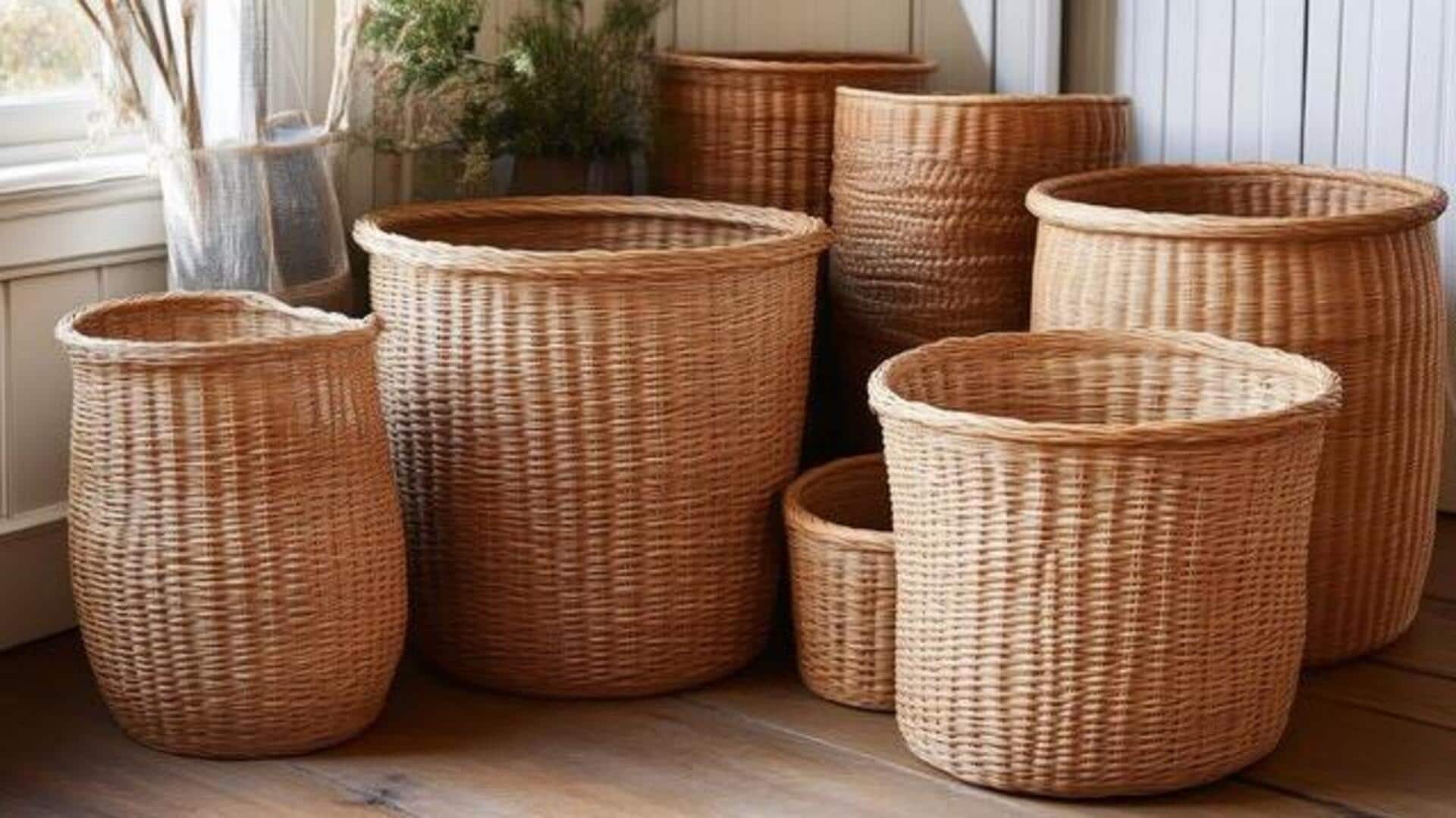
How basket weaving is redefining modern decor
What's the story
African basket weaving is making waves in the world of modern decor, thanks to its rich cultural heritage and unique craftsmanship. The intricate patterns and vibrant colors of these baskets are being used by designers to add texture and interest to contemporary spaces. From functional storage solutions to decorative pieces, African basket weaving is proving to be versatile and appealing for those looking to add a global touch to their interiors.
Craftsmanship
The art of basket weaving
Basket weaving is an age-old craft that has been passed down generations in Africa.
Using natural materials such as grass, reeds, and palm leaves, artisans create intricate designs that tell a story or represent cultural symbols.
The process requires immense skill and patience, with each piece being unique due to the handmade nature.
This craftsmanship not only preserves cultural heritage but also offers sustainable alternatives for modern decor.
Adaptability
Versatility in design
African baskets are versatile enough to fit into any room or purpose.
They can be used as planters, storage solutions for magazines or toys, or even as wall art when hung up as decorative accents.
Their adaptability makes them an ideal choice for those looking to add functional yet stylish elements into their homes without compromising on aesthetics.
Eco-friendly
Sustainable decor choices
Using African baskets in home decor is an eco-friendly choice, as they are made from renewable resources and require minimal processing.
This aligns with the growing demand for sustainable products in the market today.
By opting for these handcrafted items, consumers contribute toward supporting local artisans, while also making environmentally conscious decisions.
Empowerment
Supporting local artisans
Incorporating African basket weaving into modern decor also helps empower local communities by providing them with a source of income through fair trade practices.
Many artisans work cooperatively, ensuring that profits are shared equitably among members of the group.
This not only supports economic development but also encourages the preservation of traditional crafts for future generations.