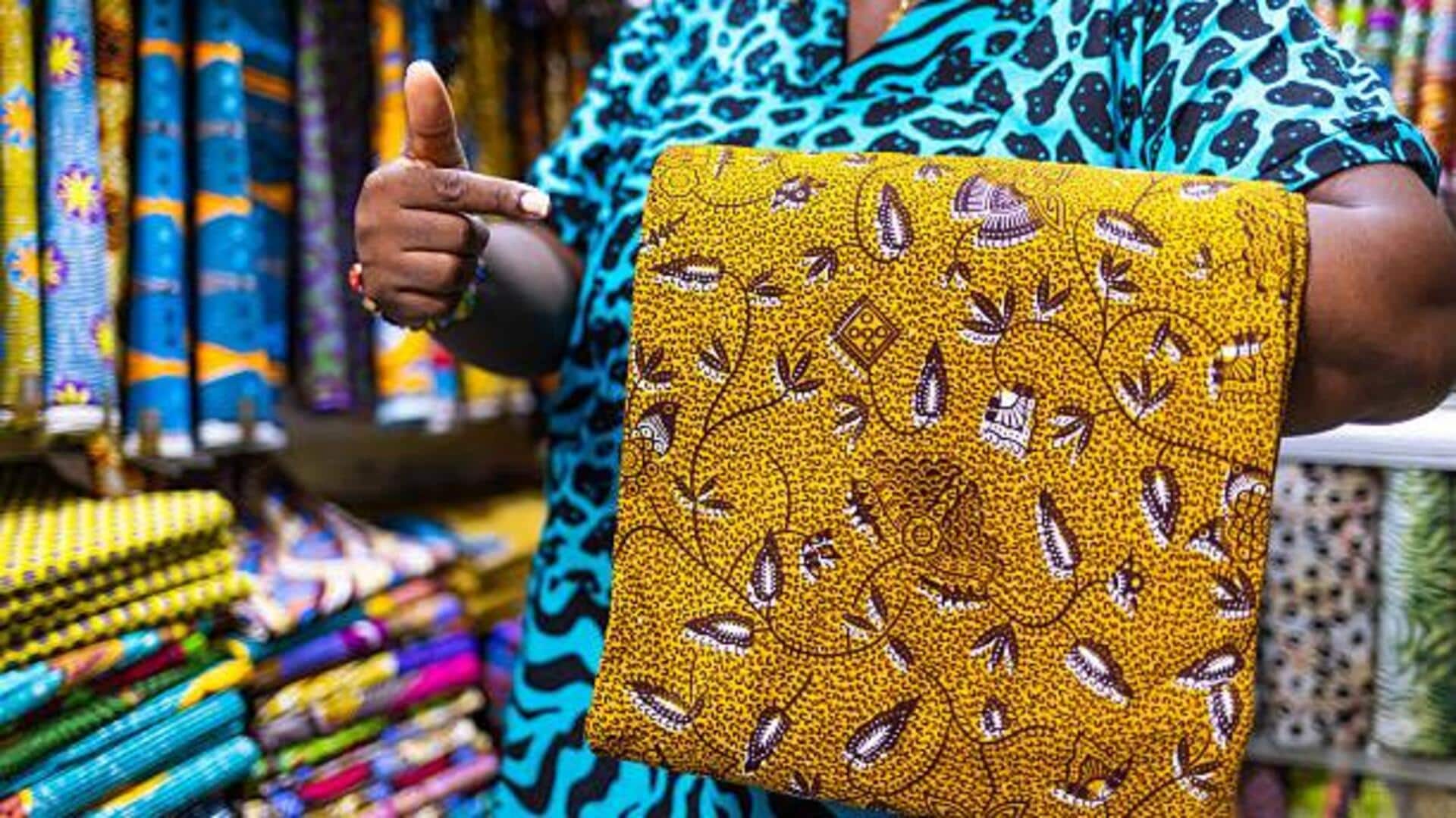
All about Ankara fabrics
What's the story
Ankara fabrics, characterized by their vibrant patterns and colors, are becoming increasingly popular in the sustainable fashion industry. The African textiles are not only beautiful but also eco-friendly, making them a perfect choice for those looking to make ethical fashion choices. As designers look for innovative ways to reduce their carbon footprint, Ankara fabrics are proving to be a versatile and sustainable option.
#1
The origins of Ankara fabrics
Ankara fabrics have their roots in West Africa, where they have been used for centuries.
Traditionally made from cotton, these fabrics are printed with intricate designs using wax-resist dyeing techniques.
The process is not only environmentally friendly but also ensures that each piece is unique.
Today, Ankara is embraced globally by designers who appreciate its cultural significance and sustainable qualities.
#2
Eco-friendly production methods
The production of Ankara fabrics involves eco-friendly methods that minimize environmental impact.
Unlike synthetic textiles, which require harmful chemicals during manufacturing, the production of Ankara relies on natural dyes and low-energy processes.
This significantly reduces carbon emissions and waste generation.
By opting for Ankara, the fashion industry can contribute to a greener planet while still enjoying beautiful, high-quality textiles.
#3
Versatility in design applications
One of the biggest advantages of Ankara fabrics is their versatility in design applications.
From clothing to accessories, these vibrant textiles can be used in various fashion items without compromising on style or sustainability.
Designers around the world are experimenting with Ankara's bold patterns to create unique pieces that stand out, while promoting eco-consciousness.
#4
Supporting local artisans
The use of Ankara fabrics also supports local artisans who produce these textiles in Africa.
By sourcing materials directly from communities, designers help sustain traditional craftsmanship while providing fair economic opportunities for artisans.
This not only preserves cultural heritage but also contributes positively to local economies within the regions where these beautiful fabrics are made.