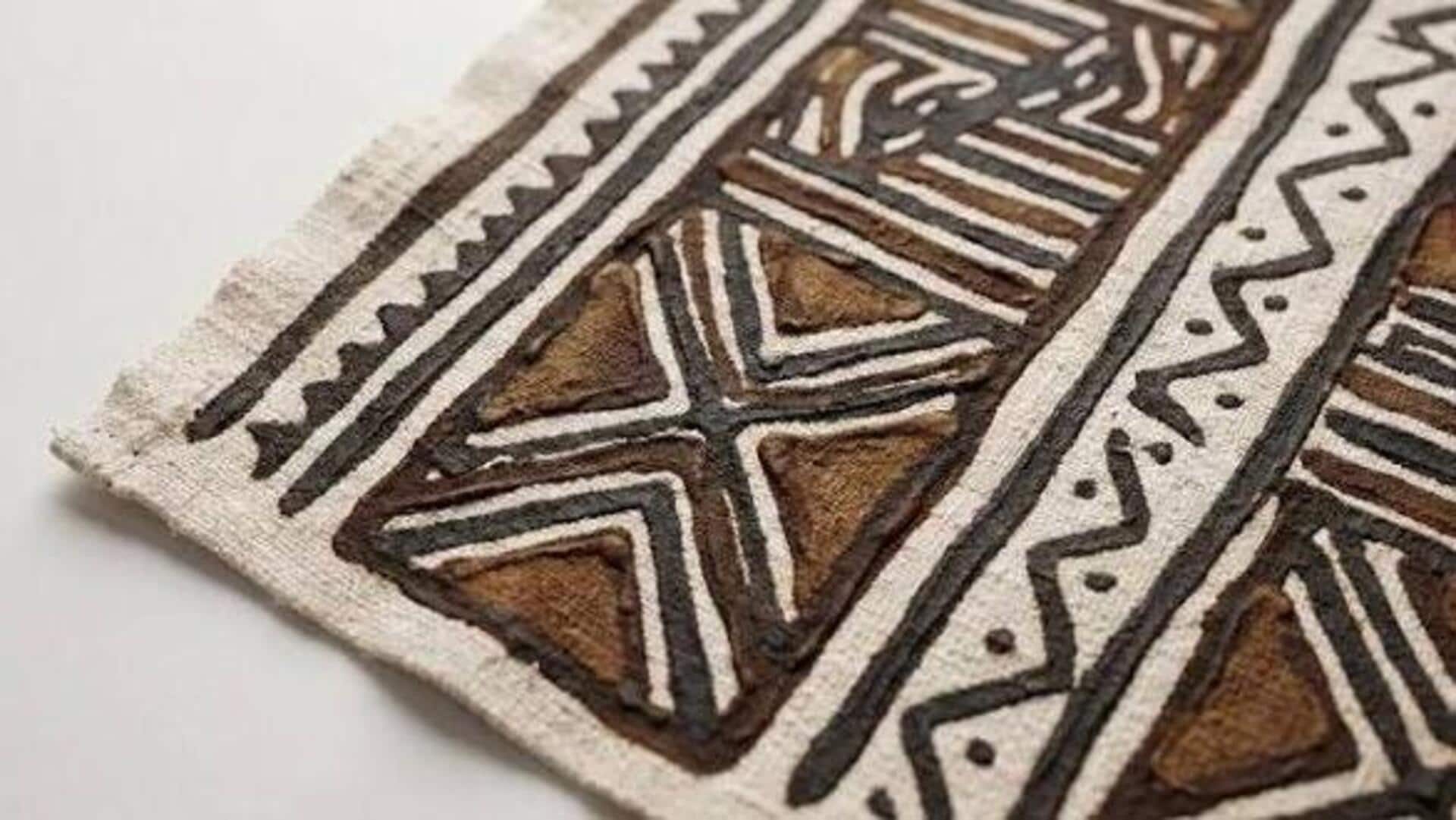
Bogolan: The Malian fabric taking over fashion
What's the story
Bogolan textiles, traditional Malian fabrics, are making waves in the fashion world with their unique patterns and rich cultural heritage. The mud-dyed cloth is not just a symbol of African identity but also a source of inspiration for modern designers. As the world embraces sustainable and culturally rich fashion, Bogolan's influence is only expected to grow. Here is how Bogolan textiles are redefining global fashion.
Technique
The art of mud-dyeing
Mud-dyeing is an ancient technique used to create the distinctive patterns on Bogolan textiles.
Artisans use fermented mud, which is rich in iron oxide, to dye the fabric.
The process involves multiple layers of dyeing and washing, resulting in intricate designs that tell stories or represent symbols.
This eco-friendly method highlights the importance of sustainability in today's fashion industry.
Heritage
Cultural significance and storytelling
Bogolan textiles are steeped in cultural significance, serving as a medium for storytelling and historical documentation.
Each pattern on the cloth is a symbol, narrating tales of ancestry, spirituality, or societal values.
This storytelling aspect adds depth to the garments made from Bogolan, making them more than just fashion items.
They become carriers of rich cultural narratives, connecting wearers to the traditions and histories of the African continent.
Innovation
Modern adaptations in fashion
Modern designers are creatively incorporating Bogolan textiles into contemporary clothing lines.
From high-end fashion houses to streetwear brands, the versatility of these fabrics appeals to a wide range of consumers.
Designers experiment with bold colors and innovative cuts, while respecting traditional techniques.
This fusion of old and new allows for the preservation of cultural heritage while appealing to modern tastes.
Empowerment
Economic impact on local communities
The global demand for Bogolan textiles has had a positive economic impact on local communities in Mali.
Artisans are empowered through fair trade practices that ensure they receive fair compensation for their work.
Increased interest in these fabrics has also led to job creation within communities, supporting livelihoods and encouraging economic growth.