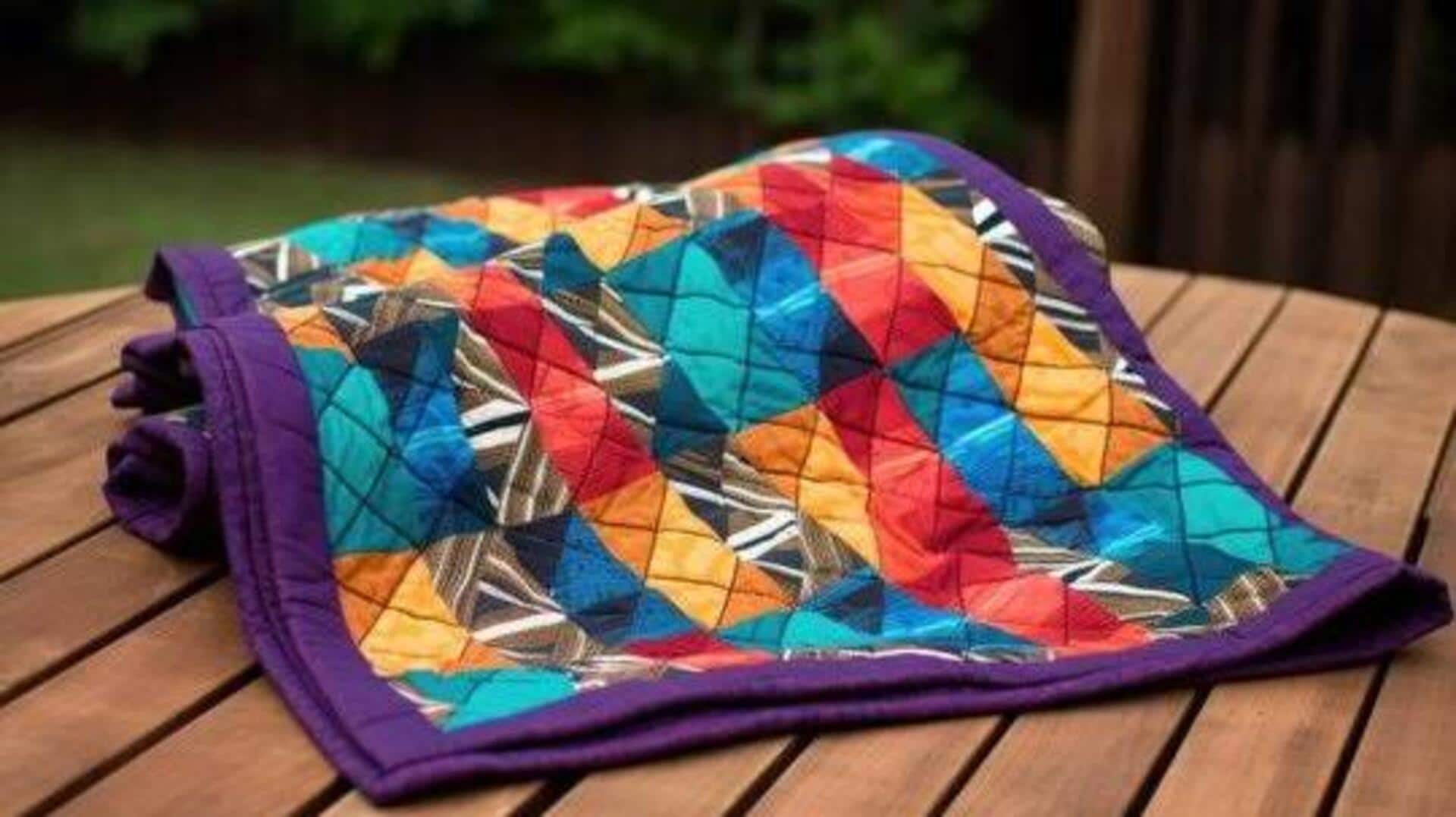
How traditional African quilts are made
What's the story
African quilts are a beautiful fusion of tradition and innovation. They reflect the continent's rich cultural heritage and modern artistic expressions. These quilts are not just functional items, but also pieces of art that tell stories, preserve history, and showcase creativity. From the intricate patterns to the vibrant colors, African quilts capture the essence of diverse cultures across the continent.
Techniques
Traditional techniques in quilt-making
Traditional African quilt-making employs techniques passed down generations. Hand-stitching is a common practice, ensuring each piece is unique.
The use of natural dyes from plants and minerals gives the quilts their vibrant colors.
Techniques like patchwork and applique are widely used, allowing artisans to create complex designs that reflect cultural symbols and motifs.
Patterns
Cultural significance of quilt patterns
The patterns used in African quilts are often steeped in cultural significance.
Each design can tell a story or convey a message related to community values, beliefs, or historical events.
For instance, some patterns may represent fertility or protection, while others might depict important life stages or rites.
Understanding these patterns gives insight into the rich tapestry of African culture.
Modernity
Modern influences on quilt design
In recent years, modern influences have also made their way into African quilt design.
While some artisans continue to stick to traditional methods, others have started experimenting with contemporary styles.
This fusion creates a dynamic space for innovation while still honoring cultural roots.
Modern fabrics, new color palettes, and abstract designs are some of the elements being incorporated.
Economy
Economic impact of quilt-making communities
Quilt-making communities across Africa also contribute significantly to local economies. Many artisans depend on this craft as their primary source of income.
By selling their work locally and internationally, they support themselves and their families.
Cooperative groups often form around these craftspeople, providing training opportunities and access to wider markets.
This economic activity helps preserve traditional skills while promoting sustainable development within communities.