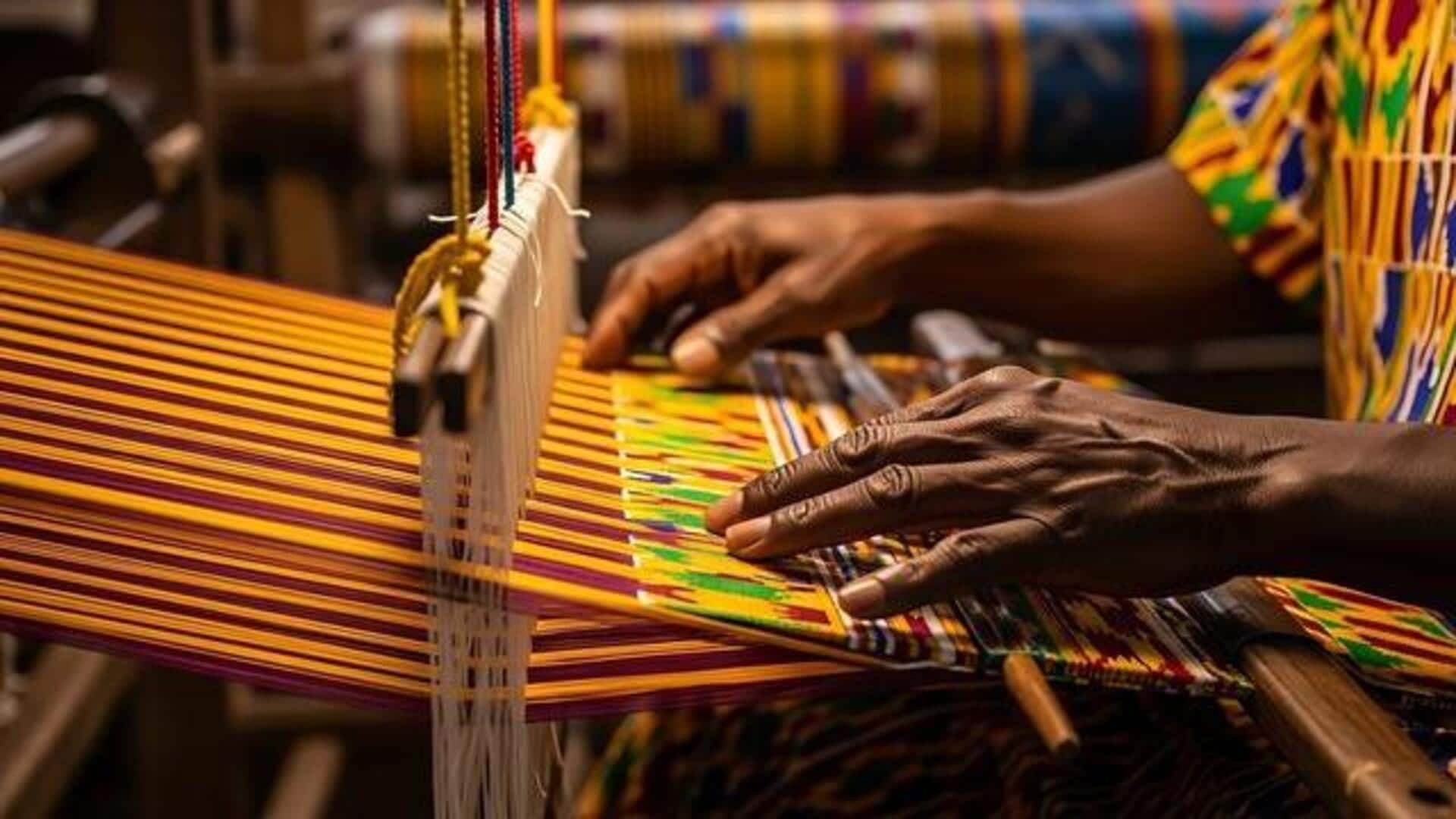
How African weavers are redefining modern textiles
What's the story
African diaspora weavers are redefining modern textiles by fusing traditional techniques with contemporary designs. Their work not only preserves cultural heritage but also introduces innovative patterns and styles to the global market. By blending the old with the new, these artisans are making a mark in the fashion industry. They showcase the richness of African textile traditions while appealing to modern tastes.
#1
Blending tradition with innovation
African diaspora weavers are famous for their ability to blend traditional weaving techniques with modern design sensibilities.
By using age-old methods like kente and mudcloth, they create textiles that are both culturally significant and aesthetically appealing.
This fusion allows them to appeal to a wider audience, while also ensuring that traditional practices are not lost.
#2
Sustainable practices in textile production
Sustainability is at the core of many African diaspora weavers' practices.
They often use locally sourced materials and eco-friendly dyes, minimizing environmental impact.
This commitment to sustainability not only benefits the planet but also resonates with consumers who value ethical production methods.
By prioritizing sustainable practices, these artisans set an example for the rest of the industry.
#3
Empowering communities through weaving
Weaving has always been a community activity in Africa, and it continues to empower communities through the diaspora.
Many weavers work in cooperatives or small businesses that provide jobs and training opportunities for locals.
This not only helps preserve traditional skills but also contributes to economic development within these communities.
#4
Global influence of African textiles
The global influence of African textiles has grown over the years, thanks to diaspora weavers showcasing their work on international platforms.
Fashion designers around the world draw inspiration from their vibrant patterns and unique textures.
This exposure has helped elevate the status of African textiles in global fashion markets.