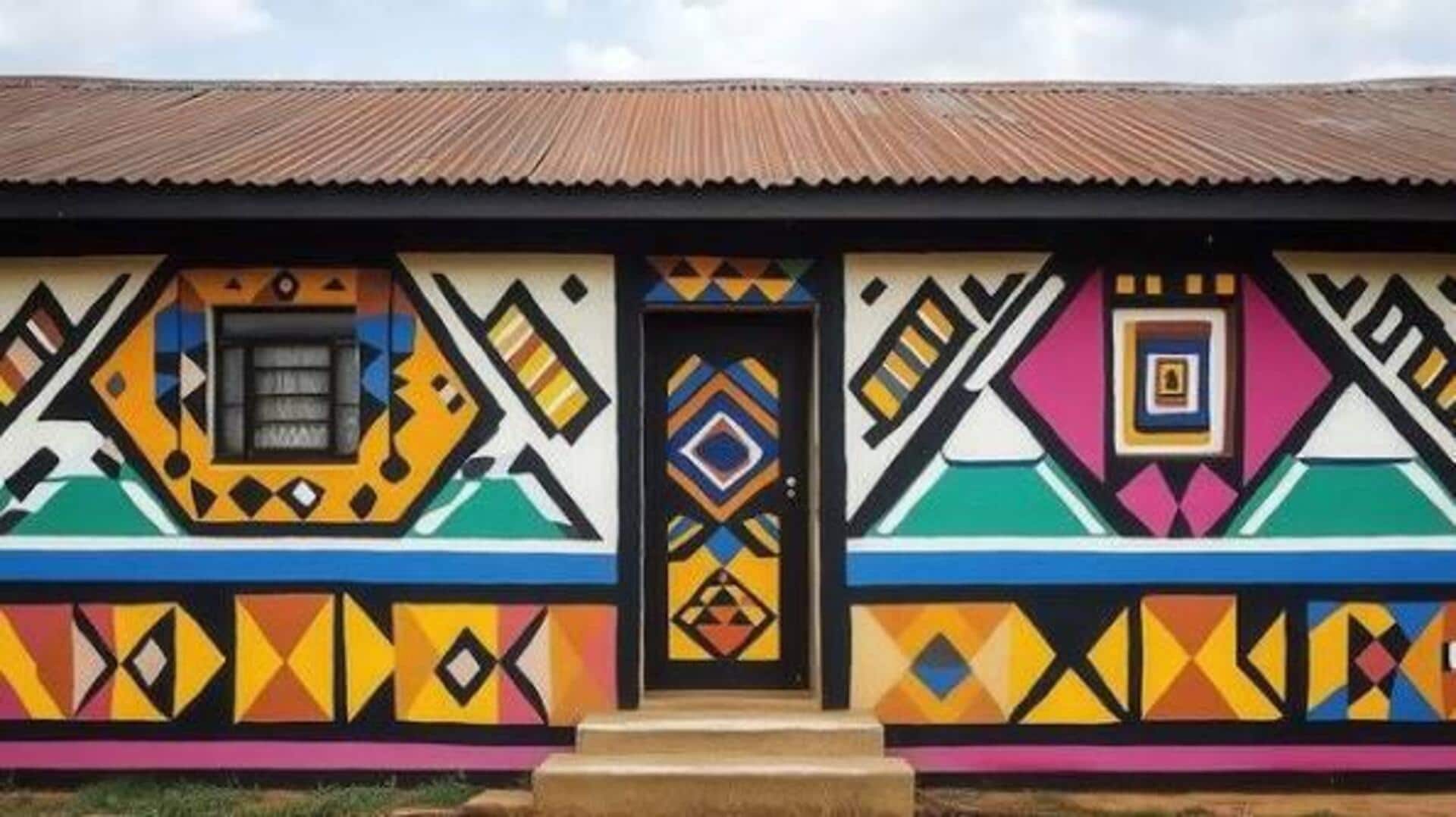
How Ndebele art is inspiring modern architecture
What's the story
Ndebele art, with its vibrant colors and geometric patterns, is making waves in the field of contemporary African architecture. The traditional art form is being incorporated into modern designs, giving a unique identity to the structures. By marrying cultural heritage with modernity, architects are creating spaces that are both functional and visually stunning. Here is how Ndebele art is shaping African architecture today.
#1
Integrating traditional patterns
Architects are also integrating traditional Ndebele patterns into the facades of buildings, creating a visual dialogue between past and present.
These geometric designs not only add aesthetic value but also serve as a reminder of the rich cultural heritage of the Ndebele people.
By using these patterns, architects create spaces that resonate with local identity and pride.
#2
Vibrant color palettes
The use of vibrant colors in Ndebele art also influences architectural choices.
Bright hues like red, blue, green, and yellow are commonly used to create eye-catching exteriors and interiors.
These colors not only enhance the visual appeal of buildings but also evoke emotions and create a sense of community among residents.
#3
Sustainable design practices
Ndebele art also emphasizes sustainability by promoting the use of locally sourced materials and eco-friendly construction methods.
Architects inspired by this tradition often opt for natural resources like clay and wood, which are abundant in the region.
This approach not only minimizes environmental impact but also supports local economies by sourcing materials from nearby suppliers.
#4
Community engagement through art
Incorporating Ndebele art into architecture also fosters community engagement by involving local artists in design processes.
Collaborative projects between architects and artisans ensure authentic representation of cultural elements, while providing economic opportunities for skilled craftsmen.
This participatory approach strengthens community bonds and preserves traditional practices for future generations.