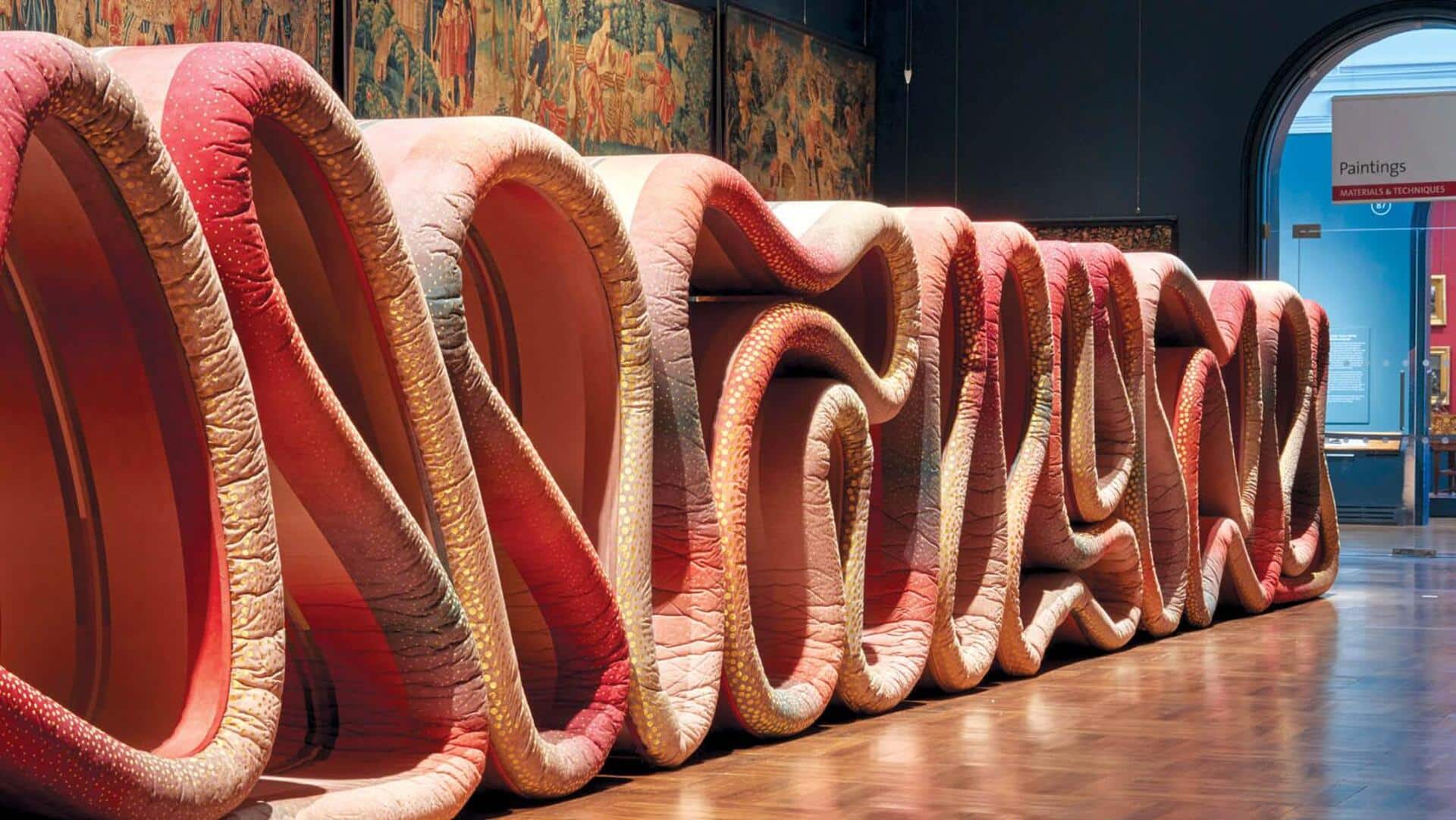
What exactly are textile sculptures?
What's the story
African textile sculpture is taking the contemporary art world by storm, offering a unique blend of tradition and innovation. Artists are reimagining traditional techniques and materials to create dynamic works that challenge perceptions and engage audiences. This art form not only preserves cultural heritage but also pushes the boundaries of artistic expression. As these artists gain recognition, their work is reshaping the landscape of contemporary African art.
#1
The fusion of tradition and modernity
African textile sculpture marries traditional craftsmanship with modern aesthetics.
Artists often use age-old techniques like weaving and embroidery, but with a contemporary twist.
This fusion allows them to pay homage to their cultural roots while exploring new artistic territories.
The result is a body of work that resonates with both local and global audiences, bridging the gap between past and present.
#2
Innovative materials and techniques
The use of unconventional materials is a hallmark of African textile sculpture.
Artists experiment with everything from recycled fabrics to natural fibers, creating textures and forms that captivate viewers.
Techniques such as dyeing, knotting, and layering are employed to add depth and complexity to their pieces.
These innovations not only enhance the visual appeal but also invite viewers to engage more deeply with the artwork.
#3
Social commentary through art
Many African textile sculptors use their work as a medium for social commentary.
By addressing issues like identity, migration, and community dynamics, they create pieces that provoke thought and discussion.
This aspect of their art makes it relevant beyond aesthetic appreciation; it becomes a tool for dialogue about pressing societal concerns.
#4
Expanding global influence
The influence of African textile sculpture is spreading beyond the continent's borders.
As more artists gain international recognition through exhibitions and collaborations, interest in this art form grows worldwide.
Collectors are increasingly drawn to these works for their cultural significance, as well as artistic merit—an indication that this movement is set to continue its expansion on the global stage.