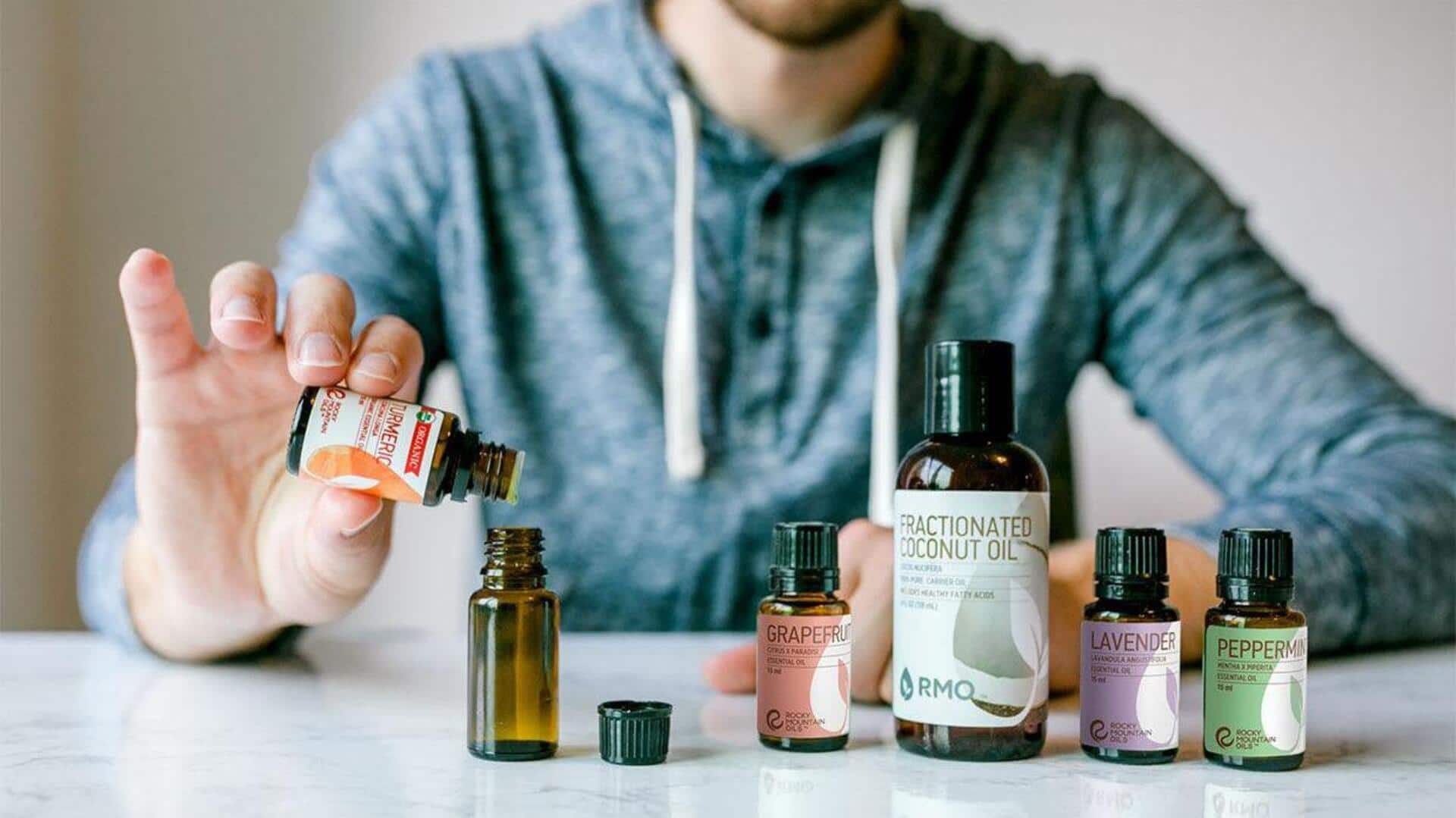
How to blend essential oils at home
What's the story
Creating a personalized scent using essential oils is an art that marries creativity with nature's finest offerings. You can craft unique fragrances suited to your taste by blending different essential oils. This DIY process is not just economical but also gives you the freedom to customize scents as per your mood or occasion. Here's a guide to blending essential oils at home and creating your signature scent.
Base oil
Choosing the right base oil
Selecting a base oil is important to dilute essential oils and make them safe for skin application.
Sweet almond oil, jojoba oil, and coconut oil are popular choices due to their skin-friendly properties.
These base oils don't interfere with the fragrance of essential oils and help in even distribution when applied.
Choose a base oil according to your skin type and preference.
Oil notes
Understanding essential oil notes
Essential oils are categorized into three notes: top, middle, and base notes.
Top notes are light and evaporate quickly; citrus oils like lemon or orange are examples.
Middle notes provide balance; lavender or rosemary are commonly used.
Base notes are rich and linger longer; sandalwood or patchouli fits here.
A balanced blend contains all three notes for a harmonious scent.
Blending tips
Experimenting with blends
Start by mixing one drop each of three different essential oils from different categories (top, middle, base) in a small container with your chosen base oil.
Adjust proportions based on preference while ensuring no single note overpowers others.
Keep track of successful combinations by noting them down for future reference.
Testing phase
Testing your creation
Once you've created your blend, let it sit for a few hours before testing it on your skin to see how it reacts over time.
This way, you can see how well-balanced your blend is and if you need any adjustments.
Apply small amounts on pulse points like wrists or necks where body heat enhances fragrance release throughout the day.