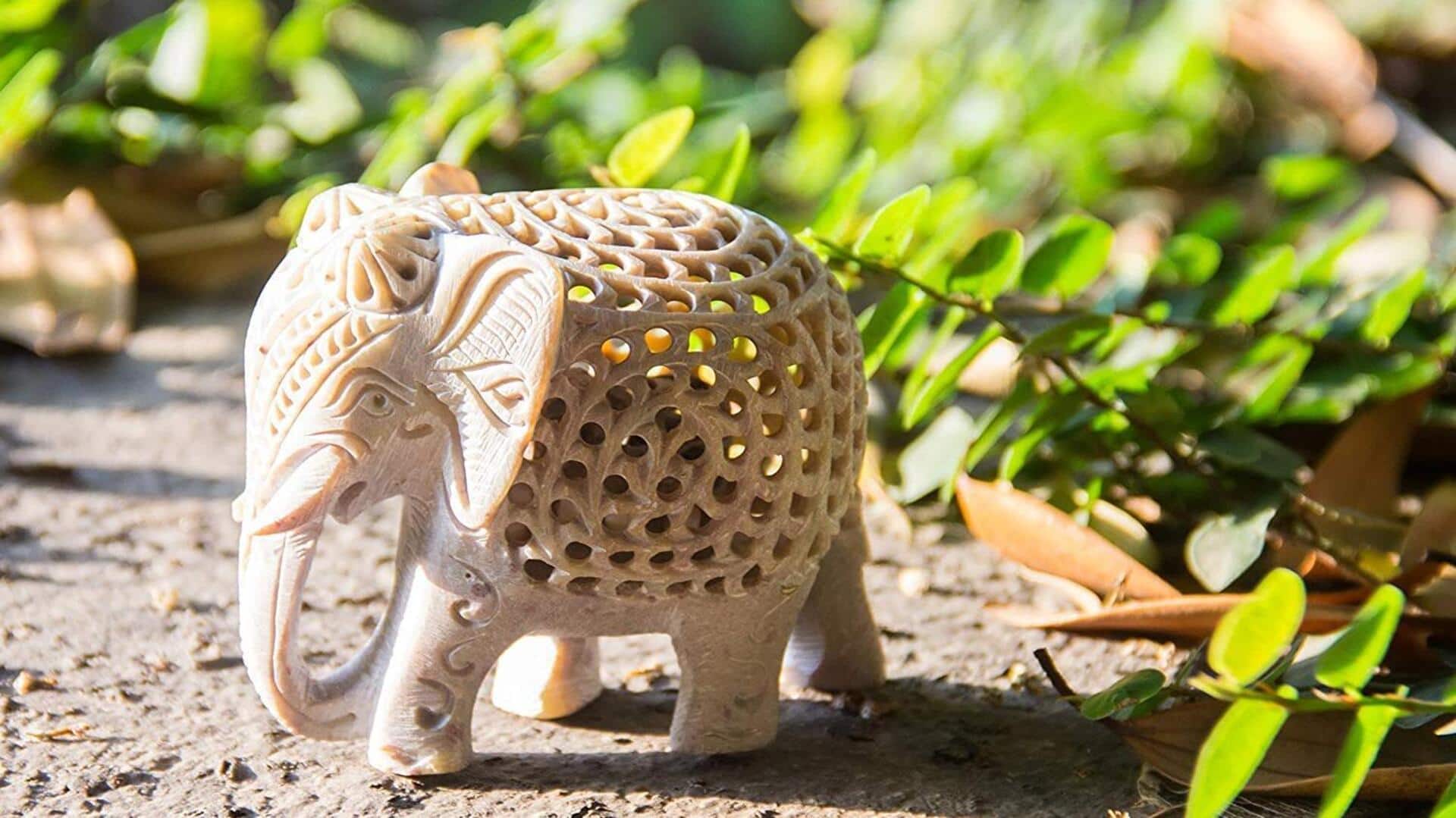
How to carve soapstone elephants
What's the story
Carving soapstone elephants is a traditional African art form that requires skill and patience. The process involves shaping the soft stone into intricate designs, often reflecting cultural significance. This craft has been passed down through generations, preserving the rich heritage of African artisans. By understanding the techniques and tools used in this art, one can appreciate the craftsmanship involved in creating these iconic sculptures.
Tip 1
Selecting quality soapstone
Choosing the right soapstone is important for successful carving.
Look for stones that are not too hard and have fewer impurities.
A good quality soapstone is usually light green or grayish in color.
It should be smooth to touch but not too soft so that it breaks easily while working on it.
The right selection ensures that your carving will have the desired detail and durability.
Tip 2
Essential tools for carving
The tools used in soapstone carving are basic but essential. A set of rasps, chisels, and files are commonly used to shape and smoothen the stone.
These tools allow artisans to create fine details on their sculptures.
A sturdy workbench also provides stability during the carving process, making it easier to handle larger pieces of stone.
Tip 3
Techniques for shaping elephants
Shaping an elephant from soapstone involves careful planning and execution.
Start by sketching out the design on paper before transferring it onto the stone with chalk or a pencil.
Use chisels for rough shaping, followed by finer tools like files for detailing features such as ears, trunk, and eyes.
Patience is key; take small steps instead of rushing through each stage.
Tip 4
Finishing touches on sculptures
After shaping your elephant sculpture, it's time to add finishing touches that enhance its appearance and texture.
Sandpaper can be used to smooth out rough edges while giving it a polished look without losing intricate details carved earlier on the piece itself.
Applying wax helps protect surfaces against dust accumulation over time, ensuring longevity in display settings, too!