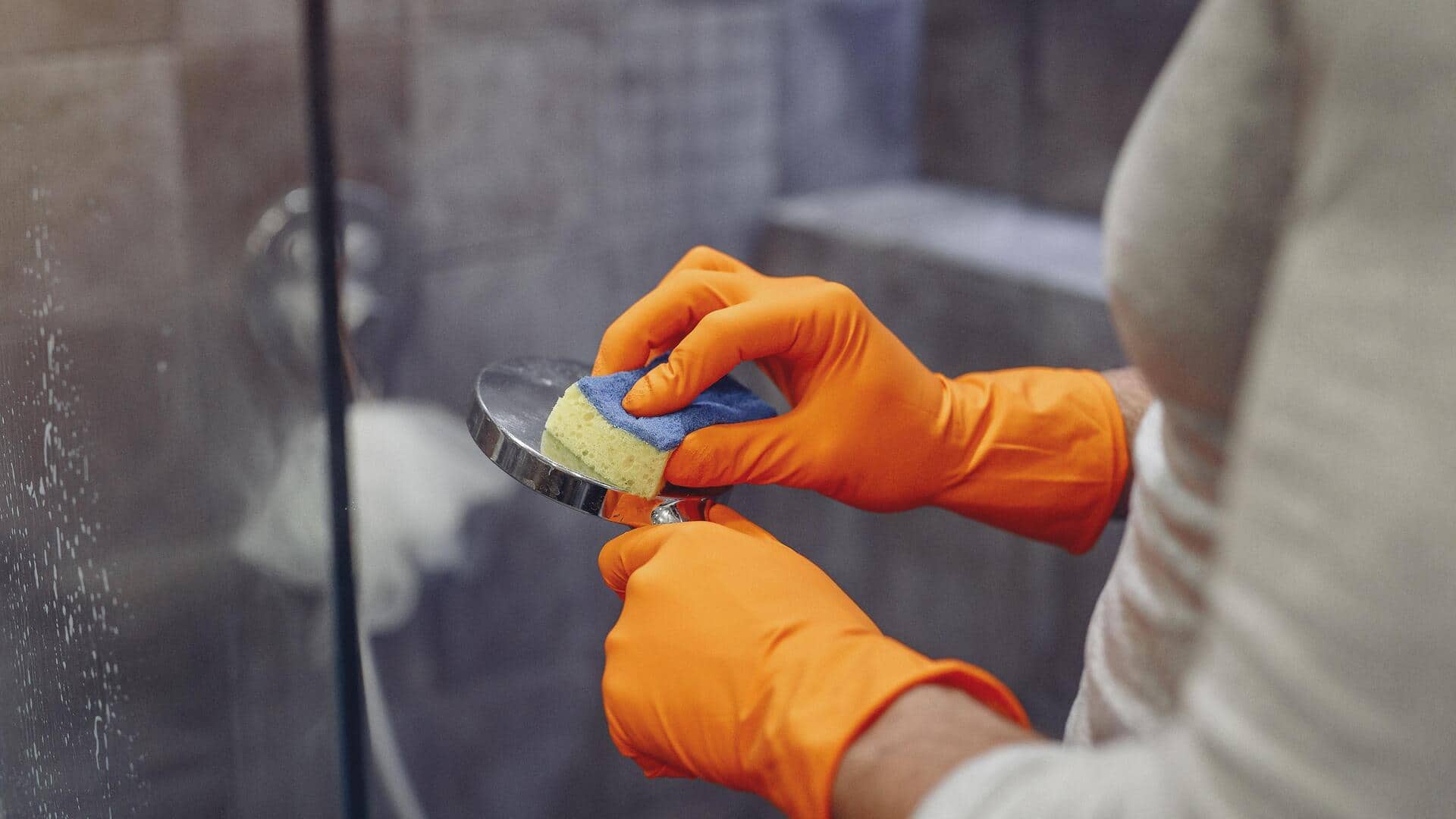
How to keep your showerhead clean
What's the story
Cleaning shower heads is an important part of maintaining a hygienic bathroom. Over time, mineral deposits and grime can build up, affecting water flow and pressure. Regular cleaning not only ensures optimal performance but also extends the lifespan of your shower head. Here are some practical tips to keep your shower head sparkling clean without resorting to harsh chemicals or expensive solutions.
Tip 1
Vinegar soak method
Soaking your shower head in vinegar is an effective way to remove mineral deposits.
Simply fill a plastic bag with white vinegar, secure it around the showerhead with a rubber band or string, and leave it overnight.
The acidity of the vinegar breaks down the buildup, making it easy to wipe away the next day.
Rinse thoroughly with water afterward to remove any residual vinegar smell.
Tip 2
Baking soda paste solution
Baking soda is another natural cleaning agent that works wonders on stubborn stains on shower heads.
Make a paste by mixing baking soda with water until it reaches a thick consistency.
Apply this paste directly onto the affected areas using an old toothbrush or soft cloth.
Let it sit for about 15 minutes before scrubbing gently and rinsing off with warm water.
Tip 3
Lemon juice spray technique
Lemon juice's natural acidity makes it an excellent cleaning agent for shower heads.
Fill a spray bottle with lemon juice and spray directly onto the surface of the showerhead.
Let it sit for about ten minutes before wiping clean with a damp cloth.
This method not only removes grime but also leaves behind a fresh citrus scent.
Tip 4
Commercial descaler products
If you prefer store-bought solutions, there are several commercial descaler products specifically designed for bathroom fixtures.
These products usually contain mild acids that dissolve mineral buildup effectively without damaging surfaces when used as per instructions on packaging labels.
Always follow usage guidelines carefully, as different brands may have varying application methods and safety precautions.