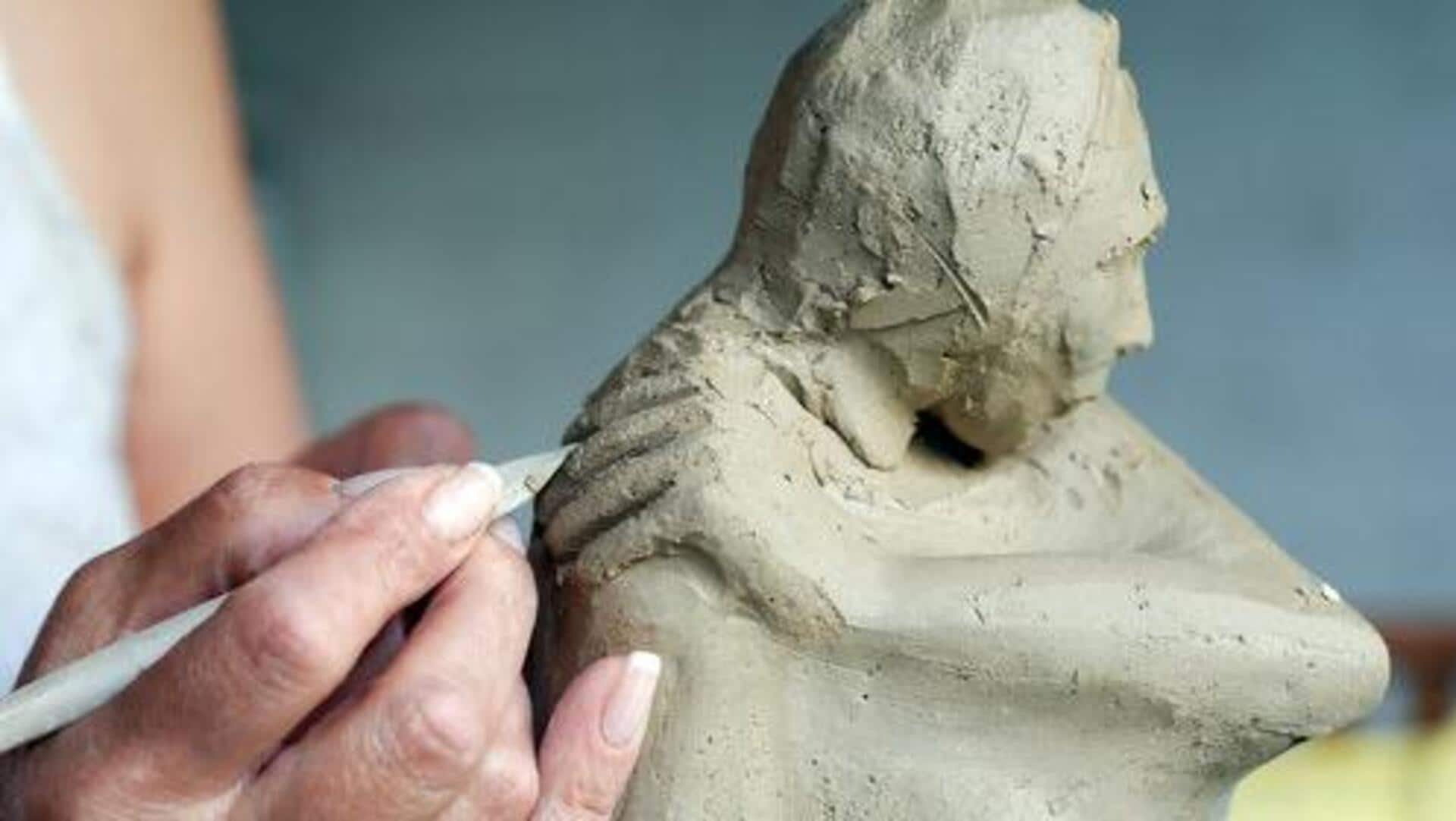
A beginner's guide to clay carving
What's the story
African clay carving is an age-old art used to create intricate masks for centuries. The technique, passed down generations, involves molding clay into detailed designs that reflect cultural and spiritual significance. By learning this craft, you can connect with African heritage and create unique pieces of art. Here are five tips to master the art of African clay carving.
Tip 1
Choose the right clay
Selecting the right kind of clay is important for successful carving. Go for natural clay that is easily moldable and dries evenly. The texture of the clay should be smooth to allow fine details to be carved without breaking. Before starting your project, test different types of clay to find one that suits your carving style.
Tip 2
Understand traditional designs
Familiarize yourself with traditional African mask designs, as they often have cultural significance and symbolism. Study various patterns and motifs commonly used in these masks to inspire your creations. Understanding these designs will help you incorporate authentic elements into your work while adding personal touches.
Tip 3
Use proper tools
Invest in quality carving tools, as they make a world of a difference in the precision and detail of your work. Use sharp knives, chisels, and sculpting tools specifically designed for clay carving. Keep your tools well-maintained by sharpening them regularly to ensure clean cuts and smooth surfaces.
Tip 4
Practice patience and precision
Carving intricate details into clay takes time and patience. Rushing through the process can lead to mistakes or damage to the piece. Take your time with each step, focusing on precision as you work through the design. Regular practice will improve your skills over time.
Tip 5
Experiment with textures
Adding texture is key to making your African clay masks more interesting. Play with different techniques, like stamping or incising, to add depth and dimension to your pieces. Experimenting with textures not only makes your masks unique, but also showcases your creativity as an artist. It encourages you to explore new possibilities in your craft, making each piece a reflection of your personal style and artistic vision.