How baobab bark is used in traditional crafts
What's the story
African baobab bark is a versatile material that can be used to create beautiful crafts. The bark, which is sustainably harvested from the iconic baobab tree, offers a unique texture and durability. Artisans across Africa have long utilized this natural resource to create functional and decorative items. From baskets to jewelry, the possibilities are endless when it comes to crafting with baobab bark fibers. Here are some insights into the art of crafting with this remarkable material.
Weaving methods
Traditional weaving techniques
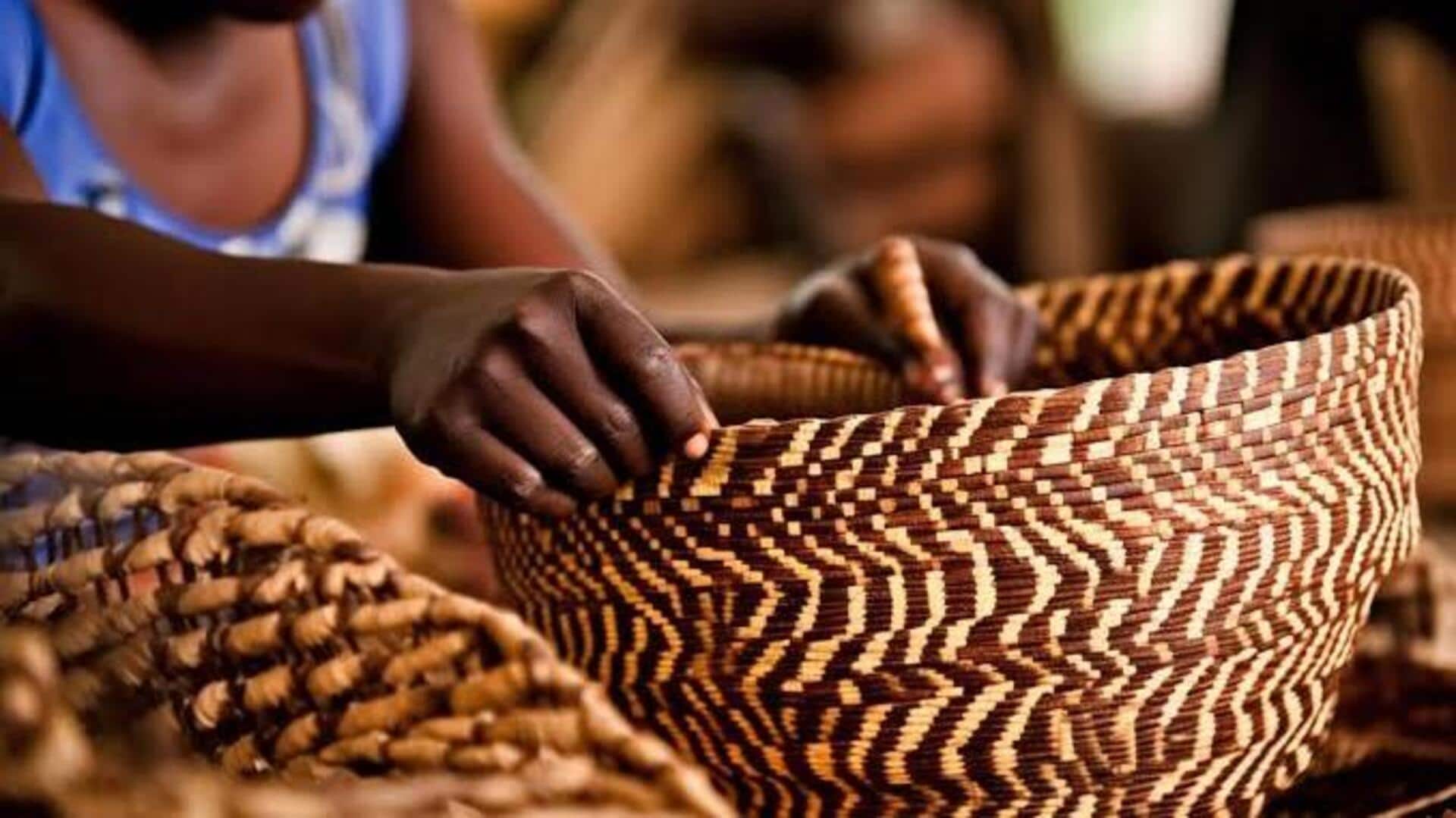
Traditional weaving techniques are at the core of many baobab bark crafts.
Artisans usually strip the inner bark into thin strips, which are then woven together to create intricate patterns.
These techniques are usually passed down through generations, preserving cultural heritage while allowing for innovation in design.
The resulting products are not just practical but also carry artistic value.
Eco-friendly sourcing
Sustainable harvesting practices
Sustainable harvesting is key to preserving the baobab tree population and supporting local communities.
Artisans usually harvest only a portion of the bark from each tree, allowing it to regrow over time.
This eco-friendly approach ensures that resources remain available for future generations, while also providing economic opportunities for those who rely on these trees for their livelihoods.
Crafting ideas
Versatile applications in crafting
Baobab bark fibers can be used in a variety of crafting applications, owing to their strength and flexibility.
They are commonly used to make baskets, mats, hats, and even jewelry like necklaces or bracelets.
The natural color of the fiber lends itself well to dyeing techniques, allowing artisans to experiment with different colors and patterns in their creations.
Community benefits
Economic impact on local communities
The craft of working with baobab bark has a significant impact on local economies across Africa.
By creating jobs within communities, it provides a source of income for many families.
The sale of these crafts not only supports individual artisans but also contributes to community development projects, such as education initiatives or healthcare services.