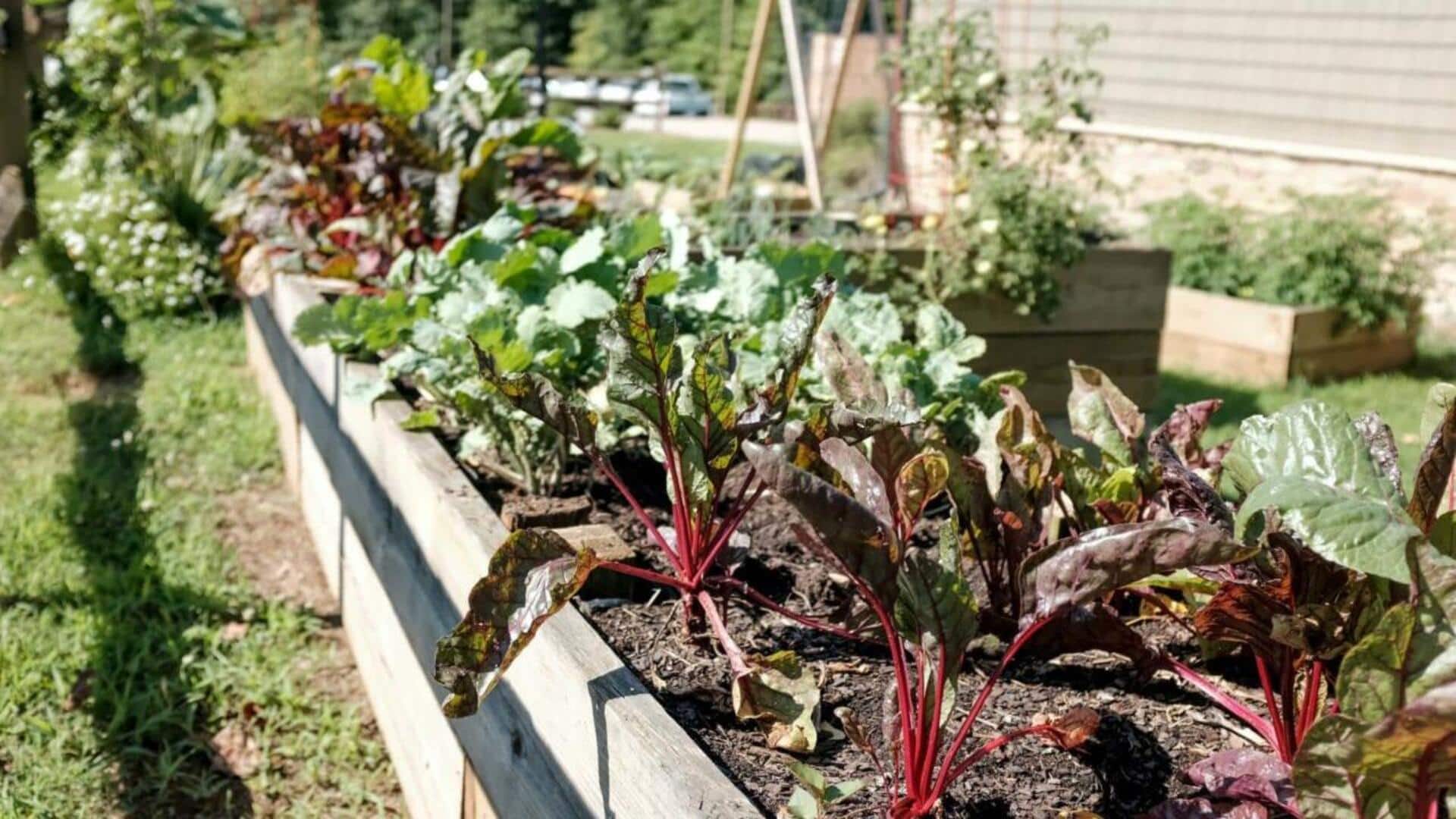
What is a self-sustaining garden?
What's the story
Creating a self-sustaining garden can be an affordable way to grow your own food, while minimizing environmental impact. By focusing on low-cost strategies, you can establish a garden that thrives without breaking the bank. This approach not only promotes sustainability but also encourages creativity in utilizing available resources. Here are some practical insights into building an eco-friendly garden on a budget, ensuring you get the most out of your green space without overspending.
Tip 1
Use recycled materials for planting
Recycling materials is a great way to cut costs and go green.
Old containers like plastic bottles or tin cans can be used as planters. Just make sure to poke holes at the bottom for drainage.
Pallets can be converted into raised beds, and newspapers can be used as weed barriers.
Using these items not only cuts down on waste but also saves you money on gardening supplies.
Tip 2
Implement composting techniques
Composting is the process of recycling organic waste into nutrient-rich soil, which is essential for plant growth.
By composting kitchen scraps like vegetable peels and coffee grounds, you can create your own fertilizer at home.
This cuts down on the need for store-bought fertilizers and improves soil health over time.
Plus, composting reduces landfill waste, contributing to an eco-friendly gardening practice.
Tip 3
Choose native plants for resilience
Native plants are adapted to the local climate and soil conditions, making them easier to maintain than non-native species.
They usually require less water and fewer resources, which makes them perfect for self-sustaining gardens.
By choosing native plants, you can save money on irrigation and fertilizers while supporting local biodiversity.
Tip 4
Practice companion planting
Companion planting is the practice of growing different plants together that benefit each other in terms of growth or pest control.
For example, marigolds can repel harmful insects when planted with vegetables like tomatoes or peppers.
This natural method reduces the need for chemical pesticides while promoting healthy plant growth without additional costs.
Tip 5
Utilize rainwater harvesting systems
Collecting rainwater is an efficient way to water your garden sustainably.
Installing simple rain barrels under gutters captures runoff during storms, providing a free water source for irrigation purposes later on.
This method conserves municipal water resources while cutting down on utility bills associated with traditional watering methods.