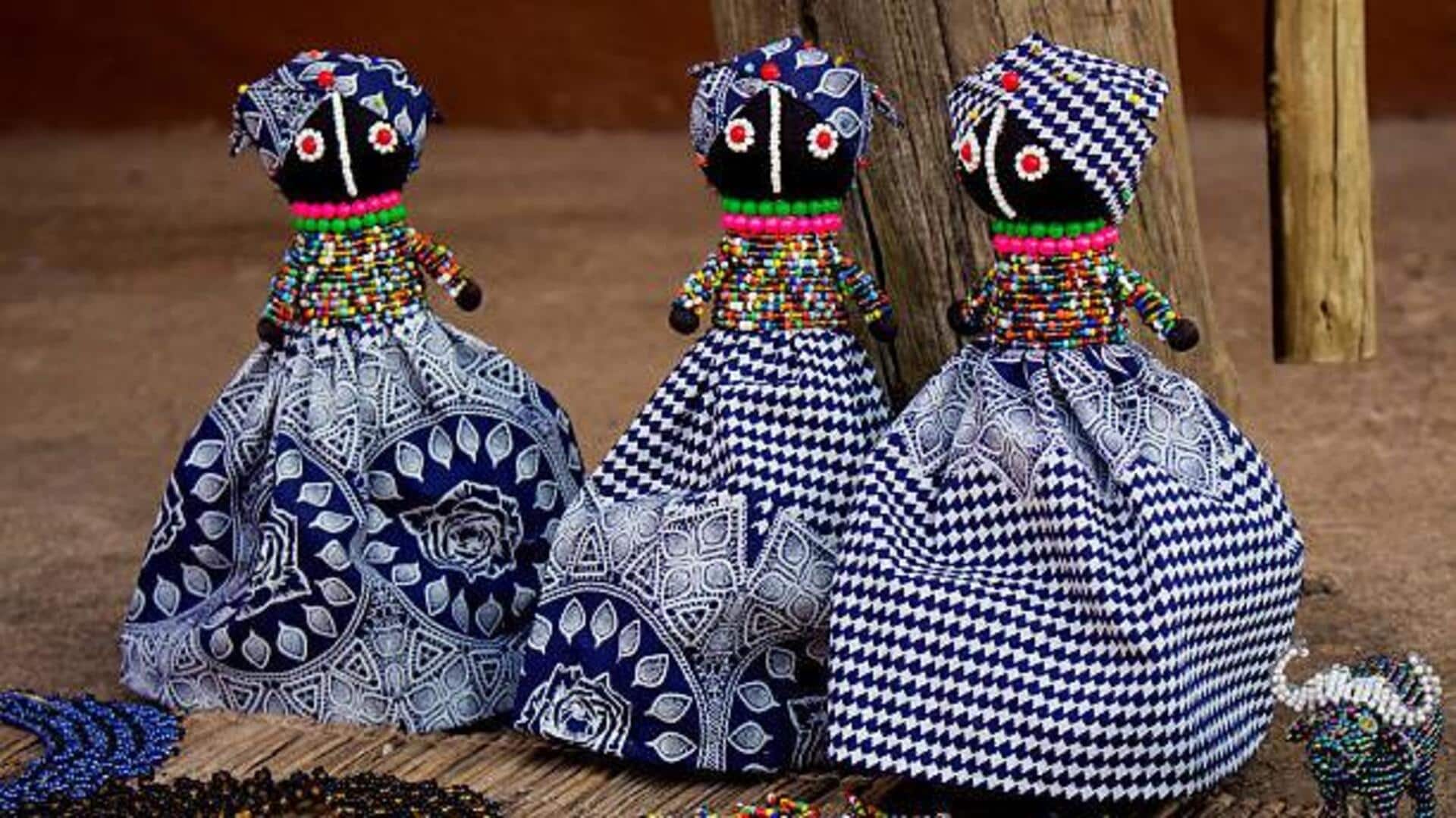
How to create African dancing dolls
What's the story
Creating African dancing dolls is a beautiful way to celebrate and preserve cultural traditions. These dolls are often made with vibrant colors and intricate designs, reflecting the rich diversity of African cultures. By using locally sourced materials, artisans can create unique pieces that tell a story. Here are some practical tips for crafting these dolls, focusing on materials, techniques, and cultural significance.
Materials
Choosing the right materials
Selecting appropriate materials is essential for crafting authentic African dancing dolls.
Natural fibers like cotton or sisal are commonly used for clothing and hair. Wooden sticks or wire can be used for the doll's frame.
Paints made from natural dyes give the doll its vibrant colors. Using locally sourced materials not only supports the community but also ensures authenticity in each piece.
Designs
Understanding traditional designs
Traditional designs are key to making these dolls culturally relevant.
Researching different African tribes can give you an idea of their unique styles and patterns.
Geometric shapes, bold colors, and symbolic motifs are commonly used in these designs.
Knowing the cultural background of each design helps in making the doll more meaningful and true to its roots.
Techniques
Mastering sewing techniques
Sewing is an important part of making African dancing dolls.
Basic sewing skills like stitching, folding, and tying knots are essential to make the doll's clothing and accessories.
Using strong threads ensures durability, and decorative stitches can add to the visual appeal.
Practicing these techniques will make you more skilled in making intricate details that bring the doll to life.
Movement
Incorporating movement elements
Movement is an integral part of African dancing dolls, imitating traditional dances.
Artisans can use simple mechanisms like strings or hinges to make the limbs moveable. This adds an interactive element to the doll, making it more engaging for the audience.
Experimenting with different ways to incorporate movement will make each doll unique, while staying true to its cultural roots.