How to create mud cloth art at home
What's the story
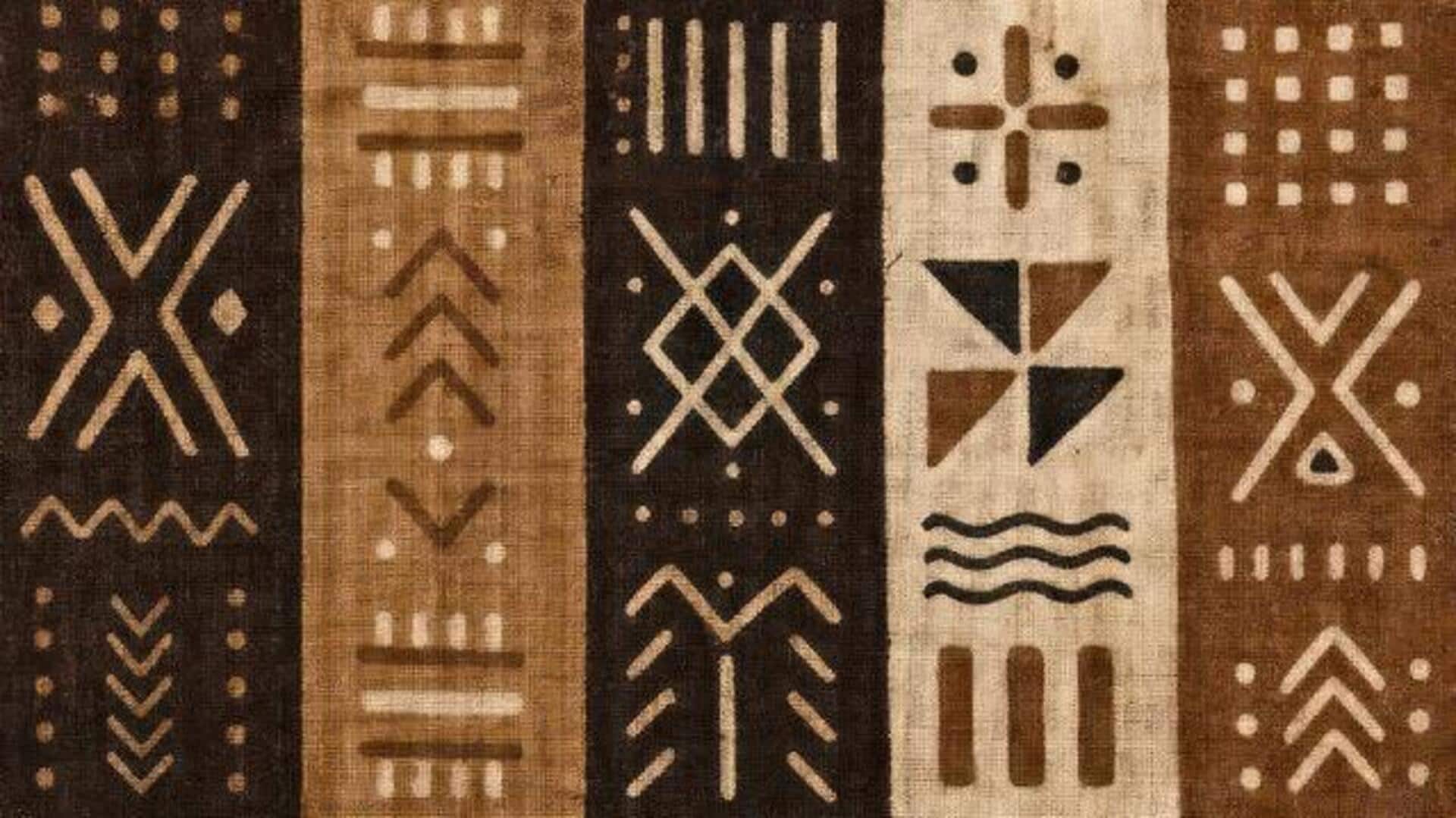
African mud cloth art, or bogolanfini, is an ancient textile art from Mali. The technique uses fermented mud to create intricate designs on cotton fabric. The process is steeped in cultural significance and has been passed down generations. This guide gives you a step-by-step process to make authentic African mud cloth art at home, preserving the tradition while encouraging creativity.
Materials
Understanding the materials needed
To start, you need cotton fabric, fermented mud or dye, water, brushes or sticks for applying the mud, and containers for mixing.
The cotton fabric should be pre-washed to remove any chemicals.
Fermented mud can be sourced from local suppliers or made by mixing soil with water and letting it ferment over time.
Ensure all materials are ready before starting the process.
Preparation
Preparing the cotton fabric
The first step is to prepare your cotton fabric by washing it thoroughly to remove any impurities.
Once clean, soak it in water mixed with natural dyes like indigo or henna for a base color.
Let it dry completely before proceeding to the next step.
This preparation sets the stage for applying traditional patterns.
Patterns
Applying traditional patterns
Using brushes or sticks dipped in fermented mud, apply traditional patterns onto your dried fabric.
These patterns often include geometric shapes and symbols that hold cultural meanings.
Take care to apply evenly and allow each layer of mud to dry before adding more designs.
This step requires patience, as each pattern adds depth and character to your artwork.
Finishing touches
Finalizing your artwork
Once all desired patterns are applied and dried, rinse your fabric with water to remove excess mud without washing away design details.
This step reveals the final artwork's clarity and vibrancy.
Hang or lay flat to dry completely before displaying or using your finished piece as desired.