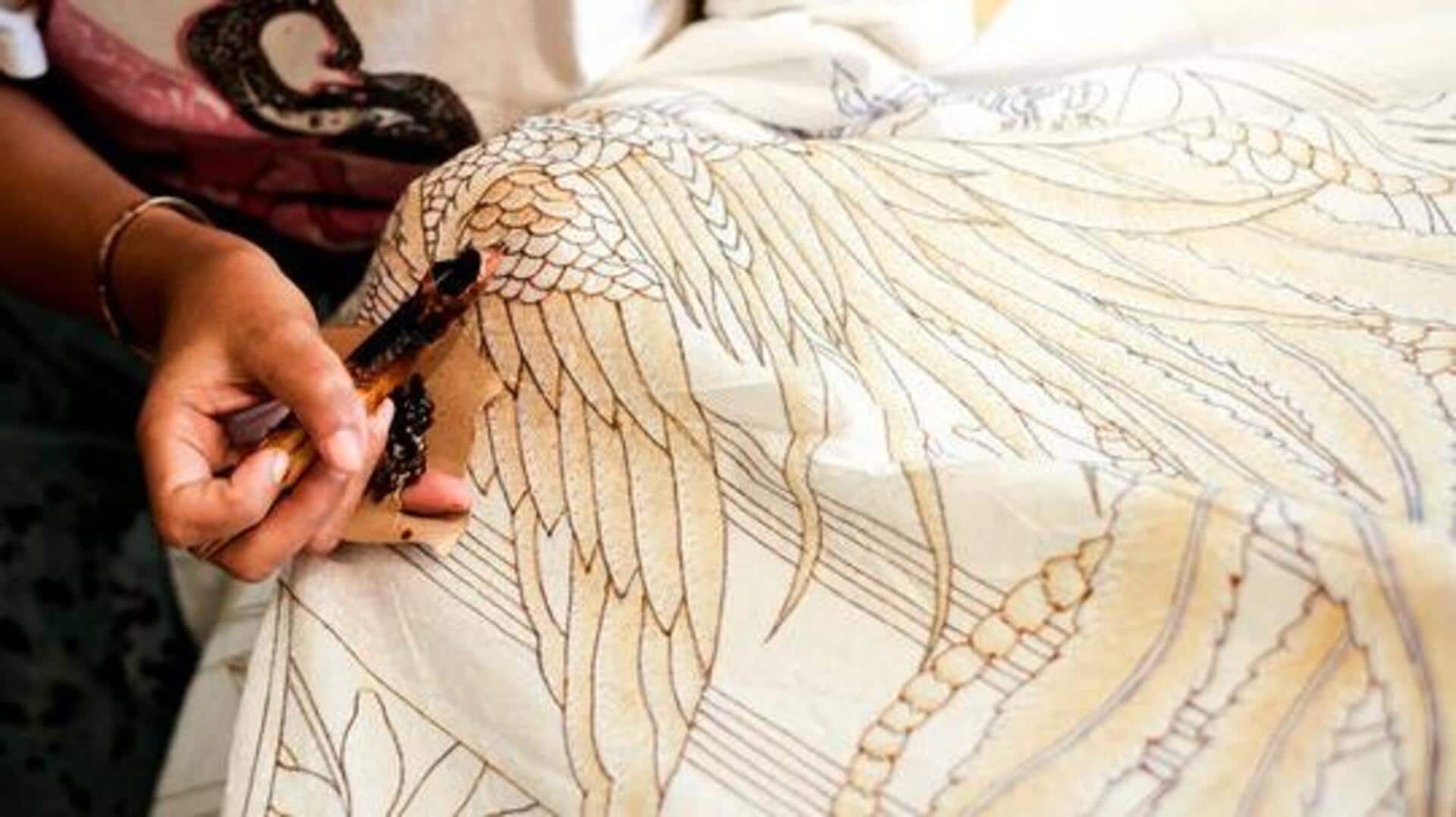
How to create fabric art with beeswax
What's the story
African batik is a traditional art form that involves creating beautiful patterns on fabric using beeswax. This method has been practiced for centuries, showcasing the rich cultural heritage of Africa. By using locally sourced beeswax, artisans can create unique designs that reflect their creativity and cultural identity. This article explores the process of making African batik with local beeswax, highlighting its significance and providing insights into this artistic technique.
#1
Sourcing local beeswax
To make authentic African batik, sourcing local beeswax is important. Local beeswax is usually more affordable and supports local beekeepers.
The process involves collecting beeswax from hives, purifying it to remove impurities, and preparing it for use in batik making.
This not only promotes sustainability but also contributes to the local economy by encouraging traditional beekeeping practices.
#2
Preparing the fabric
Preparing the fabric is an important step in the batik process.
Usually, cotton or silk is used as it absorbs dye well.
The fabric is washed thoroughly to remove any chemicals or finishes that may interfere with dye absorption.
Once dry, the fabric is stretched tightly on a frame or board to keep it taut during the application of wax and dye.
#3
Applying beeswax patterns
Applying beeswax patterns is where creativity comes into play.
Using a brush or stylus, artisans apply melted beeswax onto the fabric in desired patterns or designs.
The wax acts as a resist, preventing dye from penetrating those areas when applied later on.
Intricate designs can be created by layering different wax applications before dyeing.
#4
Dyeing techniques in batik
Dyeing techniques are key to achieving vibrant colors in African batik art.
Natural dyes from plants such as indigo or hibiscus are commonly used for their rich hues and cultural significance.
After applying the desired pattern with beeswax, artisans immerse parts of the fabric in dye baths multiple times for depth of color, while ensuring that areas covered by wax remain untouched by dye.
#5
Finalizing your artwork
Once dyed, it is time to finalize your artwork by removing excess wax through boiling or ironing between paper towels.
This reveals stunning contrasts between dyed sections and those protected by wax during earlier stages.
The result is a visually striking piece ready for display, showcasing both skillful craftsmanship and cultural storytelling inherent within each unique creation.