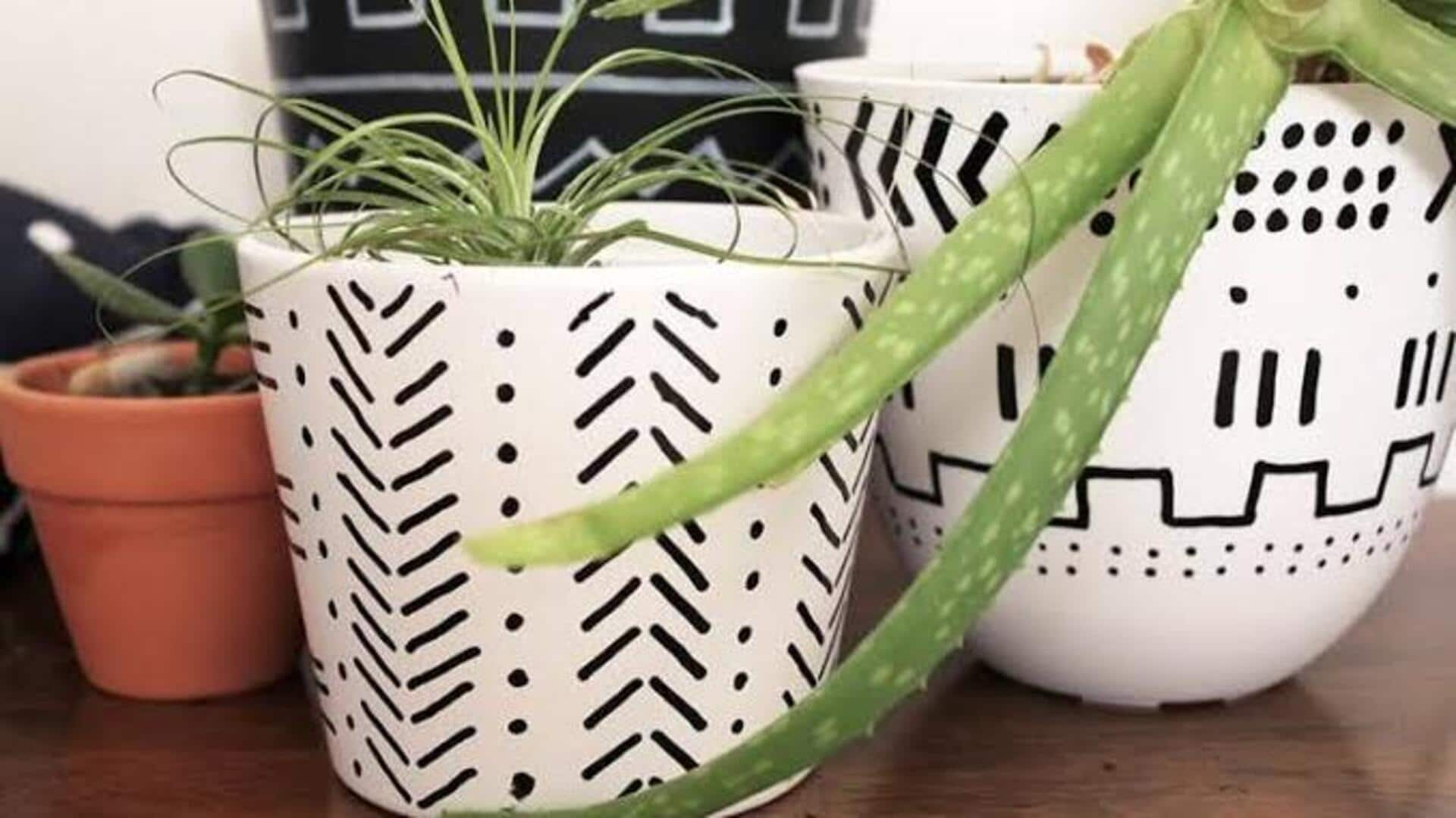
DIY: How to create mudcloth-inspired planters
What's the story
African mudcloth is famous for its unique patterns and cultural significance. The textile's bold designs and earthy tones can inspire a range of creative projects, including planters. By using mudcloth-inspired techniques, you can make planters that not only serve as functional items but also as decorative pieces, reflecting African artistry. Here are some practical insights into creating these distinctive planters.
Materials
Choosing the right materials
Selecting appropriate materials is key to crafting mudcloth-inspired planters.
Use natural fibers like jute or cotton for an authentic feel. These materials are durable and absorb moisture well, making them ideal for planters.
You could also use clay or terracotta as a base, as these materials mimic the earthy tones of traditional mudcloth.
Patterns
Designing with traditional patterns
Incorporating traditional African patterns is essential to achieve an authentic look.
Geometric shapes, lines, and symbols are commonly used in mudcloth designs. Research various patterns to find one that resonates with you.
Use stencils or stamps to replicate these designs accurately on your planter's surface.
Dyes
Applying natural dyes
Natural dyes are essential to get those earthy tones that are characteristic of mudcloth.
Use plant-based dyes like indigo or hibiscus for a sustainable option.
These dyes not only give the planter an authentic look but also make it weather-resistant when applied properly.
Finishing
Finishing touches for durability
To protect your planter from the elements, apply a sealant or waterproof coating once the dyeing process is complete.
This will ensure longevity and durability, while retaining the vibrant colors of your design.
Adding handles or decorative elements made from natural fibers can enhance both functionality and aesthetic appeal.