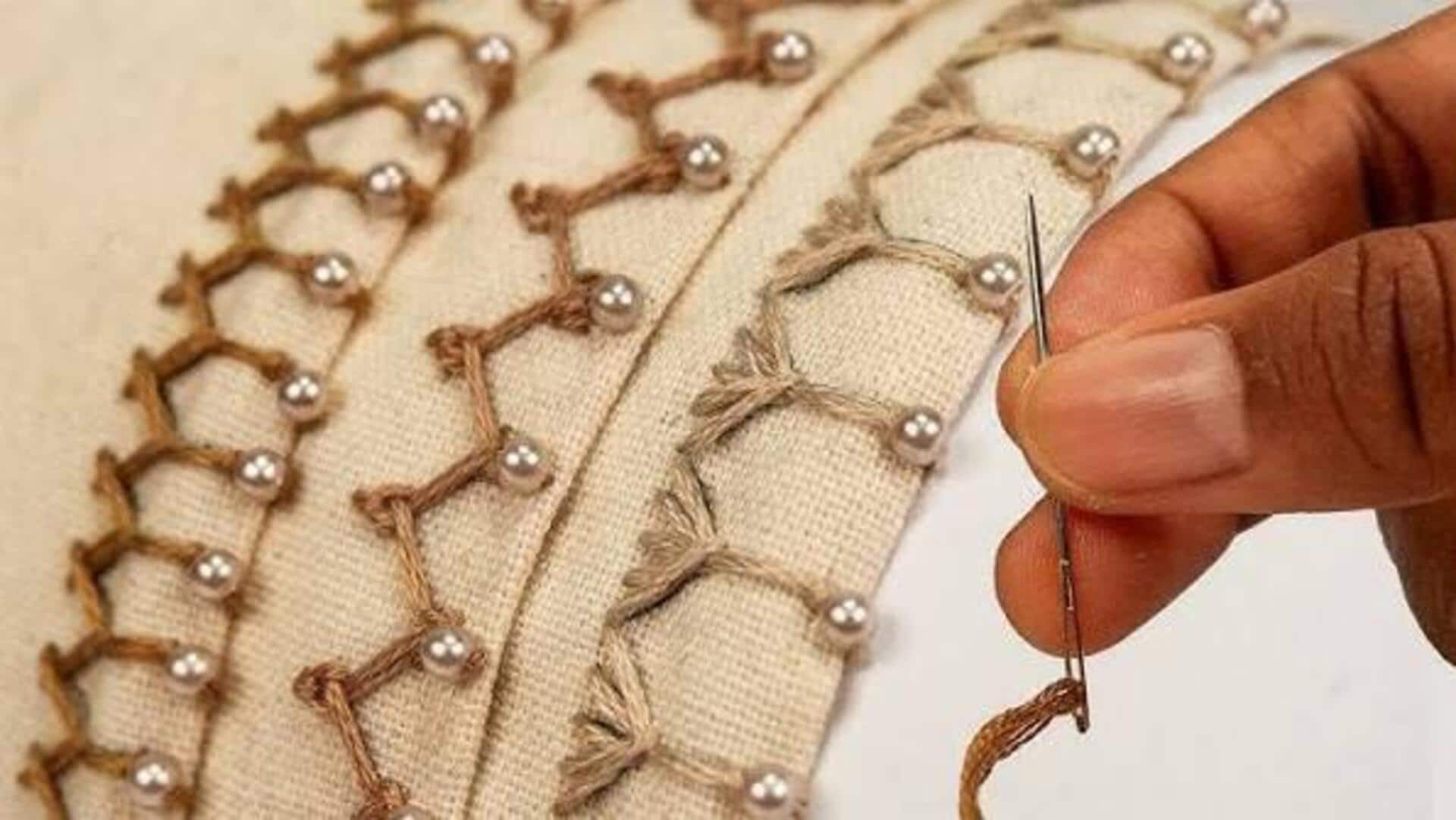
How to create bead embroidery on fabric
What's the story
Zulu bead embroidery is a traditional African art form involving fabric decoration with colorful beads. This intricate craft, which originated from the Zulu people of South Africa, is known for its vibrant patterns and cultural significance. The technique requires precision and creativity, making it a unique way to express oneself through art. Whether you are a beginner or looking to refine your skills, understanding the basics of Zulu bead embroidery can help you create stunning pieces that showcase this rich cultural heritage.
#1
Choosing the right materials
Selecting appropriate materials is essential for successful Zulu bead embroidery.
Start with a sturdy fabric base, such as cotton or linen, which can bear the weight of beads without tearing.
Choose high-quality beads in various colors to add depth and vibrancy to your designs.
A strong thread is also important; waxed thread works well, as it reduces friction and prevents tangling during stitching.
#2
Understanding traditional patterns
Traditional Zulu bead patterns are rich in symbolism and meaning.
Before you start, familiarize yourself with common motifs like chevrons, zigzags, and geometric shapes.
Each pattern has its own significance, often relating to historical events or cultural beliefs.
By understanding these symbols, you can create pieces that not only look beautiful but also tell a story.
#3
Mastering basic stitching techniques
Basic stitching techniques form the foundation of Zulu bead embroidery.
The most commonly used stitch is the brick stitch, which involves threading beads in rows for a sturdy structure.
Other techniques include the lazy stitch and backstitch, which add texture and detail to your work.
Practicing these stitches on scrap fabric before starting your project will help you gain confidence.
#4
Incorporating personal style
While traditional patterns are important, adding your own flair to Zulu bead embroidery makes it even more special.
Experiment with different color combinations, or create unique designs that reflect your personality or experiences.
Mixing traditional elements with modern twists can result in one-of-a-kind pieces that honor the craft's heritage while showcasing individual creativity.