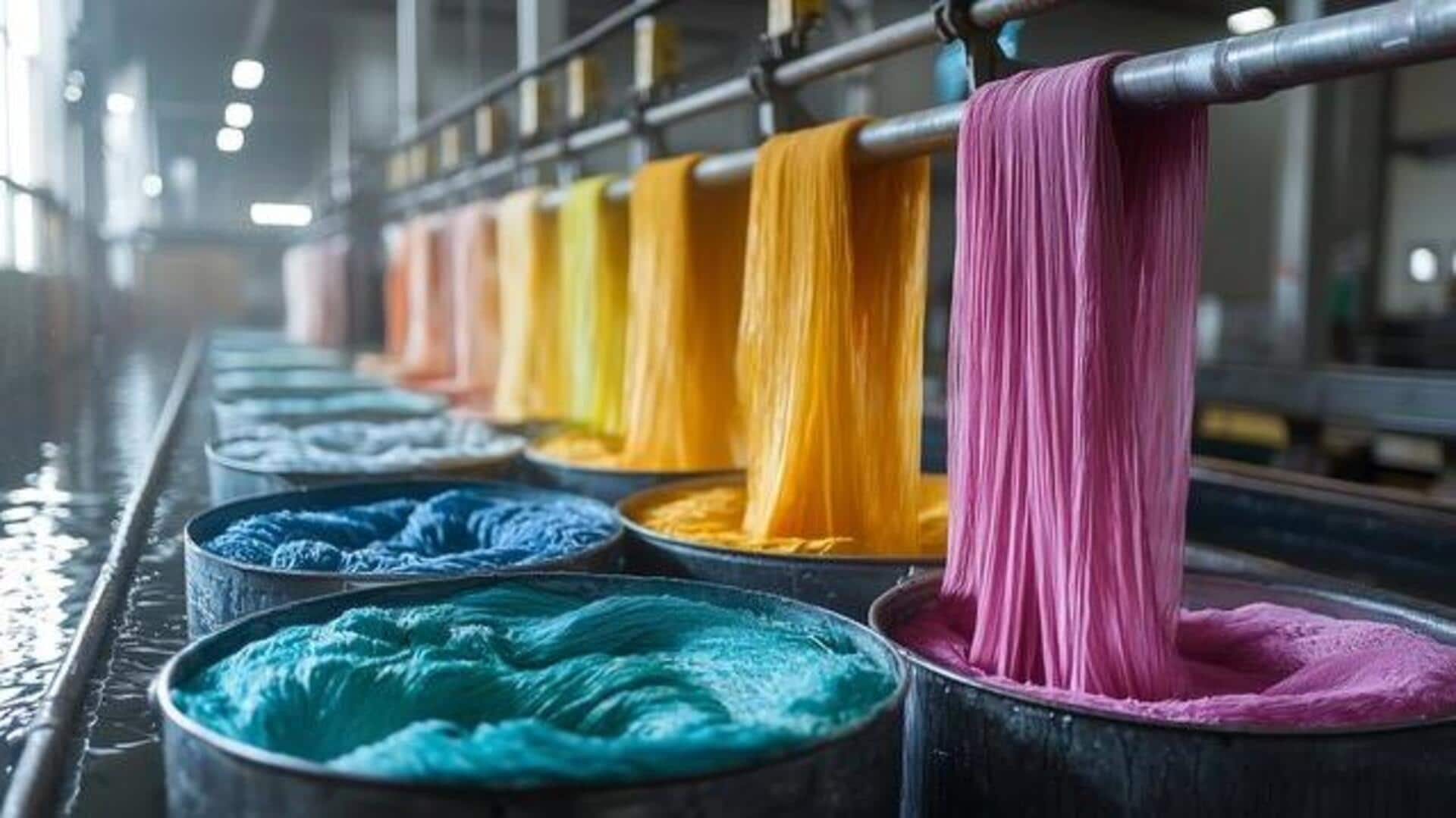
Exploring natural ways to dye fabrics
What's the story
African fabrics are famous for their vibrant colors and intricate patterns. Traditionally, these textiles are dyed using natural methods, which are eco-friendly and culturally significant. These techniques not only preserve the environment but also keep the rich heritage of African art alive. By using locally sourced materials, artisans create unique pieces that reflect the diversity and creativity of the continent's cultures.
Technique 1
Indigo dyeing techniques
Indigo dyeing is a popular method used in many African countries. The process involves fermenting indigo leaves to create a dye bath.
This technique allows artisans to create deep blue hues on cotton fabrics. The dyeing process requires multiple dips in the dye bath, allowing layers of color to build up gradually.
Indigo dyeing is often used to create intricate patterns through resist techniques like tying or stitching.
Technique 2
Natural plant dyes for vibrant colors
Apart from indigo, other plants are also used to extract natural dyes for vibrant colors.
For instance, hibiscus flowers can yield shades of red or pink, while turmeric gives a bright yellow hue.
These plant-based dyes are mixed with mordants like alum or lime to fix the colors on fabric.
The use of these natural sources highlights the sustainable practices adopted by artisans.
Technique 3
Bark cloth production methods
Bark cloth production is an ancient technique prevalent across Africa, especially in Uganda and Rwanda.
The process involves stripping inner bark from trees like fig or mulberry and then soaking it in water until soft.
Once processed, the bark is flattened into sheets that can be dyed with natural pigments.
This method not only provides an alternative textile but also supports tree conservation efforts.
Tip 1
Community workshops promoting traditional skills
Community workshops play an important role in keeping traditional dyeing techniques alive by educating younger generations about these methods.
Participants learn how to source materials locally, prepare dyes from plants, and apply them on fabrics using traditional techniques passed down through families over generations.
These workshops promote cultural exchange while supporting local economies through handmade textile production.