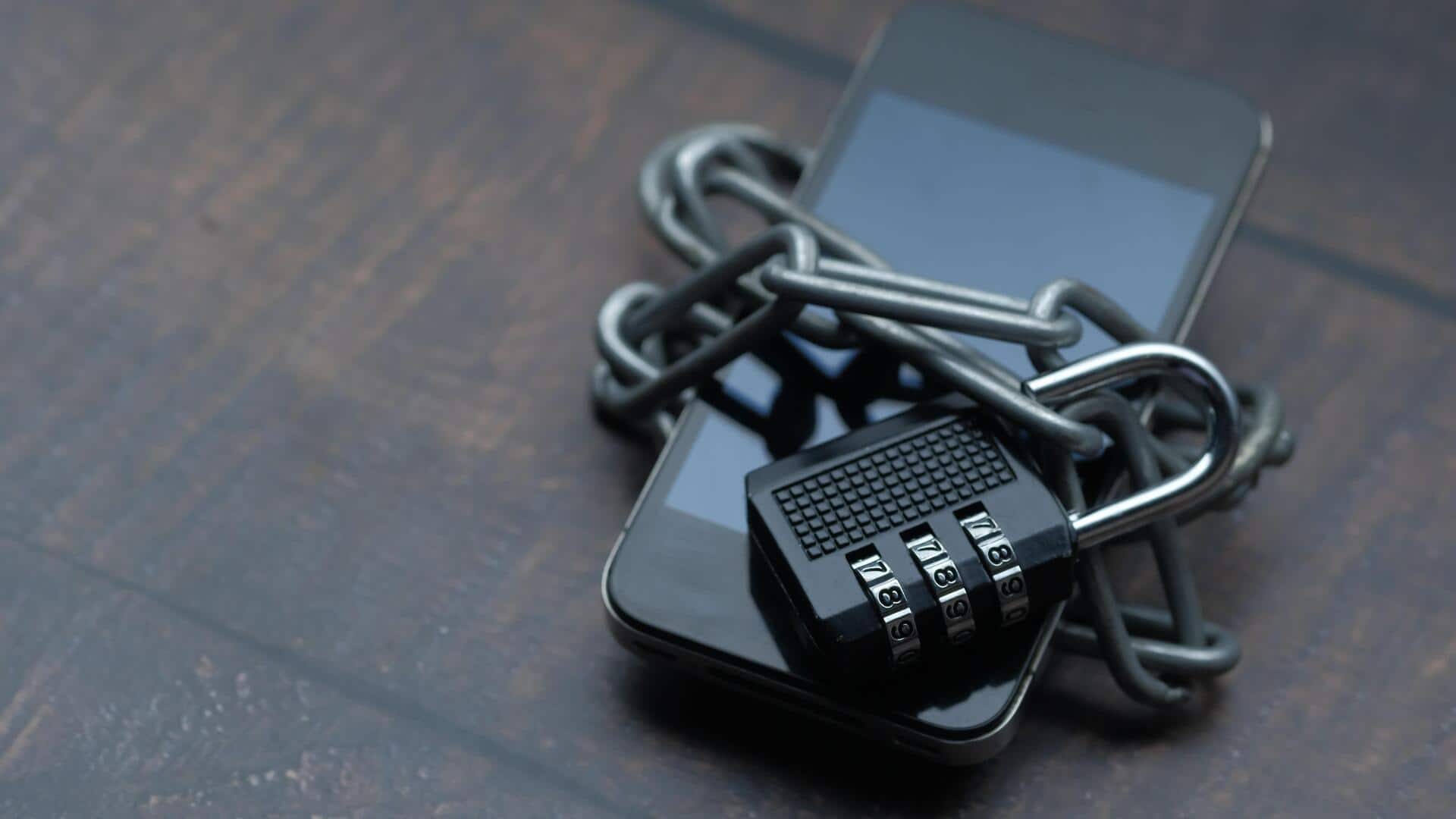
Want better phone privacy? Try these 5 tips
What's the story
In today's digital age, protecting your smartphone from prying eyes is of utmost importance. With the increasing amount of personal data stored on our devices, ensuring privacy is a must. Thankfully, there are several easy ways to enhance smartphone privacy without needing technical expertise or expensive tools. These simple steps can help keep your information safe and secure from unwanted access.
Tip 1
Use strong passwords and biometrics
One of the simplest ways to protect your smartphone is by using strong passwords or passcodes.
Avoid common combinations like 1234 or 0000. Instead, opt for a six-digit code or an alphanumeric password.
Also, enable biometric features like fingerprint recognition or facial recognition, if available.
These methods add an extra layer of security and make it harder for unauthorized users to access your device.
Tip 2
Regularly update your software
Keeping your smartphone's operating system and apps updated is crucial for maintaining privacy.
Updates often include security patches that fix vulnerabilities exploited by hackers.
Enable automatic updates so that you do not miss out on important fixes.
Regularly check for updates manually as well, especially if automatic updates are not enabled by default.
Tip 3
Limit app permissions
Apps often ask for permissions that are unnecessary for their functioning, which can compromise your privacy.
Go through the permissions granted to each app in your settings, and revoke any that seem excessive or unnecessary.
For instance, a weather app does not need access to your contacts or camera.
Limiting permissions minimizes the amount of data shared with third-party developers.
Tip 4
Use encrypted messaging apps
Switching to encrypted messaging apps can greatly increase the privacy of your conversations.
Unlike regular SMS services, encrypted apps, such as *Signal* or *WhatsApp*, secure messages with end-to-end encryption.
This means that only the sender and receiver can read the messages, and no one else, not even the service provider, can access them.
Tip 5
Enable two-factor authentication (2FA)
Two-factor authentication adds another layer of security by requiring a second form of verification beyond just a password.
This could be a text message code or an authentication app prompt when logging into accounts linked with your smartphone.
Enabling 2FA significantly reduces the risk of unauthorized access, even if someone gets hold of your password.